Hindu families targeted for Christian conversion through cash and job promises in Debpukur, West Bengal
 Barrackpore, West Bengal, India
  21 July, 2026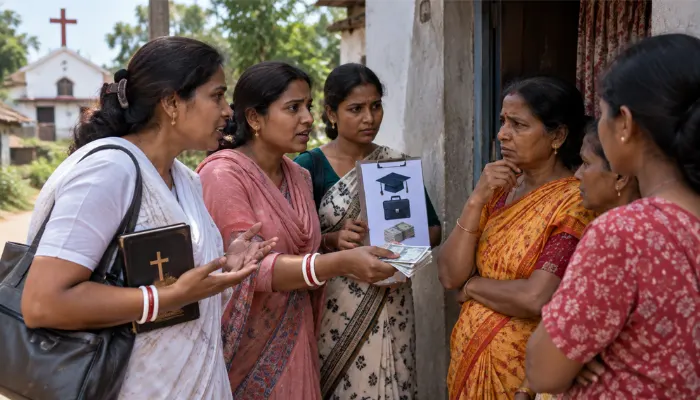
Case Summary
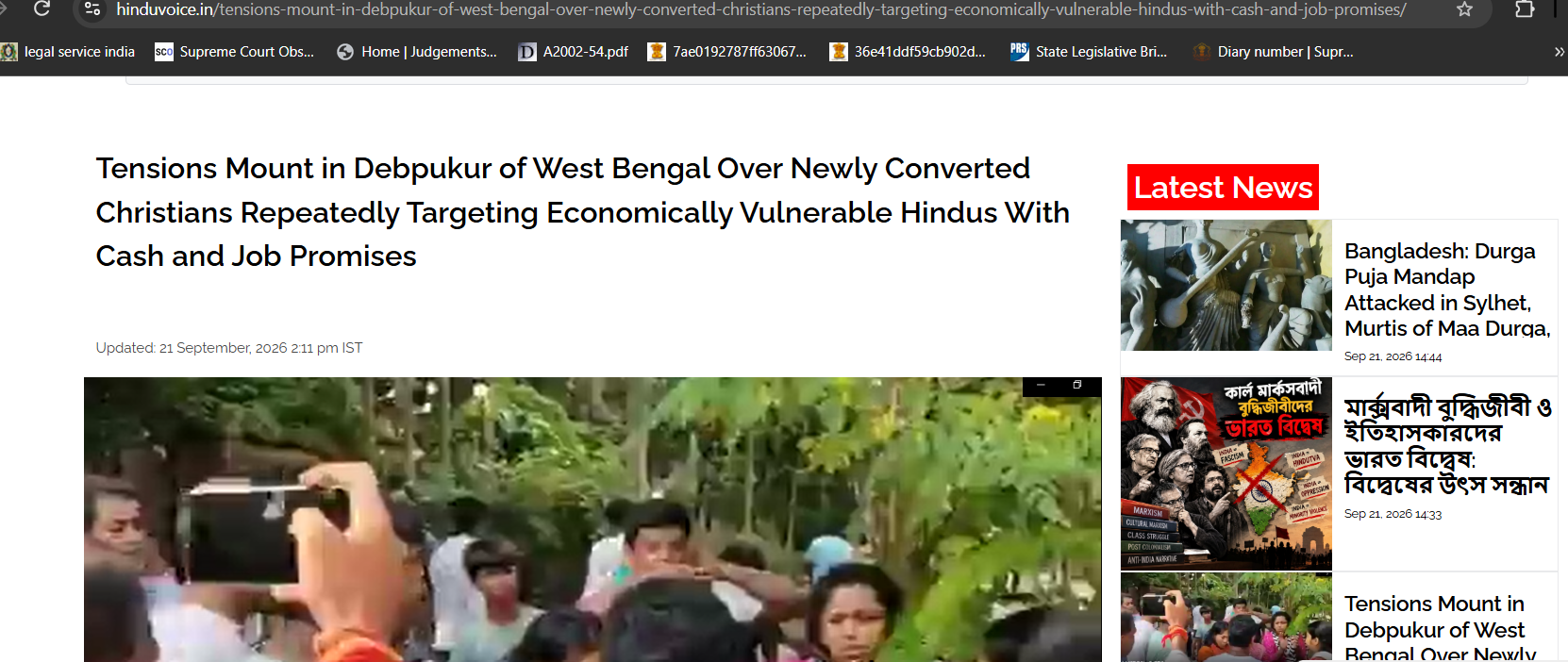
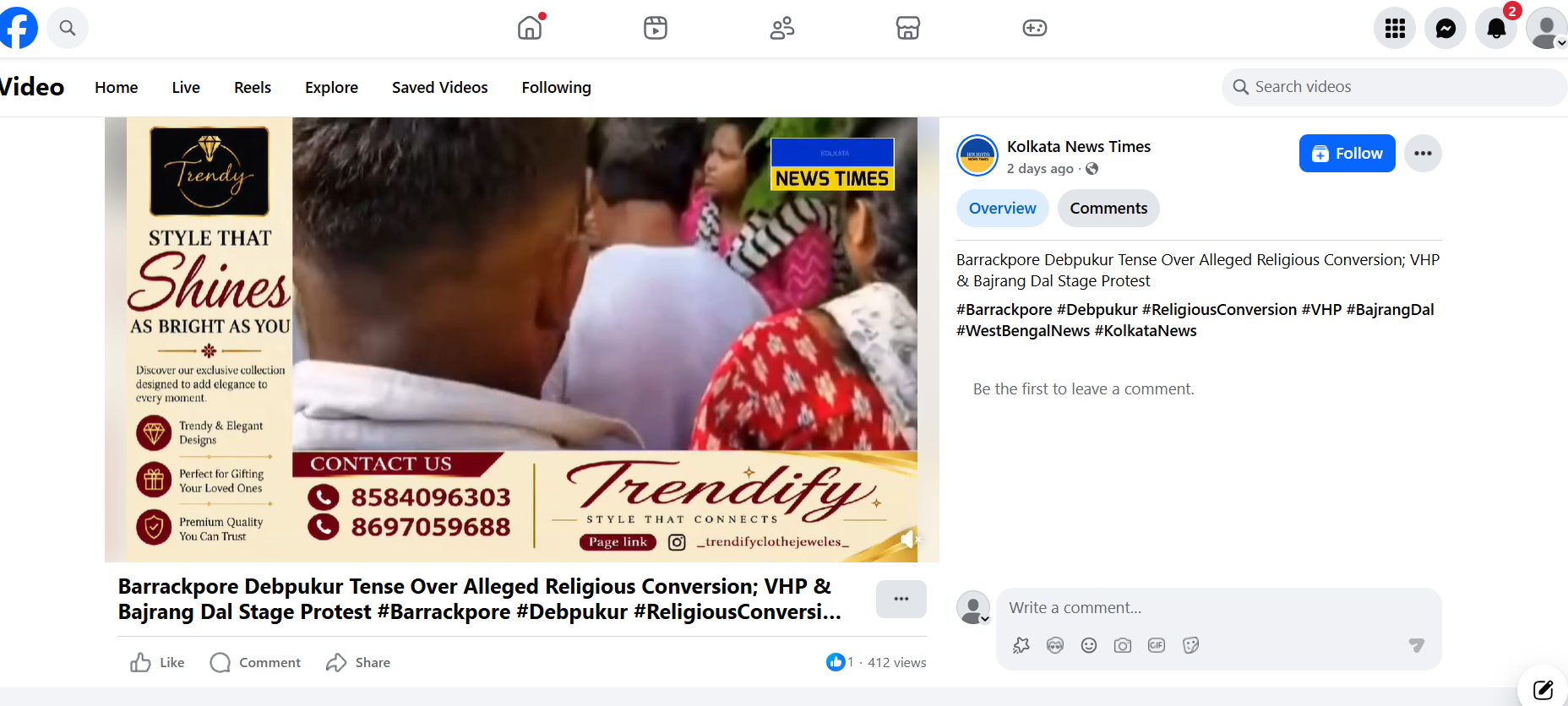
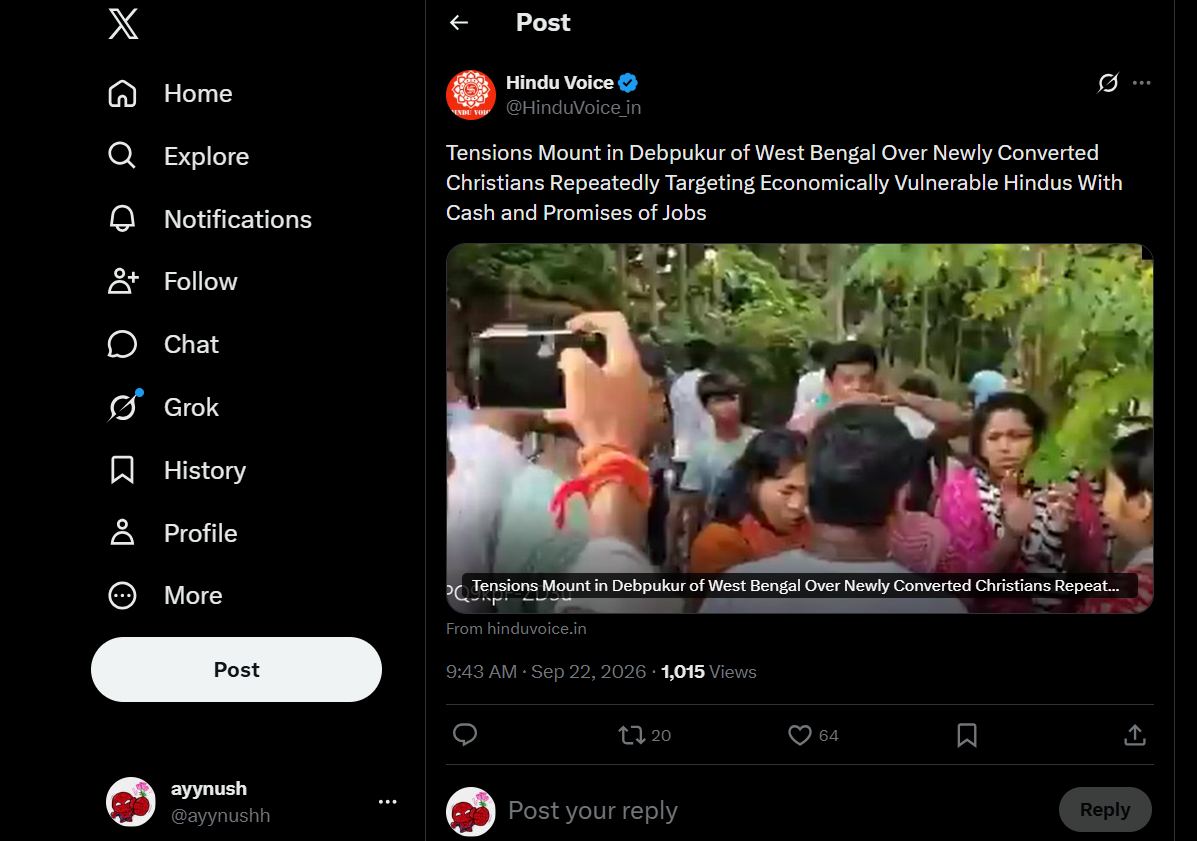
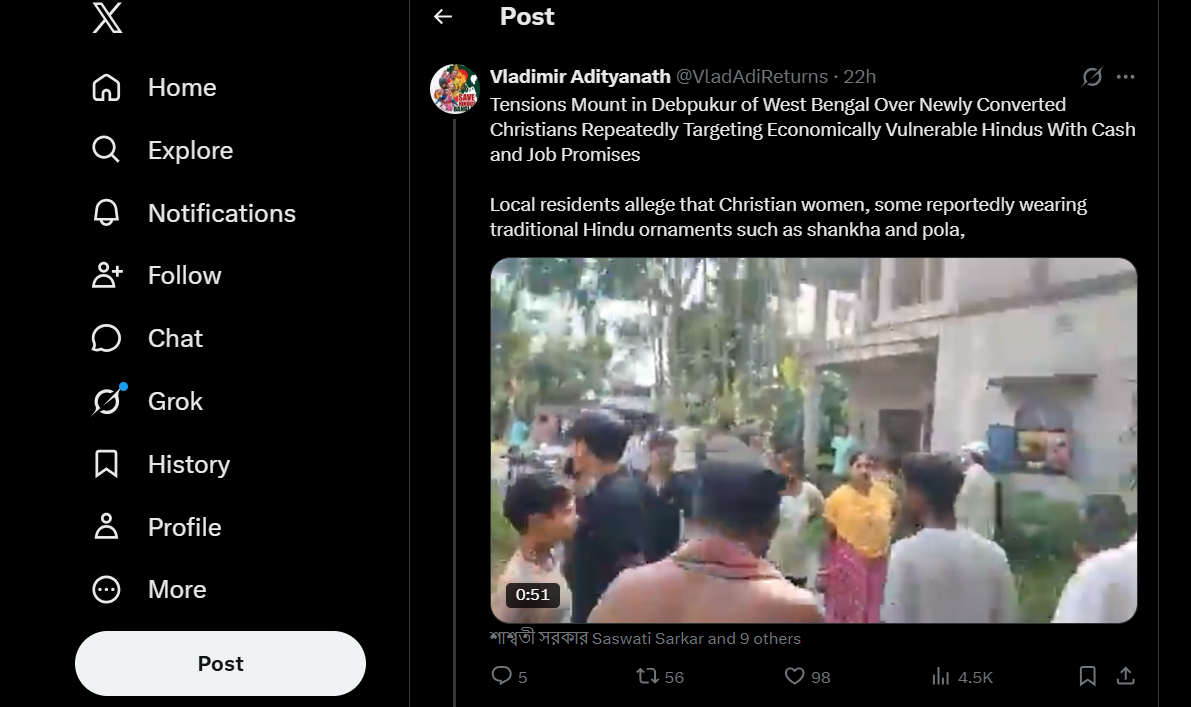
In Debpukur, Barrackpore, West Bengal, economically vulnerable Hindu families were targeted for religious conversion to Christianity. According to residents, they were targeted with promises of financial assistance, employment opportunities, and improved economic prospects. Christian women, including some whom residents identified as recent converts, repeatedly approached Hindu households over several months. Some of the women wore traditional Hindu ornaments, including shankha and pola, while engaging with the families. Local Hindu residents stated that the women regularly visited economically disadvantaged households and encouraged them to adopt Christianity. They offered financial assistance, along with the prospect of employment and improved living conditions, as incentives for religious conversion. The residents expressed concern that the financial difficulties faced by Hindu families were being exploited to persuade them to abandon their existing faith. Residents described some of the women as recent converts to Christianity. Several were also seen wearing shankha and pola, traditional bangles associated with married Hindu women in Bengal. Their continued use of these ornaments while approaching Hindu households became another point of concern among residents. The repeated visits and conversion attempts continued over several months, generating growing concern among the local Hindu community. Residents objected particularly to the use of monetary assistance and employment opportunities to influence financially vulnerable Hindu families towards Christianity. On 18th September 2026, a group of local Hindu women, encouraged by members of the Vishwa Hindu Parishad (VHP) and Bajrang Dal, confronted the Christian women during another attempt at religious conversion. The Hindu women objected to the repeated approaches to Hindu households and the use of financial and employment-related incentives to encourage conversion. The confrontation led to a heated exchange between the two groups of women, which subsequently escalated into a minor physical scuffle. The incident heightened tensions in Debpukur, where local Hindu residents continued to express concern about the repeated targeting of economically vulnerable families for Christian proselytisation.
Case Images
Why it is Hate Crime ?
The primary category selected in this case is: Predatory Proselytisation. The selected subcategory is: Conversion/attempts to convert by inducement. Predatory Proselytisation is not just limited to threats, harassment, force and violence, but it also has contours of stealth. In several cases, the Hindu victim is exploited to convert, with non-Hindus taking advantage of their poverty. In such cases, the Hindu victim who is suffering financially is offered monetary benefits, including lucrative offers for jobs, health treatment, education, etc., to induce the victim to change his/her religion. In such cases, the religious identity of the victim and the aim to disenfranchise him from his faith form the heart of the crime. Also, taking advantage of and exploiting an individual’s economic vulnerabilities is widely acknowledged as exploitation, forms of which are often penalised by law. Such cases therefore are considered religiously motivated hate crimes since the victim’s religious identity forms the very heart of the crime itself. This case has been categorised under Predatory Proselytisation because economically vulnerable Hindu families in Debpukur, Barrackpore, were repeatedly targeted for conversion to Christianity through promises of financial assistance, employment opportunities and improved economic prospects. According to residents, Christian women, including some who had recently converted, approached Hindu households over several months and encouraged them to change their religion. Some of these women continued wearing Shankha and Pola, traditional ornaments associated with married Bengali Hindu women. The combination of economic inducements, repeated religious approaches and the use of familiar Hindu cultural symbols formed the central concerns surrounding the conversion activity. Firstly, the repeated attempts to persuade Hindu families to adopt Christianity were directed at their existing religious identity and continuity as Hindus. The approaches were not confined to ordinary interaction between members of different faiths but involved efforts to encourage Hindu households to abandon their professed religion and accept Christianity. The religious dimension was therefore central to the activity, as the families were approached specifically for the purpose of changing their faith. When such efforts involve the exploitation of personal vulnerability or material dependency, they raise concerns about whether religious conversion represents an independent decision or one influenced by circumstances deliberately used to secure religious change. Secondly, the use of financial assistance, employment opportunities and promises of improved economic conditions was particularly significant because the families being approached were economically vulnerable. Financial hardship can create circumstances in which promises of money, employment and greater economic security exercise considerable influence over an individual's decisions. Linking such benefits to religious conversion can exploit that vulnerability by presenting the abandonment of one's existing faith as a means of obtaining material relief. In this case, the repeated offers described by residents formed the basis for classifying the conduct as attempted conversion through inducement. The central concern was that economic necessity was being used to influence the religious choices of Hindu families rather than allowing those choices to arise independently from personal conviction. Moreover, the use of Shankha and Pola by some of the Christian women was significant because these ornaments hold considerable religious and cultural importance for married Bengali Hindu women. Shankha are white bangles traditionally made from conch shells, symbolising purity, marital auspiciousness and prayers for the husband's well-being. Pola are red bangles traditionally made from coral, associated with fertility, prosperity and marital happiness. Together, much like Sindoor, they are recognisable symbols of a married Bengali Hindu woman's religious, marital and cultural identity. Their presence acquired particular significance in this case because residents described some of the women wearing these ornaments as recent converts to Christianity who were approaching Hindu households to encourage further conversions. The continued use of familiar Hindu cultural markers could have helped establish familiarity and trust with the families being approached. In circumstances involving financial inducements, that familiarity could make repeated religious approaches more persuasive. The significance of Sankha-Pola lies in the cultural familiarity they brought to the interactions described by residents. The incident raises concerns about recent Christian converts continuing to wear Shankha and Pola, traditional symbols of married Bengali Hindu women, while approaching Hindu families for conversion. These familiar religious markers could help establish trust and facilitate proselytisation through financial and employment inducements. The case exposes a growing but under-discussed phenomenon of “crypto conversion,” where individuals convert to another religion but hide their new faith to continue receiving Scheduled Caste or Scheduled Tribe benefits reserved for Hindus. Sonali’s in-laws, while practising Christianity, have not legally declared their conversion—allowing them to retain access to government subsidies, job reservations, and land rights. Crypto converts represent a dangerous grey zone. They claim the privileges of Hindu identity while violating its tenets and pressuring others to follow suit. It’s ideological fraud with real human victims. Taken together, the conduct reflects a sustained effort to make Hindus abandon their faith by exploiting their vulnerability through financial assistance, employment opportunities and promises of better economic prospects. These actions of the accused stemmed from inherent hostility towards the victim's professed faith since Abrahamic faiths believe that any non-adherent to the faith is subject to being dehumanised till they convert. This mindset does not merely tolerate the existence of another faith but seeks its erasure or assimilation. As a result, Hindus are often targeted not because of who they are as individuals, but because of their religious identity. The violence, deception, or humiliation inflicted in such cases is therefore not random, but part of a broader ideological hostility toward Hinduism and its symbols, practices, and adherents. Here, too, the predatory actions stemmed from doctrinal animosity towards the Hindu faith, which is why this case is being documented as a religiously motivated hate crime. Disclaimer: The conversion attempts had reportedly been continuing for several months before the confrontation on 18 September 2026. Since the exact date on which the targeting of the Hindu families first began is not known, the Hinduphobia Tracker has recorded 18 September 2026 as the incident date, based on the earliest specific date available for the documented confrontation. The tracker records the date of occurrence, or the beginning of the victim’s ordeal, rather than the date the incident was reported. Disclaimer: The available material did not specify the exact number or identities of the perpetrators. However, the video associated with the incident shows three women. Therefore, the Hinduphobia Tracker has recorded the perpetrator count as three for documentation purposes. The involvement of any additional individuals remains unknown.


Case Status
Complaint filed


Perpetrators Details
Perpetrators
Christian Extremists
Perpetrators Range
From 2 To 5
Perpetrators Gender
female
 Sources




