Minor Hindu students reprimanded for chanting ‘Jai Shri Ram’, subjected to mocking remarks about Hindu deities by teacher in Kasganj
 Kasganj, Uttar Pradesh, India
  18 September, 2026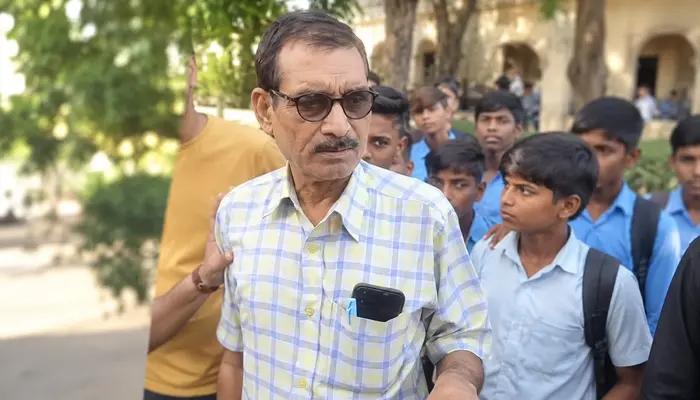
Case Summary
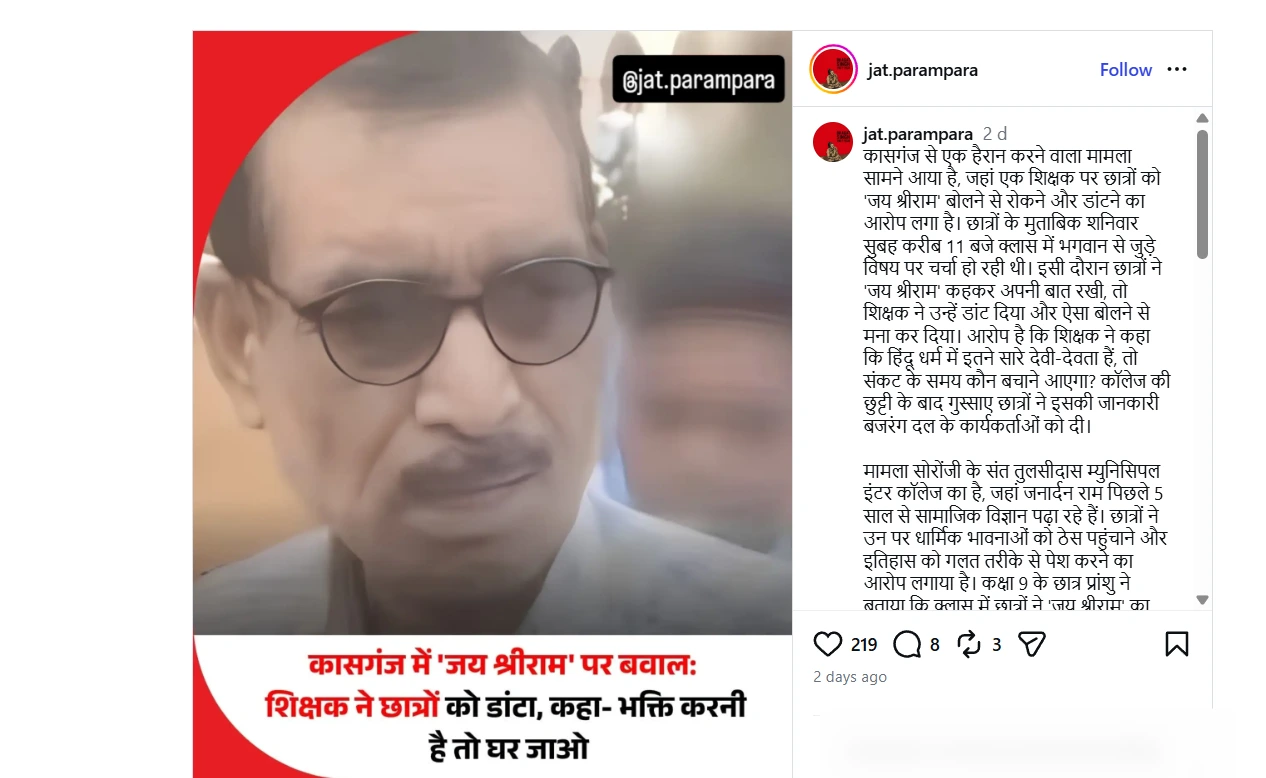
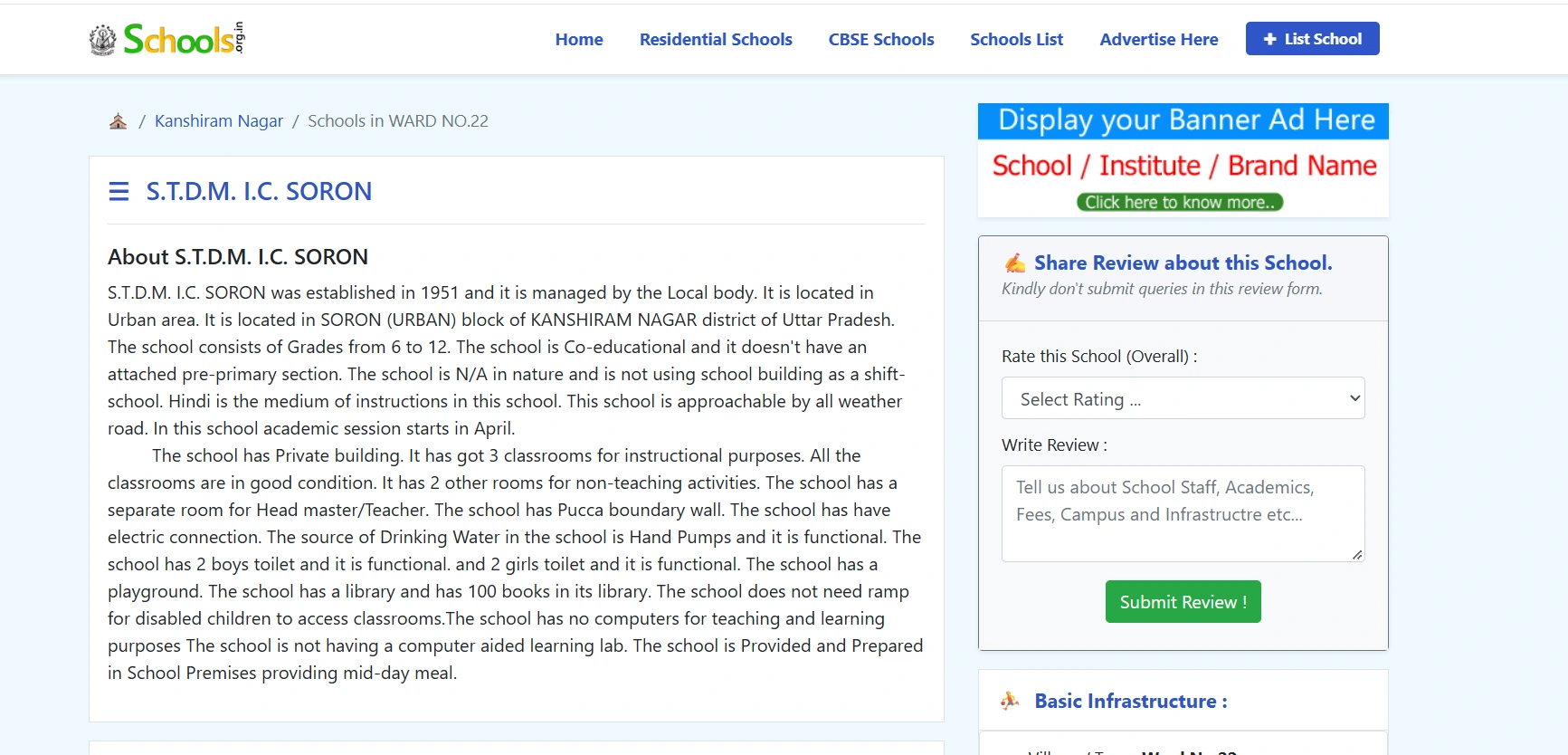
In Soron, Kasganj, Uttar Pradesh, minor Hindu students were reprimanded for saying “Jai Ram” and “Jai Shri Ram” during a classroom discussion. The students said social science teacher Janardan Ram stopped them from chanting the names of Lord Ram and told them, “If you want to do bhakti, go home.” The teacher also made mocking remarks against Hindu deities and said that there should be only one God. The incident took place at around 11 am on 19 September 2026 at Sant Tulsidas Municipal Inter College in Soron, where students from Classes 6 to 12 studied. As an educational institution catering to students up to Class 12, the institute also had minor students enrolled. Janardan Ram, a social science teacher who had been posted at the institute for about five years, was teaching a Class 9 lesson involving a discussion about God and religious beliefs. According to Class 9 student Pranshu, students said “Jai Ram” and “Jai Shri Ram” during the discussion, following which Janardan Ram reprimanded them and told them not to use the phrases. He then made mocking remarks concerning Hindu deities, questioning which deity would come to save a person in a crisis when Hinduism had multiple gods and goddesses. He also said that there should be only one God. The students described these remarks as derogatory and said they hurt their religious sentiments. After the institute closed on 19 September 2026, the students informed Bajrang Dal workers about the incident. A large number of workers subsequently reached the institute and staged a protest and sit-in along with the students, demanding an investigation and action against the teacher. “Jai Shri Ram” slogans were also raised on the institute premises during the protest. During the confrontation, the Hindu activists questioned Janardan Ram over his conduct, asking whether he had come to the institute to teach or engage in such activities, and whether Allah would come to someone’s aid if Ram and Lakshman did not. Govind Mahere, the Bajrang Dal district convenor, demanded an impartial investigation and action against the teacher, stating that religious discrimination and remarks concerning deities should not be tolerated in an educational institution. The protest was attended by Nikhil Nirbhay, Piyush Shankar Mahere, Sudhanshu Bhardwaj, Siddhant Gupta, Arjun Ram Lota, Yash Mahere, Utkarsh Parashar, Manoj Baghel and other Bajrang Dal workers. Janardan Ram subsequently gave his explanation. He denied the allegations and claimed that he had been teaching the students through a story and examples concerning different religious beliefs. He referred to “Khuda” (God) in Islam and Jesus Christ in Christianity while explaining that Hinduism had a belief in numerous gods and goddesses. He said that, in this context, he had asked the students a general question about which deity would come to save a person in a crisis. He maintained that the question was part of his classroom example and that his words had been understood separately from their context. He said that he had no intention of hurting anyone’s religious sentiments. The matter was subsequently taken up by the educational administration. Principal Ramkaran Raj issued Janardan Ram a notice requiring him to submit a written explanation within three days. District Inspector of Schools Rajnesh Kumar also confirmed that the teacher had been asked to provide his written response within three days. The administration said that the teacher’s written response and the students’ complaint would be examined as part of the inquiry, after which further action would be decided. At the time of writing this report, no police complaint had been filed in connection with the incident.
Case Images
Why it is Hate Crime ?
The first primary category selected in this case is: Restriction/ban on Hindu practices. The selected subcategory is: Restriction on the expression of Hindu identity. An example of the state-affected prejudicial and targeted orders against the Hindu community would be a government denying the right of a Hindu or a group of Hindus to hold a religious procession owing to the animosity of non-Hindu groups. Denial of the religious right of the Hindus to assuage the non-Hindu group which harbours animosity to a point where it could lead to violence against Hindus is not only a failure of law and order but is a prejudicial order against Hindus, denying them their fundamental rights to express their religious identity. An example of a hate crime against Hindus by a non-Hindu would be a non-Hindu institution forcing its Hindu employees to abandon religious symbols that a Hindu would wear as an expression of faith owing to inherent prejudice against the faith professed by the victim or a non-Hindu group of people restricting a Hindu group from constructing a place of worship simply because the demography of the area in which the temple is being built is dominated by non-Hindus. Such actions are driven by religious animosity and/or prejudice against Hindus and their faith and would therefore be categorized as a hate crime. The second primary category selected is: Attack not resulting in death. The subcategory selected is: Attacked for Hindu identity. In several cases, Hindus are attacked merely for their Hindu identity without any perceived provocation. A classic example of this category of religiously motivated hate crime is a murder in 2016. 7 ISIS terrorists were convicted for shooting a school principal in Kanpur because they got ‘triggered’ seeing the Kalava on his wrist and tilak that he had put. In this, the Hindu victim had offered no provocation except for his Hindu religious identity. The motivation for the murder was purely religious, driven by religious supremacy. Such cases where Hindus are targeted merely for their religious identity would be documented as a hate crime under this category. The third primary category selected is: Hate speech against Hindus. The subcategory selected is: Anti-Hindu slurs, mocking faith. Anti-Hindu slurs and the deliberate mocking of the Hindu faith owing to religious animosity involve the usage of derogatory terms, stereotypes, or offensive references to religious practices, symbols, or figures. One of the common anti-Hindu slurs used against Hindus is “cow-worshipper” and “cow piss drinker”. The intention of using this term is to demean and mock Hindus as a group and their religious beliefs since Hindus consider the cow holy. Additionally, some symbols and the slurs attached to them have a historical context that exacerbates the insult, hate, stereotyping, dehumanisation and oppression against Hindus. Cow worship has been used for centuries to denigrate Hindus, insult their faith and oppress Hindus specifically as a religious group. There has been overwhelming documentation about how cow slaughter has been used to persecute Hindus with cow meat being thrown in temples and places of worship. There has also been overwhelming documentation where cow meat (beef) has been force-fed to Hindus to either forcefully convert them to Islam or denigrate their faith. Apart from cow worship, the Swastika – which holds deep religious significance for the Hindus – has also been misinterpreted and distorted to use as a slur against Hindus. Similarly, the worship of the Shivling has been used by supremacist ideologies and religions to denigrate Hindus owing to religious animosity. Such slurs and denigration stem from inherent animosity and hate towards Hindus and their faith; therefore, it is categorised as hate speech targeted at Hindus specifically owing to their religious identity. The fourth primary category selected is: Predatory Proselytisation. The subcategory selected is: Proselytisation by grooming, brainwashing, manipulation or subtle indoctrination. Religious brainwashing essentially means the often subtle and forcible indoctrination to induce someone to give up their religious beliefs to accept contrasting regimented ideas. Religious grooming or brainwashing also involves propaganda and manipulation. It involves the systematic effort, driven by religious malice and indoctrination, to persuade “non-believers’ to accept allegiance, command, or doctrine to and of a contrasting faith. Cases of such grooming or brainwashing are far more nuanced than direct threats, coercion, inducement and violence. In such cases, it is often seen that there is repeated, subtle and continual manipulation of the victim to induce disaffection towards their own faith and acceptance of the contrasting faith of the perpetrator. While subtle indoctrination is widely acknowledged as predatory, an element which is often understated in such conversions or the attempts of such conversion is the role of loyalty and trust which might develop between the perpetrator and the victim. Fiduciary relationships are often abused to affect such religious conversion. For example, an educator transmitting religious doctrine of a competing faith to a Hindu student. The Hindu student is likely to accept what the teacher is transmitting owing to existence of the fiduciary relationship. The exploitation of the fiduciary relationship to religiously indoctrinate victims would also be included in this category. Since the underlying animosity towards the victim’s faith forms the basis of predatory proselytization, such cases are considered religiously motivated hate crimes. This case is an example of a hate crime because minor Hindu students were targeted by their teacher for merely saying “Jai Ram” and “Jai Shri Ram” during a classroom discussion on God and religious beliefs. “Jai Shri Ram” is a widely recognised Hindu devotional invocation expressing reverence to Lord Ram and constitutes a simple and ordinary expression of Hindu religious identity. The Hindu students in this case were not engaging in any misconduct, disruption or inappropriate behaviour; they merely expressed their faith through familiar devotional phrases while participating in a discussion about religion. Despite this, the teacher specifically reprimanded them and instructed them not to use the Hindu religious phrases. The students were therefore not targeted because of anything improper they had done, but specifically because they had expressed their Hindu faith. Singling out minor Hindu students for a harmless religious expression demonstrates hostility towards the open expression of Hindu identity and shows that their faith itself had become the basis for the teacher’s intervention. The selective suppression of a Hindu devotional expression, particularly during a discussion about religion, therefore demonstrated religious hostility towards the students and their Hindu identity. The restriction on saying “Jai Ram” and “Jai Shri Ram” also demonstrated hostility because it did not regulate any conduct that was harmful or disruptive; it specifically sought to exclude a Hindu religious expression from the classroom. A religious invocation does not cease to be a legitimate expression of faith merely because it is spoken in an educational setting, particularly when the discussion itself concerns God and religious beliefs. By objecting specifically to these Hindu devotional phrases, the teacher effectively treated the verbal expression of Hindu devotion as something objectionable in itself. This is materially different from enforcing a neutral rule against disruption, because the objection was directed at the religious content of what the students said. Such selective suppression of a faith-specific expression demonstrates intolerance towards the public and ordinary expression of Hindu religious identity. It therefore reflected hostility not towards the students’ conduct, but towards the religious character of their expression, making the targeting religiously motivated. The teacher subsequently made derogatory remarks concerning Hindu beliefs about God and deities, mockingly questioning which deity would come to a person’s rescue because Hinduism had multiple gods and goddesses, and stating that there should be only one God. Hindu religious thought encompasses diverse theological understandings, including traditions in which the one supreme reality, Brahman, is understood and worshipped through numerous deities and manifestations of the divine. These deities are not merely viewed as competing gods but are deeply sacred manifestations through which the divine is understood, approached and worshipped in different forms. The plurality of deities is therefore an integral and deeply meaningful aspect of Hindu religious practice and theology. By ridiculing this belief through the question of which deity would come to a person’s aid and then asserting that there should be only one God, the teacher disparaged a fundamental aspect of Hindu religious thought. The remarks thus did not merely question a student's answer in an academic discussion; they demeaned the theological basis of the students’ own faith while they were participating in a lesson about religion. The context and manner of the remarks further reinforced their religiously hostile character. The teacher first sought to prevent Hindu students from expressing a simple devotional invocation and then questioned and mocked the very religious framework that gave meaning to that expression. Taken together, the conduct communicated that Hindu devotional expressions were unacceptable and that Hindu beliefs concerning the plurality and manifestations of the divine were inferior or deserving of ridicule. The juxtaposition between suppressing “Jai Shri Ram” and asserting that there should be only one God was particularly significant because it placed a specific Hindu expression of devotion and a central aspect of Hindu theology in a disparaging context. Such conduct demonstrated hostility not merely towards individual students but towards the religious identity and beliefs they represented. The fact that the victims were minor students and the perpetrator was their teacher further aggravated the circumstances. As an authority figure responsible for teaching and disciplining them, the teacher occupied a position of considerable influence over the students, while their young age made them particularly vulnerable to reprimand and humiliation by an adult in an institutional setting. Hindu children subjected to targeting by a teacher specifically because of a Hindu devotional expression could reasonably experience that conduct as pressure to restrain the open expression of their faith within the educational environment. When such treatment is accompanied by derogatory comments about Hindu deities and beliefs, it creates an atmosphere in which Hindu students start to feel that openly expressing their religious identity can invite humiliation or disciplinary action. The targeting of minor Hindu students in this position of institutional and personal vulnerability therefore heightened the discriminatory and religiously hostile character of the conduct. It is also important to note that the victims were minors. Children are particularly vulnerable to the influence of authority figures such as teachers and are less equipped to challenge or respond to religiously derogatory treatment directed at them. In this case, the students were placed in a position where an adult teacher reprimanded them for a simple expression of their Hindu faith and subsequently made remarks denigrating Hindu beliefs. The age of the victims, combined with the teacher’s institutional authority over them, heightened both their vulnerability and the impact of the religiously hostile conduct. Repeated ridicule or suppression of Hindu religious expression within an educational environment also has a cumulative effect on the religious confidence of minor students. When children are repeatedly made to feel that openly expressing their Hindu identity is unacceptable, they gradually become hesitant to practise or speak about their faith and begin distancing themselves from their own religious traditions. Such erosion of confidence makes young students more susceptible to subsequent manipulation, coercive influence or attempts to alienate them from their faith, particularly while they are still developing their understanding of and confidence in their religious identity. The suppression and denigration of Hindu religious expression at such an impressionable age therefore has consequences beyond the immediate incident by weakening a child’s attachment to their own faith and increasing their vulnerability to external religious influence. Such actions are rooted in bias and disdain towards Hinduism, making it a religiously motivated hate crime. Overall, since this case meets the parameters of a religiously driven crime, it is being added to the hate crime database of the Hinduphobia Tracker. Disclaimer: Although the incident involved multiple Hindu students, only one student, Class 9 student Pranshu, was specifically identified in the available information. Accordingly, the victim count has been conservatively recorded as one. This is a conservative estimate maintained for documentation purposes only and does not imply that no other students were affected.
Victim Details
Total Victim
1
Deceased
0
Gender
- Male 1
- Female 0
- Third Gender 0
- Unknown 0
Caste
- SC/ST 0
- OBC 0
- General 0
- Unknown 1
Age Group
- Minor 1
- Adult 0
- Senior Citizen 0
- Unknown 0


Case Status
Complaint not filed


Perpetrators Details
Perpetrators
Others
Perpetrators Range
One Person
Perpetrators Gender
male
 Sources




