Hindu family harassed, forced into hiding and driven from home; accused invoked Jamaat-e-Islami to intimidate them in Pirojpur, Bangladesh
 Pirojpur District, Bangladesh
  21 September, 2026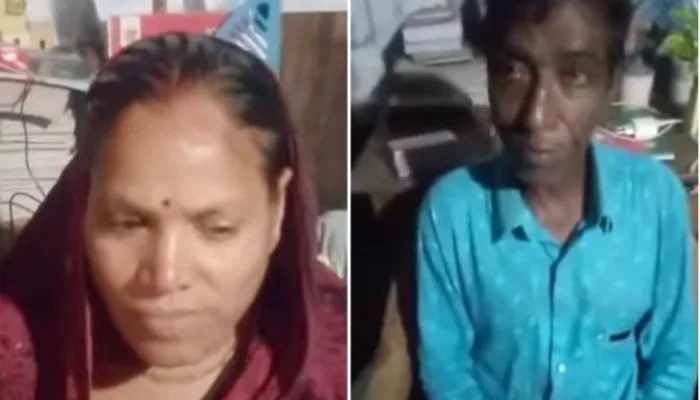
Case Summary
In Sreeramkathi Union of Nazirpur Upazila in Pirojpur District, Bangladesh, a Hindu family was subjected to sustained intimidation, property interference, threats, and attempted physical assault by a few influential local individuals. The perpetrators used their local influence and political connections to terrorise the family. They forcibly cut down and removed trees from Anil Baral's property, leaving the family living in constant fear. The incident came to light after the family of Anil Baral stated that influential local individuals had forcibly entered their property and cut down and taken away trees standing on their land. The family approached the police and lodged a complaint. Police personnel visited the location, prompting the accused to temporarily leave the area. However, the family stated that they returned immediately after the police departed and resumed threatening and intimidating them. The harassment escalated to the point that Anil Baral went into hiding for several days out of fear for his life. During this period, his son attempted to return home to prepare for an examination scheduled for the following day. He was chased by the accused, who attempted to assault him and forced him to flee to save himself. The continuous threats left the family unable to live together safely in their own home. Family members stated that they no longer felt secure even inside their residence. Anil Baral's wife, Tulika Rani Baral, broke down in tears while describing the family's ordeal and the constant fear under which they were living. The family also communicated the details of the intimidation through mobile phone calls while seeking help. The family further stated that the perpetrators invoked the names of Jamaat-e-Islami, a Muslim extremist group, and the Bangladesh Nationalist Party to reinforce their intimidation. They described the accused as influential local individuals who used political names and connections to create fear and exert pressure. The family stated that the threats repeatedly resumed after police officers left the area. They expressed dissatisfaction with temporary police intervention and sought immediate administrative protection, a proper investigation, verification of the allegations, and legal action against those responsible. The prolonged intimidation left Anil Baral in hiding, his son unable to remain safely at home, and the family dispersed out of fear. They appealed to the administration, relevant authorities, and civil society to ensure their security and enable them to return to their home without fear. This incident occurred against the backdrop of the historical persecution faced by Hindus in Bangladesh. While the Hindu minority has endured discrimination, targeted violence, and religious hostility over decades, such persecution has intensified in distinct spurts during periods of political and social instability. The latest major escalation began after the ouster of Sheikh Hasina’s government in August 2024, continued after the death of Sharif Osman Bin Hadi in December 2025, and resurfaced in the immediate aftermath of the 13th National Parliamentary Election in 2026. Following the ouster of Sheikh Hasina, multiple incidents involving attacks on Hindu homes, temples and religious institutions were documented, alongside intimidation, arson and mob violence targeting Hindu localities. The Hinduphobia Tracker recorded 336 incidents involving the Hindu minority during this period, reflecting the scale of the escalation and the continuing vulnerability of Hindus in Bangladesh. A further spurt of violence followed the death of Sharif Osman Bin Hadi, a Muslim political activist and student leader known for his anti-Hindu and anti-India rhetoric, in December 2025. In the aftermath, Hindu communities were subjected to retaliatory violence, with Hindu homes and properties selectively attacked and several families forced to flee. Among the victims was Dipu Chandra Das, who was lynched and whose body was subsequently set ablaze by a Muslim mob over false blasphemy allegations. The Hinduphobia Tracker documented 51 incidents of anti-Hindu violence in the period following Hadi’s death alone, further illustrating how existing hostility towards the Hindu minority intensified during moments of communal mobilisation. During the same period, posters and written material calling for the extermination of Hindus were also displayed in public spaces. Such rhetoric, when viewed alongside incidents of arson, vandalism, assault and targeted intimidation, reflected an environment in which hostility towards Hindus was not merely episodic but repeatedly resurfaced in more intense forms during periods of unrest. The most recent escalation followed the 13th National Parliamentary Election in 2026. In the immediate aftermath of the election results, Hindu families in districts including Noakhali, Rangpur, Nilphamari, Sylhet, Thakurgaon and Dinajpur faced attacks involving arson, looting, assault and vandalism of Hindu homes and temples. In several instances, Hindu properties were selectively targeted, and families were threatened with displacement.
Why it is Hate Crime ?
This case is being added to the Undecided Database because it lacks clear evidence that religious hatred was the immediate motive behind the crime. Although a Hindu family was harassed, repeatedly threatened, forced into hiding, and driven from their home, and the perpetrators invoked the names of Jamaat-e-Islami and the Bangladesh Nationalist Party to intimidate the victims, the available evidence does not conclusively establish that the family's Hindu identity was the direct reason for the attack. The circumstances nevertheless raise legitimate suspicion. Hindus in Bangladesh have faced repeated episodes of persecution, communal violence, attacks on temples, sexual violence against Hindu women, forced displacement, and intimidation, particularly during periods of political instability following the exile of Sheikh Hasina. Against that broader backdrop, the targeting of a Hindu family through sustained threats and harassment naturally raises the question of whether religious identity played a role, even if it has not been established in this specific case. The suspicion is further strengthened by the perpetrators' repeated invocation of Jamaat-e-Islami and the Bangladesh Nationalist Party while threatening the victims. Jamaat-e-Islami is an Islamic extremist organisation with a long history of anti-Hindu communal violence in Bangladesh, including attacks on Hindu communities and temples, rapes of Hindu women, forced conversions, and religious persecution. Similarly, members of the Bangladesh Nationalist Party have also been implicated in incidents of anti-Hindu violence, particularly during periods of political unrest following Sheikh Hasina's exile. The fact that the perpetrators invoked both organisations raises suspicion that the intimidation may have been directed at the victims because of their Hindu identity. However, it is equally plausible that the incident arose from a non-religious dispute, such as a local property or land conflict in which influential individuals used political names as instruments of intimidation rather than expressing religious animosity. None of the presently available case details establishes that the perpetrators targeted the family because they were Hindus, nor does the evidence demonstrate religious hostility as the driving force behind the crime. The Hinduphobia Tracker maintains strict parameters for classifying incidents as hate crimes. Since this case does not presently meet the evidentiary threshold required to establish a clear religious motive, it will remain in the Undecided Database. If further evidence emerges demonstrating that anti-Hindu hostility was the motivating factor behind the intimidation and persecution, the case will be reclassified and added to the Tracker's hate crime database. Disclaimer: The Hinduphobia Tracker records an incident based on the date on which it occurred, rather than when it was subsequently reported or published. In this case, the exact date on which the intimidation, property interference, threats and attempted assault against Anil Baral’s family began could not be conclusively established from the available material. Therefore, 21st September 2026, the date on which the incident was published by the news media, has been recorded as the indicative incident date for documentation purposes only.
Victim Details
Total Victim
3
Deceased
0
Gender
- Male 2
- Female 1
- Third Gender 0
- Unknown 0
Caste
- SC/ST 0
- OBC 0
- General 0
- Unknown 3
Age Group
- Minor 1
- Adult 2
- Senior Citizen 0
- Unknown 0


Case Status
Unknown


Perpetrators Details
Perpetrators
Unknown
Perpetrators Range
Unknown
Perpetrators Gender
unknown
 Sources




