Hindus lured for religious conversion by Christian pastor under guise of prayer gathering
 Anuppur, Madhya Pradesh, India
  18 September, 2026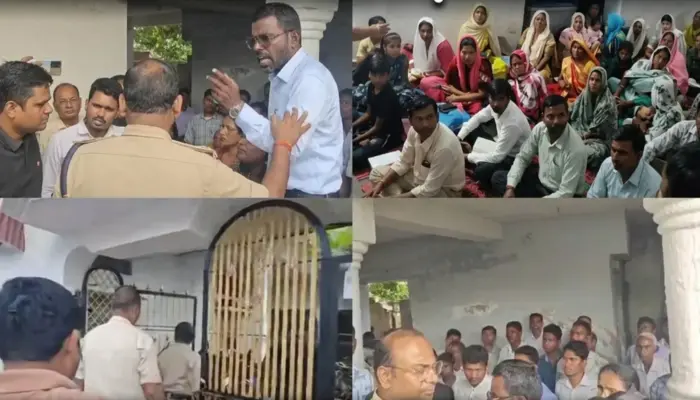
Case Summary
In Ward 9 of Anuppur district, Madhya Pradesh, Hindus were lured into religious conversion by Christian Pastor Yeshu Das, who organised a prayer meeting at this house. According to reports, the prayer gathering was organised on 19 September 2026 at the residence of Pastor Yeshu Das, which came under scrutiny after local residents and complainants stated that religious conversion activities were being conducted under the guise of a family function. A large number of Hindu individuals had gathered at the house, with attendees arriving from Madhya Pradesh, Chhattisgarh and other states, including Kerala. The complainants informed Kotwali police that mass prayers and activities aimed at religious conversion were taking place at the residence and that no permission had been obtained from the police or district administration for the gathering. Police subsequently reached the house and questioned those present. However, Pastor Yeshu Das and the homeowner claimed that the gathering was a private family function attended by relatives and acquaintances. Police station in-charge Sanjay Ashok Ekka said that the concerns regarding the gathering and religious conversion were being investigated and that a list of 55 people present at the site had been prepared, with statements being recorded. He stated that further legal action would be taken on the basis of facts and evidence emerging from the investigation.
Why it is Hate Crime ?
This case has been added to the tracker under the primary category of: Predatory Proselytisation. Within this, the sub-category selected is: Proselytisation by grooming, brainwashing, manipulation or subtle indoctrination. Religious brainwashing essentially means the often subtle and forcible indoctrination to induce someone to give up their religious beliefs to accept contrasting regimented ideas. Religious grooming or brainwashing also involves propaganda and manipulation. It involves the systematic effort, driven by religious malice and indoctrination, to persuade “non-believers’ to accept allegiance, command, or doctrine to and of a contrasting faith. Cases of such grooming or brainwashing are far more nuanced than direct threats, coercion, inducement and violence. In such cases, it is often seen that there is repeated, subtle and continual manipulation of the victim to induce disaffection towards their own faith and acceptance of the contrasting faith of the perpetrator. While subtle indoctrination is widely acknowledged as predatory, an element which is often understated in such conversions or the attempts of such conversion is the role of loyalty and trust which might develop between the perpetrator and the victim. Fiduciary relationships are often abused to affect such religious conversion. For example, an educator transmitting religious doctrine of a competing faith to a Hindu student. The Hindu student is likely to accept what the teacher is transmitting owing to existence of the fiduciary relationship. The exploitation of the fiduciary relationship to religiously indoctrinate victims would also be included in this category. Since the underlying animosity towards the victim’s faith forms the basis of predatory proselytization, such cases are considered religiously motivated hate crimes. This case was significant from a hate-crime perspective because the reported conduct centred on targeting individuals on the basis of their existing religious identity with the objective of inducing them to abandon their faith and adopt another religion. Unlike an ordinary dispute or private gathering, the complaint concerned religious conversion activity, making the religious identity of the persons involved central to the reported conduct. The religious dimension was particularly significant because conversion seeks to alter a person's religious affiliation, which is a fundamental component of religious identity. Where conversion is pursued through organised religious activity directed at members of another faith, the conduct can constitute an attack on the targeted community's religious identity when it involves pressure, inducement, deception or other means that undermine genuine and voluntary choice. The reported use of a purported family function as the setting for the activity was also relevant because, if established, it would indicate that the religious nature of the gathering was not transparently disclosed to those being approached. The reported participation of people who had travelled from multiple states was relevant to understanding the scale and organisation of the gathering, although their presence by itself did not establish a conversion attempt. Similarly, the preparation of a list of 55 attendees and the recording of their statements demonstrated that police considered the circumstances sufficiently serious to warrant an investigation. These facts provided the basis for examining whether the gathering involved an organised effort to target people on religious grounds rather than merely a private family event. The potential hate-crime dimension therefore arose from the reported targeting of religious identity itself. If the investigation establishes that individuals were deliberately subjected to conversion efforts because they belonged to another faith, particularly through concealed or deceptive means, the conduct would represent an attempt to interfere with their religious identity and exercise of faith. However, as the police investigation was still ongoing and the available reports did not establish that an unlawful conversion actually occurred, the hate-crime classification should remain contingent on the evidence emerging from the investigation.
Victim Details
Total Victim
55
Deceased
0
Gender
- Male 0
- Female 0
- Third Gender 0
- Unknown 55
Caste
- SC/ST 0
- OBC 0
- General 0
- Unknown 55
Age Group
- Minor 0
- Adult 0
- Senior Citizen 0
- Unknown 55


Case Status
Complaint filed


Perpetrators Details
Perpetrators
Christian Extremists
Perpetrators Range
From 2 To 5
Perpetrators Gender
male
 Sources




