Hindu identity targeted: Indian politician’s remarks advanced anti-Hindu narrative, citing Hindu right-wing communalism as threat to India
 New Delhi, Delhi, India
  17 September, 2026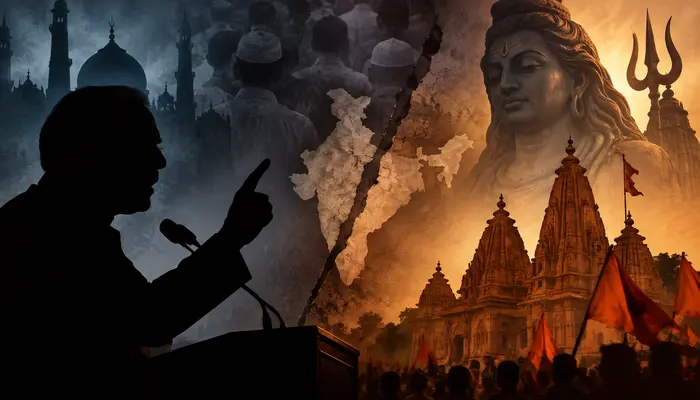
Case Summary
In New Delhi, Hindu identity was placed at the centre of remarks by Muslim politician and former Vice President of India, Hamid Ansari, who referred to Hindu right-wing communalism as a danger to India while discussing Hindu identity, cultural nationalism, religious identity and political power. The remarks further associated these issues with intolerance, the creation of “otherness”, insecurity and the treatment of citizens based on faith, placing Hindu political and cultural identity at the heart of the address. The remarks were made on 18 September 2026 at the 3rd A.G. Noorani Memorial Lecture at the India Islamic Cultural Centre in New Delhi. Titled “Remembering a Polymath: The Life and Times of Abdul Ghafoor Noorani”. The event focused on Abdul Ghafoor Noorani, the late jurist, constitutional expert and author. Ansari’s address examined Noorani’s writings on India, nationalism, religion and political identity. A central part of the address was Noorani’s 2019 book, The RSS: A Menace to India. Ansari referred to the book while discussing Noorani’s understanding of Hindu political and cultural nationalism. The book's introduction contained two Urdu couplets. The first read, “Sar zamin-e-Hind par aqwam-e-aalam ke, Firaq, Kafile aate rahe aur Hindustan banta gaya,” translated as, “On the soil of Hind, caravans from all over the world kept coming, and so Hindustan was made.” The second couplet read, “Jab gulistan ko lahoo ki zaroorat padi, Sabse pehle hamari hi gardan kati. Phir bhi kehte hain humse ye ahl-e-chaman, Ye chaman hai hamara, tumhara nahin.” It was translated as, “When the country needed blood, it was our necks that were severed first. Yet its guardians tell us that this nation is ours and not yours.” Ansari then brought up a historical statement attributed to former Prime Minister Jawaharlal Nehru. Noorani had cited the statement in the introduction to The RSS: A Menace to India in connection with a meeting of Ministry of External Affairs officials. Former Foreign Secretary Jagat Singh Gundevia recorded the statement. The words cited during the lecture were that the danger to India was “not communism” but “Hindu right-wing communalism”. The reference was presented as an old statement by Nehru recorded in Noorani’s book. The historical quotation nevertheless became the central Hindu-related element of the address, as it explicitly placed Hindu right-wing communalism in the context of a danger to India. The speech then moved from the historical reference to contemporary political developments. Ansari discussed what he presented as a challenge to civic nationalism from a “new and imaginary practice of cultural nationalism”. He said an electoral majority was being presented as a religious majority and linked this to the pursuit of political power. The remarks further addressed the role of religious identity in public life. They referred to distinguishing citizens on the basis of faith, giving vent to intolerance, creating “otherness”, and promoting disquiet and insecurity. The discussion therefore placed Hindu cultural and political nationalism within a wider argument about religious identity and the nature of Indian citizenship. Ansari also referred to recent trends as challenges to the rule of law and said that such developments needed to be contested both politically and legally. The speech consequently moved from Noorani’s writings and Nehru’s historical observation to contemporary questions concerning nationalism, religion, political authority, citizenship and constitutional governance. The remarks subsequently became the subject of a political controversy centred on their treatment of Hindu right-wing communalism. Union Minister Kiren Rijiju objected to the focus on Hindu communalism and said that there would be no corresponding discussion of extremists, religious fanatics, terrorists and separatists. Bharatiya Janata Party spokesperson Pradeep Bhandari connected the remarks with Rahul Gandhi and referred to a 2009 statement concerning Hindu groups and Lashkar-e-Taiba. Bhandari characterised the Congress party as “anti-Hindu” and “pro-terror”, placing Ansari’s remarks within a broader political dispute over the treatment of Hindu organisations and Hindu identity. The Bharatiya Janata Party Scheduled Tribe Morcha similarly connected the episode with what it described as Congress’s “anti-Hindu politics” and referred to Rahul Gandhi’s earlier remarks concerning Hindu groups and terrorism. Vishwa Hindu Parishad spokesperson Surendra Jain also criticised the remarks and described them as an insult to India’s traditions, bringing the controversy into a wider discussion about Hindu civilisational and cultural identity. The controversy thus centred on how the address presented Hindu identity, Hindu right-wing communalism, and cultural nationalism, alongside Noorani’s 2019 book, its two Urdu couplets, and the historical Nehru statement recorded through Jagat Singh Gundevia. The speech also touched on civic nationalism, religious identity, political power, intolerance, “otherness”, insecurity, the rule of law, and legal and political contestation.
Why it is Hate Crime ?
The primary category selected in this case is: Hate speech against Hindus. The subcategory selected is: Anti-Hindu slurs, mocking faith. Anti-Hindu slurs and the deliberate mocking of the Hindu faith owing to religious animosity involve the usage of derogatory terms, stereotypes, or offensive references to religious practices, symbols, or figures. One of the common anti-Hindu slurs used against Hindus is “cow-worshipper” and “cow piss drinker”. The intention of using this term is to demean and mock Hindus as a group and their religious beliefs since Hindus consider the cow holy. Additionally, some symbols and the slurs attached to them have a historical context that exacerbates the insult, hate, stereotyping, dehumanisation and oppression against Hindus. Cow worship has been used for centuries to denigrate Hindus, insult their faith and oppress Hindus specifically as a religious group. There has been overwhelming documentation about how cow slaughter has been used to persecute Hindus with cow meat being thrown in temples and places of worship. There has also been overwhelming documentation where cow meat (beef) has been force-fed to Hindus to either forcefully convert them to Islam or denigrate their faith. Apart from cow worship, the Swastika – which holds deep religious significance for the Hindus – has also been misinterpreted and distorted to use as a slur against Hindus. Similarly, the worship of the Shivling has been used by supremacist ideologies and religions to denigrate Hindus owing to religious animosity. Such slurs and denigration stem out of inherent animosity and hate towards Hindus and their faith, therefore, it is categorised as hate speech targeted at Hindus specifically owing to their religious identity. The incident qualified as a religiously motivated hate speech case because a political leader targeted Hindu identity by portraying Hindu right-wing communalism as a danger to India and associating Hindu cultural nationalism and religious identity with intolerance, “otherness” and insecurity. The remarks therefore went beyond criticism of government policy or political ideology and placed Hindu religious and cultural identity at the centre of a negative political characterisation. The most direct religious marker was the characterisation of Hindu right-wing communalism as a danger to India through the historical Jawaharlal Nehru quotation cited in the speech. The formulation placed the word “Hindu” directly within a description of what was identified as a national danger, thereby associating a particular strand of Hindu political identity with a threat to the country. The significance lay in the religious identity being incorporated into the description of the threat rather than the criticism being restricted to a specific policy, political decision or individual. Against this backdrop, cultural nationalism was presented as a problematic political development when associated with a religious majority and political power. The remarks described a movement away from civic nationalism towards what was termed a “new and imaginary practice of cultural nationalism”. They further connected an electoral majority with its presentation as a religious majority and with the exercise of political power. This framing placed Hindu-majority cultural expression within a negative political construct, because cultural nationalism was discussed alongside religious majoritarianism and the acquisition of political power. Another significant marker emerged from the association of religious identity with distinctions between citizens, intolerance, “otherness”, disquiet and insecurity. The remarks addressed the separation of citizens according to faith and connected this process with intolerance and the creation of “otherness”. In the context of the wider speech, which had already focused on Hindu right-wing communalism and cultural nationalism, these references extended the negative framing into questions of religious identity and social conduct. The concern was that Hindu identity and its political expression were being discussed within a framework of exclusion, intolerance and insecurity, rather than solely as matters of religious tradition, cultural heritage or national identity. A further marker came through the reference to The RSS: A Menace to India, which brought the Rashtriya Swayamsevak Sangh into the discussion alongside Hindu political and cultural nationalism. The Rashtriya Swayamsevak Sangh is a Hindu nationalist organisation associated with the promotion of Hindu cultural and national identity and the interests of the Hindu community. The title itself characterised the organisation as a “menace to India”, while the surrounding discussion addressed Hindu right-wing communalism, cultural nationalism and religious identity. This brought an organisation associated with Hindu nationalism into the same conceptual frame as the discussion of a supposed national danger. The significance rested in this convergence: Hindu identity, Hindu nationalism, the Rashtriya Swayamsevak Sangh and the language of threat were discussed within a closely connected narrative. Lastly, the two Urdu couplets cited from Noorani’s book added a religious dimension by framing national belonging through a contrast between communities. The second couplet was particularly significant because it portrayed one community as having sacrificed for the country while being told that the nation belonged to others, creating a distinction between those who were presented as rightful claimants to India and those whose belonging was being questioned. This framing placed Hindu-majority ownership or cultural claim to India in a negative light. Taken together, these elements placed Hindu identity, Hindu nationalism, cultural nationalism and the Rashtriya Swayamsevak Sangh within a broader political narrative concerning communalism, religious identity, political power and national belonging. Framing Hindu political and cultural identity as associated with communalism and national danger formed the basis for interpreting the episode as hostile towards Hindu identity. Accordingly, this case has been documented in the Hinduphobia Tracker's Hate Crime Database as an instance of religiously motivated hostility directed against Hinduism and the religious identity of the Hindu community.


Case Status
Unknown


Perpetrators Details
Perpetrators
Muslim Extremists
Perpetrators Range
One Person
Perpetrators Gender
male
 Sources




