Hindu woman targeted for Islamic conversion by Muslim man posing as Hindu in Alirajpur, Madhya Pradesh
 Alirajpur, Madhya Pradesh, India
  17 September, 2026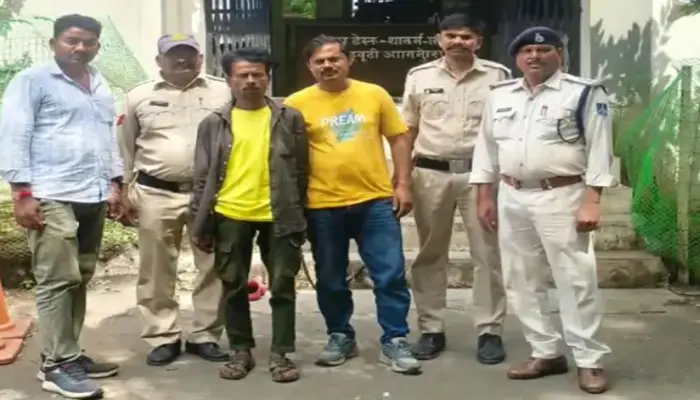
Case Summary
In the Sondwa area of Alirajpur district, a Hindu woman was deceived and pressured for religious conversion to Islam by a Muslim man, Javed Mansoori, who concealed his identity by pretending to be a Hindu man named Sachin Yadav. The accused, Javed Mansoori, manipulated the victim, who was his landlord's wife, deliberately insulted her faith, and subjected her to death threats to force the conversion. Originally from Nisarpur in Dhar district, Mansoori moved into the victim's property as a tenant using his disguised Hindu identity. During his tenancy, he systematically influenced the Hindu woman and pressured her to abandon her faith. To further this religious conversion, he took the victim to an Islamic religious shrine. Alongside the religious manipulation, Mansoori and his wife, Aarti, engaged in fraudulent activities against the victim's family. When the deception was uncovered, the couple continuously intimidated the victim and issued death threats. Following the discovery of the identity concealment and the continuous harassment, a formal complaint was lodged at the Sondwa police station. Based on the complaint, the police registered a First Information Report (FIR), numbered 239/26, against Mansoori and Aarti. The authorities invoked Sections 3 and 5 of the Madhya Pradesh Freedom of Religion Act and the Scheduled Castes and Scheduled Tribes (Prevention of Atrocities) Act. Legal sections for fraud, criminal intimidation, and hurting religious sentiments were also applied. After a period on the run, police apprehended Mansoori in the Dahi area of Dhar district. Law enforcement officials subsequently launched a search operation to locate and arrest his absconding wife. Following his arrest, the police produced Mansoori in court. Subsequently, je was sent to jail on court orders.
Why it is Hate Crime ?
This case is being added to the tracker under the primary category- Crimes against women in relationships and other sexual crimes. Within this, the subcategory selected is- Man pretends to be Hindu. The tertiary category selected is- Name Changed. When a non-Hindu man pretends to be a Hindu to deceive a Hindu woman into a relationship, the act is seen as triggered by malafide intentions. In some cases, the woman eventually accepts the man’s original religious identity and converts after the man’s identity is revealed. These cases could be argued as cases of religious brainwashing and a result of the pressure a woman feels after getting into a relationship with a man. The woman, it can be argued, also changed her religious identity because of the stigma she believes she might face if she chooses to walk out of a deceptive relationship. However, for the purpose of documenting hate crimes, the cases in this subcategory are limited to those where there is explicit violence aimed at religious conversion against the wishes of the victim (force-feeding beef, blackmailing with intimate videos, rape on refusal to convert, etc), or if the woman herself complains of the man’s religious deception. In such cases, it is established that the deception of the non-Hindu man had a specific aim of religious conversion or targeting of the victim due to her Hindu religious identity, therefore, making it a religiously motivated hate crime. The second Primary Category here is- Predatory Proselytisation. Within this, the subcategory selected is Harassment, threats, coercion for conversion. Harassment covers a wide range of behaviours of an offensive nature. It is commonly understood as behaviour that demeans, humiliates, and intimidates a person, including threats and coercion. Harassment and threats, in this case, find their root on discriminatory grounds which has the effect of nullifying a person’s rights or infringing upon his freedom to exercise his right specifically owing to the victim’s religious identity. Verbal and physical threats and psychological or physical harassment are often used against Hindu victims because they choose to practice their professed religion. Religious harassment also includes forced and involuntary conversions by harassment, threats or coercion. Coercion includes intimidatory tactics like force-feeding a Hindu victim beef to convert to another religion, forceful circumcision etc. In several cases documented, non-Hindu perpetrators or those who harbour specific animosity towards Hinduism, harass victims simply based on their religious identity. Such cases often also include harassment to ensure the Hindu victim abandons his/her professed religion and adopts the religion of the perpetrator. Such cases where Hindu victims are harassed to convert to the perpetrator’s religion are rooted in animosity towards the victim’s religious identity and are therefore documented as religiously motivated hate crimes. The other sub category would be- Attempting to convert/converting by denigrating Hinduism In several cases, Hindus are converted or an attempt is made to convert Hindus by denigrating their faith, Hinduism. In such cases, the Hindus associate with the non-Hindu perpetrators often by choice and then, the attempt to convert them by insulting their faith, showing the faith down etc begins. An example of this would be a non-Hindu gathering where the Hindus are attending the gathering of their own free will. However, once they attend the gathering, there is an explicit attempt to convert them by abusing their faith and hailing the faith of the perpetrator. The denigration of the Hindu faith is often based on misrepresentation of the Hindu faith, its doctrine and scriptures and insult to espoused traditions if not blatant lies about Hindu beliefs and ways. Such conversions or attempts at conversions are driven by animosity towards the Hindu faith and are therefore documented as religiously motivated hate crimes. The incident qualified as a religiously motivated hate crime because the perpetrator used calculated religious deception to specifically target a Hindu woman. By deliberately concealing his Muslim identity and assuming a Hindu name to gain entry into a Hindu household, he demonstrated clear mala fide intent. This itself is a clear manifestation of bias and malicious intent towards the victim's religion. By concealing his true identity, he exploited her trust, targeting her under false pretences. This indicates a premeditated intent to manipulate her based on her religious background. In cases like these, the tactic of adopting a false Hindu identity to manipulate and "ensnare" a Hindu individual is not just an act of personal betrayal but can also be interpreted as an expression of disdain or disregard for Hinduism and its customs that reflects a deeper animosity towards Hindus and their beliefs.This identity fraud was not incidental; it was a specific predatory tactic used to bypass boundaries, build false trust, and target the victim explicitly owing to her Hindu religious identity. Furthermore, the accused actively sought to sever the victim's ties to her faith by systematically insulting Hinduism. To facilitate the conversion, he employed the deliberate denigration of Hindu beliefs to alienate the woman from her religious roots. This targeted abuse of her espoused traditions exposed a deep-seated animosity towards the Hindu faith, making the attempt to convert her an act of religious hostility rather than mere persuasion. The animosity escalated into severe harassment when the perpetrators used death threats to force the religious conversion. This coercive behaviour aimed to intimidate the victim into abandoning her professed religion entirely against her will. Using extreme psychological pressure and threats of violence to force a Hindu victim to adopt another religion is a direct infringement of her fundamental rights, rooted entirely in discriminatory hatred. Pressuring a Hindu individual to discard her religious faith and embrace another was a direct attack on her religious identity and dignity. It was not a matter of personal choice; it was coercion rooted in hostility towards the victim's Hindu identity. Such an attempt reflects religious animosity because the act was not simply about personal differences but about erasing the victim’s Hindu faith, making it a religiously motivated crime. Ultimately, the entire sequence of actions was driven by a predatory desire to erase the victim's Hindu identity. The combination of a false Hindu identity to trap the victim, abusing the Hindu faith to brainwash her, and applying coercive threats to finalise the conversion established a clear pattern of religious persecution. Consequently, the targeted, multifaceted hostility directed at the Hindu woman confirmed the incident as a hate crime. Such actions stem from inherent hostility towards the victim's professed faith, since Abrahamic faiths believe that any non-adherent to the faith is subject to being dehumanised till they convert. Such acts were not merely personal crimes; they were rooted in a desire to dominate and erase the religious identity of the victim. Since such predatory actions stem from doctrinal animosity towards the Hindu faith and its adherents, this case is being documented as a religiously motivated hate crime. Disclaimer: The Hinduphobia Tracker records crimes based on when the victim’s ordeal begins rather than when they are reported by the media. In this case, media reports did not specify the exact date when the accused began inducing the woman to convert to Islam. Hence, 18 September 2026, the date of the media report documenting the case and police action, has been selected as the indicative incident date. This is recorded for documentation purposes only.
Victim Details
Total Victim
1
Deceased
0
Gender
- Male 0
- Female 1
- Third Gender 0
- Unknown 0
Caste
- SC/ST 1
- OBC 0
- General 0
- Unknown 0
Age Group
- Minor 0
- Adult 1
- Senior Citizen 0
- Unknown 0


Case Status
Arrested


Perpetrators Details
Perpetrators
Muslim Extremists
Perpetrators Range
From 2 To 5
Perpetrators Gender
both
 Sources




