Hindu temple targeted, sacred idols of Hindu deities desecrated in Udaipur, Rajasthan
 Udaipur, Rajasthan, India
  16 September, 2026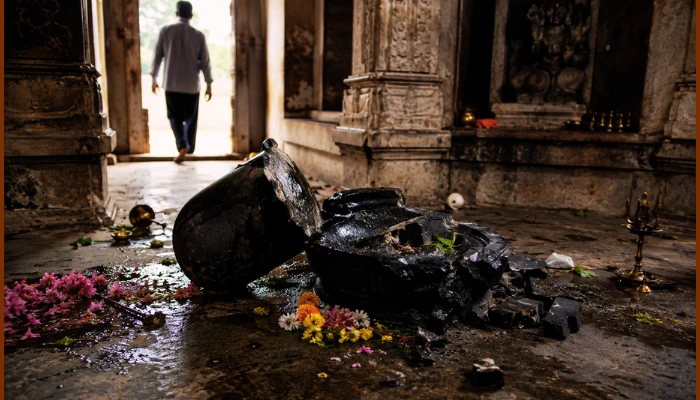
Case Summary
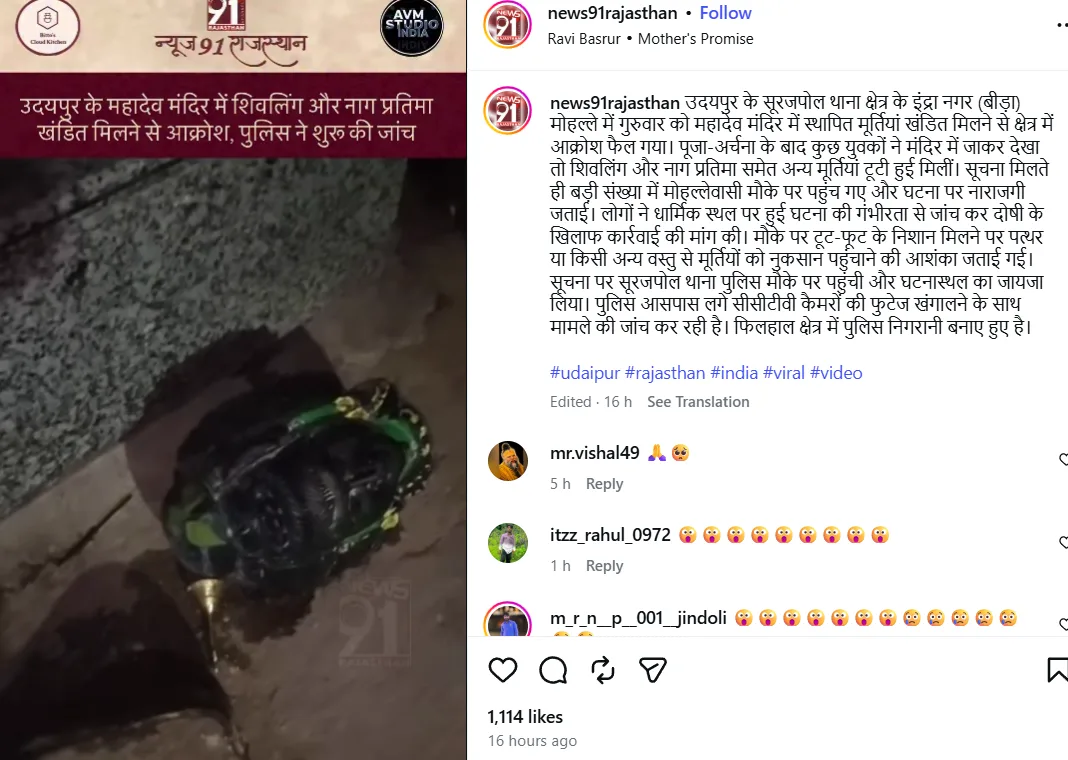
In Rajasthan’s Udaipur, a Hindu temple known as the Pipleshwar Mahadev Temple was targeted by unidentified miscreants, who desecrated the sacred idols of Hindu deities inside. The Shivalinga, the statue of the serpent deity (Naag Devta), along with other idols, were found broken. According to reports, the temple is located in the Indira Nagar (Bida) area under the jurisdiction of the Surajpol police station. The incident took place on Thursday, 17 September 2026. The temple priest performed puja and left at around 7 PM. At around 8 PM, another person arrived at the temple and found the Shivalinga vandalised. He immediately informed the people living nearby, following which the news spread across the neighbourhood and a large number of residents gathered at the temple. Residents who reached the spot observed signs of damage to the idols. Prima facie, it was suspected that the idols had been damaged using a stone or some other object. Members of a social organisation also reached the spot after learning about the incident and demanded that the accused be identified and arrested at the earliest. The incident triggered anger among residents, who said that the desecration of idols at a religious site had hurt their religious sentiments. Following the gathering of residents, police from the Surajpol police station reached the spot along with DSP Chhavi Sharma. Police inspected the temple premises and the surrounding area and began gathering information about the incident. Police attempted to pacify the agitated Hindu residents, but the protesters remained adamant about demanding the immediate arrest of those responsible. The Indira Nagar (Bida) Vikas Samiti lodged an FIR at the Surajpol police station in connection with the incident. Police subsequently began investigating the case and examining CCTV footage from cameras installed in the surrounding area to identify the person or persons involved. The footage was being analysed to trace suspicious activities and establish the movements of individuals present in the vicinity around the time of the incident. As the investigation continued, a large number of residents gathered outside the Surajpol police station. The protesters warned that they would launch further agitation if the perpetrators were not arrested and action was not taken against them. Police assured the residents that the matter was being investigated and that efforts were underway to identify and apprehend those responsible. At the time of reporting, the identity of the perpetrators remained unclear. Police continued to investigate the incident based on CCTV footage and other available evidence and maintained a presence in the area to monitor the situation amid the gathering and movement of people.
Case Images

Why it is Hate Crime ?
This case is being added to the tracker under the primary category: Attack on Hindu religious representations. The subcategory selected is: Desecration of Hindu religious symbol. Icons and symbols or a religious representation of a spiritual ideal are widely revered in Hinduism. Iconography is of vital significance in the Hindu milieu. It helps connect people’s spiritual beliefs with the real world. Iconography within the Hindu faith takes several shapes and forms. Murtis are of most significance to Hindus, to which daily rituals, prayers and offerings are done. Besides the murtis, there are several other symbols which have deep significance in the Hindu faith – the Om and Swastika for example. Since these Hindu religious symbols hold paramount importance in Hinduism, any desecration of symbols, icons, murtis, religious representations and manifestations, is driven by animosity towards the faith itself which manifests itself through these murtis, icons and symbols. Therefore, any desecration of these Hindu religious symbols and representations is considered religiously motivated hate crimes under this category. The other subcategory selected is: Attack on Temples. In Hinduism, a temple is the abode of the Deity. The Deity in the Temple is consecrated, thereby, making it a real, breathing entity. Hindus believe that not just the Deity but the temple premises itself are sacred to Hindus since Hindus hold the faith that the entire Temple space is an amalgamation of the divine energy of the deity. Given the central significance of Temples in Hindu Dharma, any attack against a Hindu Temple or its peripheral premises is an attack on the faith itself and is born out of animosity towards the faith, of which, the Temple is a central tenet. Any manner of attack against a Temple and/or its premises would therefore be considered a religiously motivated hate crime. This case is a clear example of a religiously driven hate crime, as the perpetrators targeted a Shiva temple in Rajasthan and desecrated sacred idols of Hindu deities inside it. To understand the severity of this case, one has to understand the religious significance that Hindu idols hold. In Hindu traditions, a murti is not merely a physical object or artistic representation but a sacred form through which a deity is worshipped and invoked during rituals, prayers, offerings and darshan. The Shivalinga holds particular religious significance as a revered representation of Shiva and occupies a central place in Hindu worship, with devotees offering prayers, water, milk and other ritual offerings to it. Similarly, Naag Devta idols represent the veneration of nāga (serpent) deities and hold an important place in Hindu religious traditions, where devotees worship them and seek divine protection and blessings. The other idols installed in the temple are likewise sacred objects of worship, representing Hindu deities before whom devotees offer prayers, perform rituals and seek blessings. Consequently, these idols form an integral part of the religious life and worship practices of Hindu devotees. Consequently, the destruction of these idols constituted an act of religious desecration directed at sacred Hindu representations. The Shivalinga, the Naag Devta idol and the other deities’ idols were not ordinary objects but revered forms of worship that hold deep religious significance for Hindu devotees. Damaging them therefore demonstrated a direct disregard for the sacredness accorded to these representations and the religious practices associated with them. By physically destroying objects that devotees worship, offer prayers to and regard as manifestations of the divine, the perpetrators violated their sanctity and caused profound religious hurt to the Hindu community. The fact that the desecration took place inside a Hindu temple further aggravated the religious nature of the offence. A temple is a sacred space dedicated to the worship of deities, where devotees undertake prayers, rituals, festivals and other religious observances. The sanctity of the temple is intrinsically connected with the sacred idols installed within it, the rituals performed around them and the devotees who come there to worship. Desecrating the idols within the temple therefore violated not only the sanctity of the sacred representations but also that of the place of worship itself. Targeting a Hindu temple in this manner causes deep hurt to the religious sentiments of Hindu devotees and represents a direct affront to the sanctity of their place of worship. Such acts are rooted in deep-seated hostility towards Hinduism and its adherents, making this a religiously driven hate crime. In this case, it is also important to note that although the identity of the perpetrators was unknown at the time of writing this report, their actions demonstrate clear hatred towards Hinduism and Hindu temples. Therefore, this case is being added to the hate crime database of the Hinduphobia Tracker.


Case Status
Complaint registered


Perpetrators Details
Perpetrators
Unknown
Perpetrators Range
Unknown
Perpetrators Gender
unknown
 Sources




