Sanctity of Ganesh Chaturthi celebrations desecrated; obscene dance performed during a religious programme in Sitamarhi, Bihar
 Sitamarhi, Bihar, India
  16 September, 2026
Case Summary
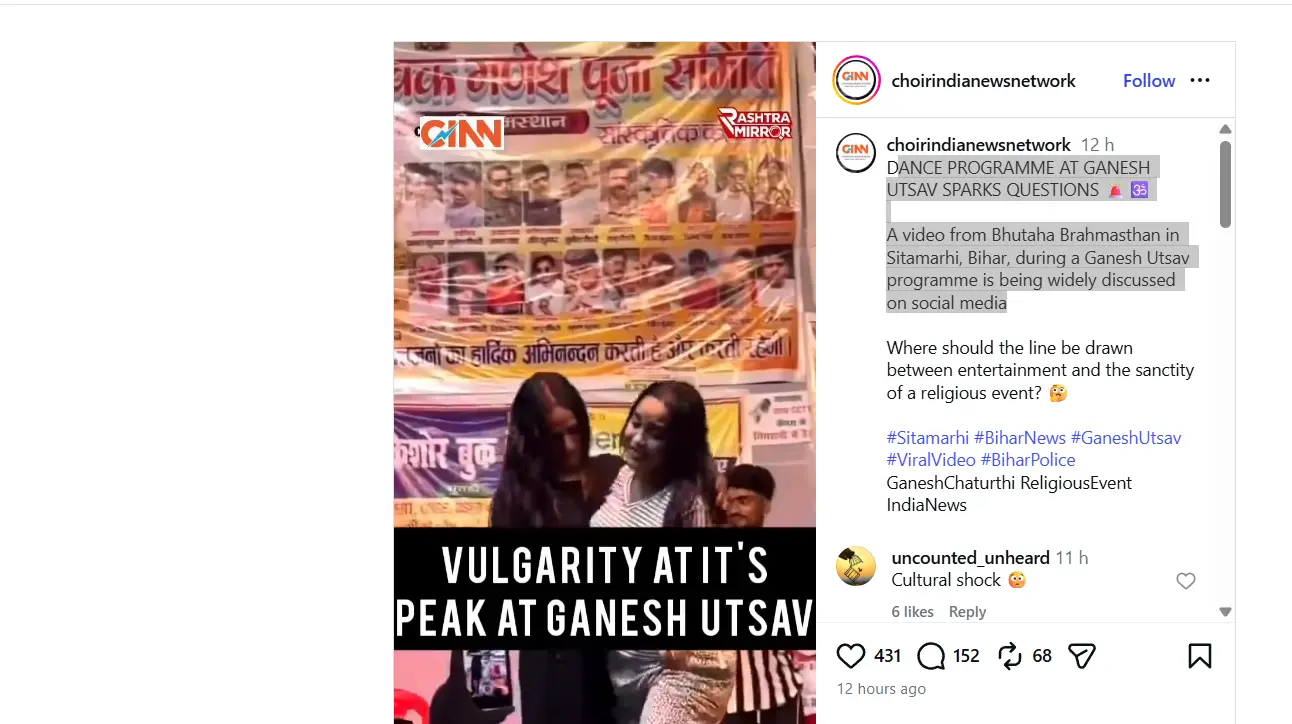
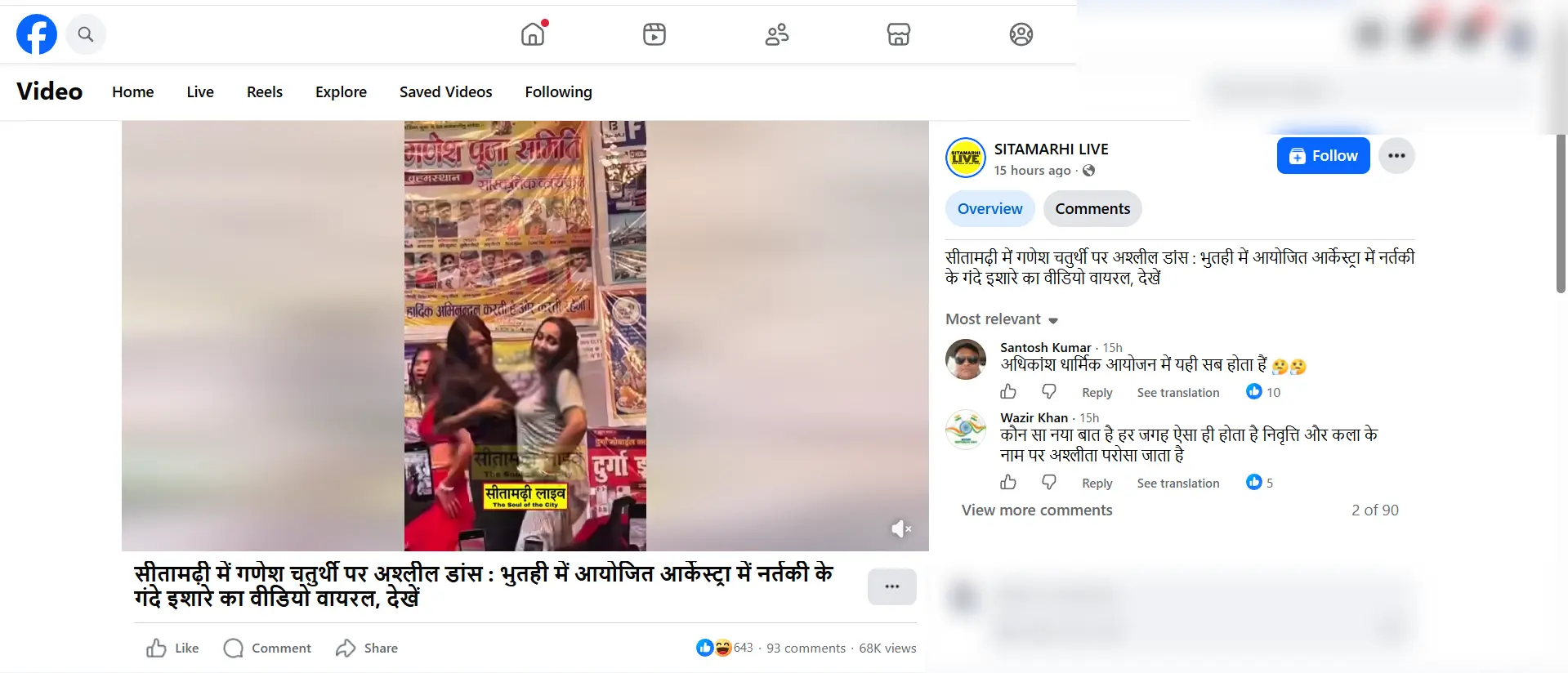
In Sitamarhi, Bihar, the sanctity of the Ganesh Chaturthi festival was desecrated. Obscene dance performances were conducted during a religious programme organised as part of the celebrations. A video of the incident went viral across social media on September 17, 2026. The footage showed two female orchestra dancers performing vulgar dance steps and making obscene gestures during the programme. Although the idol of Lord Ganesha was not clearly visible in the video, the decorations and setting indicated that the performance was part of a Ganesh Chaturthi event. According to media reports, the programme was organised at Bhutaha Brahmasthan in Sitamarhi, where an orchestra performance was held during the Ganesh Utsav celebrations. The dancers were performing vulgar steps in front of the idol of Lord Ganesha, making the nature of the performance particularly objectionable given the religious setting. The event was organised by the Ganesh Utsav Committee. The video triggered criticism on social media, with people questioning how such an obscene performance could be allowed during a Hindu religious festival. Calls were also made for legal action against the orchestra performers and those responsible for organising the programme. Hindu users stated that conducting such vulgar performances during the Ganesh Chaturthi celebrations was disrespectful to Lord Ganesha and hurt the religious sentiments of Hindus.
Case Images


Why it is Hate Crime ?
The primary category selected in this case is- Attack on Hindu religious representations. The subcategory selected is- Defiling religious customs. Sanatan Dharma is not a religion of one book, which is to say that while it has religious scriptures that form the central tenets of the faith, there are several traditions followed through thousands of years, mostly passed from generation to generation orally. There are several such customs and traditions that are followed by various Hindus and Hindu sects. Defiling of these traditions and customs is a breach of an individual or group’s religious practices. Such practices can range from dietary restrictions like not eating non-vegetarian food for a certain period of the year, not eating non-vegetarian food at all, not eating beef since the cow is considered holy in Hinduism, the sanctity of religious customs followed in the house (like many ISCKON devotees), etc. Any malicious action leading to the breach of such traditions or defilement of these traditions owing to animosity towards the faith or for the sake of activism stems not only from the lack of faith in the religion itself but also from disregard for the faith of the devotees who follow the customs/traditions and implicit bias against the faith, the tradition itself. Since these specific traditions are central to the faith of the devotees of that specific sect of Hindus, any non-compliance with these traditional rules would be considered a religiously motivated hate crime. This case constitutes a clear instance of a religiously motivated offence, as vulgar dance performances were conducted during the Ganesh Chaturthi celebrations in Sitamarhi, Bihar, thereby desecrating the sanctity of the Hindu festival. Ganesh Chaturthi holds profound religious significance in Hinduism as a festival dedicated to Lord Ganesha, the revered deity of wisdom, prosperity, auspiciousness, and the remover of obstacles. The festival marks the worship of Lord Ganesha through the installation of his idols, prayers, rituals, offerings, devotional activities, and cultural programmes, with devotees seeking his blessings for prosperity, wisdom, and the removal of obstacles. Devotees install idols of Lord Ganesha in homes, temples, and temporary pandals, where they gather to perform worship and participate in the celebrations. These settings serve as sacred spaces during the festival, embodying devotion and reverence towards Lord Ganesha. Therefore, conducting vulgar dance performances during the Ganesh Chaturthi celebrations constituted a serious violation of the sanctity attached to the festival. The two female orchestra dancers performed vulgar dance steps and made obscene gestures as part of the programme in front of the idol of Lord Ganesha, turning a religious gathering dedicated to worship and devotion into a setting for lewd entertainment. Hindu festivals are observed through established customs, rituals, and standards of conduct that preserve the reverence and purity of the occasion, and such obscene performances were wholly contrary to the devotional nature of Ganesh Chaturthi. By permitting such conduct during a religious programme and in the presence of the deity, the norms of propriety expected during a sacred festival were disregarded, causing offence to Hindu devotees and hurting the religious sentiments of the Hindu community. The deliberate use of vulgar entertainment in a setting dedicated to the worship of Lord Ganesha demonstrated a complete disregard for the religious character of the celebration and hostility towards the sanctity attached to the festival. Such conduct therefore went beyond ordinary inappropriate behaviour and constituted a deliberate act of religious undermining, making the incident a clear case of a religiously driven hate crime. Given that this case meets the parameters of a religiously motivated offence, it is being added to the hate crime database of the Hinduphobia Tracker. Disclaimer: In this case, since the two female dancers performing the vulgar dance were clearly visible in the video, they are designated as the perpetrators. For documentation purposes, the perpetrator count is conservatively recorded as '2'. The Hinduphobia Tracker records the date of an incident based on the date when the crime occurs, rather than when it is reported by the media, or when it goes viral on social media. In this case, the media reports did not state the exact date when the incident occurred. However, the incident went viral on social media and was reported by the media on September 17, 2026. Hence, September 17, 2026, has been selected as the indicative incident date for documentation purposes only.


Case Status
Unknown


Perpetrators Details
Perpetrators
Others
Perpetrators Range
From 2 To 5
Perpetrators Gender
female
 Sources




