Hindu villagers targeted under guise of prayer meeting, indoctrinated with religious literature for forced Christian conversion
 Betul, Madhya Pradesh, India
  14 September, 2026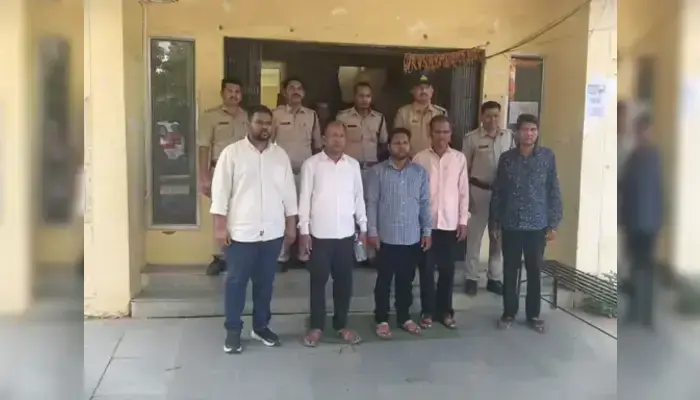
Case Summary
In Amla, Betul district, Madhya Pradesh, Hindu villagers were targeted and indoctrinated with religious texts for forced Christian conversion. According to reports, the police arrested five individuals during a Christian prayer meeting held on 15 September 2026 at the residence of Ganpat Sonawane in the Bhimnagar-Bodkhi area in connection with religious conversion activities. Police had received information that conversion-related activities were being carried out during a meeting and prayer gathering at Sonawane’s house. Acting on the information, a team from Amla police, led by Additional Superintendent of Police Kamlesh Kharpuse and Multai SDOP S.K. Singh, reached the house and found five people present. The police searched the premises and seized several documents and other materials, including religious literature, booklets, pamphlets, consent forms and letters addressed to various organisations. The mobile phones of the five individuals were also confiscated for examination. During interrogation, police stated that the arrested individuals admitted to involvement in religious conversion activities, although the police stated that the matter was under investigation. Subsequently, the case was registered at Amla police station as Crime No. 371/26 under Sections 3 and 5 of the Madhya Pradesh Freedom of Religion Act and Sections 351(2) and 3(5) of the BNS. The seized documents, religious materials and mobile phones were taken up for further examination as part of the investigation. The five arrested individuals were identified as Ganpat Sonawane (43), son of Shobhana Sonawane and a resident of Bhimnagar-Bodkhi; Enos alias Inos (34), son of Haroon Jonathan and a resident of Patel Tola, Barghat, Seoni district; Ramesh Atulkar (40), son of Madhukar Atulkar and a resident of Hamlapur, Betul; Bhavrao Chandelkar (34), son of Kaliram Chandelkar and a resident of Junapani, Saikheda police station, Betul district; and Sunil Nagle (50), son of Krishna Nagle and a resident of Somgarh, Multai police station, Betul district. All five were subsequently produced before the court, while police continued examining the seized documents, religious literature and mobile phones to establish the facts and circumstances surrounding the conversion-related activities.
Why it is Hate Crime ?
The primary category selected in this case is: Predatory Proselytisation. The subcategory selected is: Proselytisation by grooming, brainwashing, manipulation or subtle indoctrination. Religious brainwashing essentially means the often subtle and forcible indoctrination to induce someone to give up their religious beliefs to accept contrasting regimented ideas. Religious grooming or brainwashing also involves propaganda and manipulation. It involves the systematic effort, driven by religious malice and indoctrination, to persuade “non-believers’ to accept allegiance, command, or doctrine to and of a contrasting faith. Cases of such grooming or brainwashing are far more nuanced than direct threats, coercion, inducement and violence. In such cases, it is often seen that there is repeated, subtle and continual manipulation of the victim to induce disaffection towards their own faith and acceptance of the contrasting faith of the perpetrator. While subtle indoctrination is widely acknowledged as predatory, an element which is often understated in such conversions or the attempts of such conversion is the role of loyalty and trust which might develop between the perpetrator and the victim. Fiduciary relationships are often abused to affect such religious conversion. For example, an educator transmitting religious doctrine of a competing faith to a Hindu student. The Hindu student is likely to accept what the teacher is transmitting owing to the existence of the fiduciary relationship. The exploitation of the fiduciary relationship to religiously indoctrinate victims would also be included in this category. Since the underlying animosity towards the victim’s faith forms the basis of predatory proselytization, such cases are considered religiously motivated hate crimes. The incident constituted a religiously driven hate crime because the conduct was directed at members of the Hindu community with the specific objective of changing their religious identity. The religious identity of the victims was therefore central to the conduct rather than incidental to it. The Christians perpetrators were not merely practising or sharing their own faith; they were engaged in organised efforts aimed at persuading Hindus to abandon their existing religion and embrace Christianity. Such conduct specifically interfered with the religious identity of the Hindu community and sought to replace an existing faith with another. The conversion objective was particularly significant in determining the religious motivation of the incident. Religious conversion inherently involves an attempt to alter a person's existing religious affiliation. When such efforts are directed specifically at members of another faith, the conduct moves beyond the ordinary exercise of one's own religious beliefs and becomes targeted proselytisation. In this case, the activity was directed at Hindus because they were Hindus, making their religious identity the basis upon which they were selected as the intended targets. The objective was consequently not simply to disseminate religious ideas in the abstract, but to induce members of the Hindu community to relinquish their existing faith. The organised character of the proselytisation also strengthened the religious-motive assessment. The use of prayer gatherings and conversion-related material demonstrated a deliberate effort to create circumstances in which Hindu participants could be exposed to Christian religious teaching and encouraged towards conversion. The recovery of consent forms and other conversion-related documents was relevant because it revealed that the activity was structured around the process of religious conversion rather than being limited to private worship. This demonstrated an intentional effort to facilitate a change in the religious affiliation of the targeted individuals. By conducting such gatherings, the Christian individuals sought to manipulate vulnerable Hindus, taking advantage of their emotional and social circumstances to push them towards conversion. The Christian perpetrators were actively attempting to indoctrinate the Hindu victims by using Christian religious texts and literature. Using the scriptures or literature of one faith to deliberately target and manipulate members of another, with the clear intention of religious conversion, represents a direct attack on the Hindu faith. Such actions are designed to violate and undermine the beliefs of Hindu victims and are clear indicators of religious hostility towards Hindus and their religious identity. Such actions further demonstrate that this was not an isolated incident of evangelism, but rather part of a broader, organised operation to further religious conversions. When Christian religious material is used to exploit trust, sow doubt, and misrepresent the beliefs of Hindus to coerce conversion, particularly in a systematic manner, it constitutes a religiously motivated offence. Given that the incident involved targeted efforts to influence members of the Hindu community to abandon their existing faith through organised Christian proselytisation and inducements, the conduct met the parameters of a religiously motivated hate incident. The case was therefore added to the hate crime database of the tracker.


Case Status
Arrested


Perpetrators Details
Perpetrators
Christian Extremists
Perpetrators Range
From 2 To 5
Perpetrators Gender
male
 Sources




