Ganesh Chaturthi celebrations targeted, Hindu devotees subjected to several restrictions by Tamil Nadu government
 Tamil Nadu, India
  10 September, 2026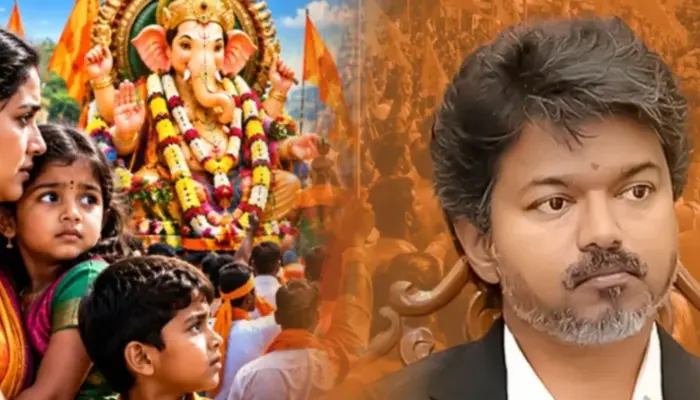
Case Summary
In Tamil Nadu, Hindu devotees and organisations preparing for Ganesh Chaturthi faced a series of administrative restrictions and police curbs that affected various aspects of the festival. These included participation in traditional processions, the installation and transportation of Vinayaka murtis, the bursting of firecrackers, the display of religious and political banners, the raising of devotional slogans, and the routes followed during immersion processions. In Virudhunagar district, police officials convened a meeting and communicated conditions explicitly preventing Hindu women and children from taking part in traditional Ganesh Chaturthi immersion processions. Hindu organisations and devotees strongly opposed the restriction, pointing out that immersion processions were traditionally community- and family-oriented religious observances. Functionaries questioned the rationale behind using administrative conditions to exclude women and children from participating in their own religious festivities. In Tiruppur, Hindu Munnani district executive committee member S. Anbumani approached the Madras High Court after local police withheld permission to install a Ganesha murti. On 10 September 2026, the High Court intervened and directed the Tiruppur police to grant permission for the installation at the identified location. The court also observed that worship constituted a fundamental right. Hindu organisations further objected to being required to approach the courts every year merely to obtain permission for traditional religious celebrations, pointing to earlier observations of the High Court and Supreme Court that authorities should facilitate such celebrations rather than make permissions unnecessarily difficult. In Chennai, Greater Chennai Police Commissioner Amal Das and senior police officials convened a meeting with representatives of the Bharatiya Janata Party, Vishwa Hindu Parishad, Hindu Munnani, Hindu Makkal Katchi, Shiv Sena, Hindu Hanuman Sena and Bharath Hindu Munnani, and issued 13 guidelines governing Ganesh Chaturthi celebrations. The administration capped the height of Vinayaka murtis at 10 feet and prohibited their installation near hospitals, schools and places of worship. The Chennai police further imposed extensive restrictions on traditional festive customs. The guidelines prohibited the bursting of firecrackers inside pandals, along procession routes and at immersion sites. Authorities prohibited political and religious banners, including banners supporting political parties and religious leaders, and restricted the chanting of Hindu slogans that claiming that it could lead to communal disharmony. Devotees and Hindu organisations objected to instances where state authorities cited the presence of mosques, churches or minority-dominated residential areas as grounds for denying permissions or altering traditional Hindu procession routes. They argued that the religious identity of a locality should not by itself become a reason to deny Hindus permission to conduct lawful celebrations. While authorities cited safety, environmental and law-and-order considerations for the restrictions, Hindu organisations maintained that such conditions unnecessarily restricted traditional religious celebrations. These restrictions and administrative hurdles across Tamil Nadu affected multiple customary aspects of Ganesh Chaturthi celebrations and led devotees and Hindu organisations to seek judicial intervention to exercise their religious rights.
Why it is Hate Crime ?
This case has been added to the tracker under the primary category: Restriction/ban on Hindu practices. The first subcategory selected is: Restriction on expression of Hindu identity. An example of the state-affected prejudicial and targeted orders against the Hindu community would be a government denying the right of a Hindu or a group of Hindus to hold a religious procession owing to the animosity of non-Hindu groups. Denial of the religious right of the Hindus to assuage the non-Hindu group which harbours animosity to a point where it could lead to violence against Hindus is not only a failure of law and order but is a prejudicial order against Hindus, denying them their fundamental rights to express their religious identity. An example of a hate crime against Hindus by a non-Hindu would be a non-Hindu institution forcing its Hindu employees to abandon religious symbols that a Hindu would wear as an expression of faith owing to inherent prejudice against the faith professed by the victim or a non-Hindu group of people restricting a Hindu group from constructing a place of worship simply because the demography of the area in which the temple is being built is dominated by non-Hindus. Such actions are driven by religious animosity and/or prejudice against Hindus and their faith and would therefore be categorized as a hate crime. The second subcategory selected here is: Administration restricting religious practice. In several cases, it is seen that the administration/state disallows a religious practice owing to prejudicial orders and concerns, targeted specifically against the Hindu community. Such restriction/prohibition would be considered documented as a hate crime because the orders are often a result of pressure by groups that harbour animosity towards Hinduism and Hindus. Often, the restriction by the authorities is driven by bias, hostility, or prejudice against the specific community being stopped from holding a religious practice, by pressure groups that harbour animosity towards Hindus, intrinsic to their faith. Since practices are intrinsic to the faith of the Hindus, such prejudicial restriction is considered a curtailing of the fundamental rights of the Hindu community. In several cases, for example, the authorities ban a Hindu religious practice due to pressure from groups opposed to the religion. In other instances the prohibition is selectively enforced against one religious group (Hindus) while others are allowed to proceed. There are still other cases where the authorities preemptively restrict a religious practice by Hindus because those who hold animosity towards Hindus may get “provoked” leading to them being violent, thereby assuaging the sentiments of those who hold animosity towards Hindus by curtailing the religious rights of Hindus. Such acts and orders are prejudiced, indicating discriminatory motives owing to the capitulation to groups that harbour animosity towards Hindus and therefore, would be categorized as a religiously motivated hate crime since the original pressure leading to the order itself is a result of hatred/bias/prejudice/religious hate against Hindus. The third subcategory selected is: Administration disallows religious procession. The tertiary category selected is: Religious procession. In several cases, it is seen that the administration/state disallows a religious procession owing to prejudicial orders and concerns, targeted specifically against the Hindu community. Such restriction/prohibition would be considered documented as a hate crime because the orders are often a result of pressure by groups that harbour animosity towards Hinduism and Hindus. Often, the restriction by the authorities is driven by bias, hostility, or prejudice against the specific community being stopped from holding a religious procession, by pressure groups that harbour animosity towards Hindus, intrinsic to their faith. Since the religious procession is inherent to the faith of the Hindus, such prejudicial restriction is considered a curtailing of the fundamental rights of the Hindu community. In several cases, for example, the authorities ban a Hindu religious procession due to pressure from groups opposed to the religion. In other instances, the prohibition is selectively enforced against one religious group (Hindus) while others are allowed to proceed. There are still other cases where the authorities preemptively restrict a religious process by Hindus because those who hold animosity towards Hindus may get “provoked” leading to them being violent, thereby assuaging the sentiments of those who hold animosity towards Hindus by curtailing the religious rights of Hindus. Such acts and orders are prejudiced, indicating discriminatory motives owing to the capitulation to groups that harbour animosity towards Hindus and therefore, would be categorized as a religiously motivated hate crime since the original pressure leading to the order itself is a result of hatred/bias/prejudice/religious hate against Hindus. This case was a clear example of a hate crime under the Hinduphobia Tracker’s classification because a Hindu festival, Ganesh Chaturthi, was subjected to several administrative restrictions by the Tamil Nadu government and police authorities. The restrictions affected the installation of Vinayaka murtis, their size and location, the use of firecrackers, the display of religious banners, the raising of devotional slogans, and the conduct of immersion processions. Ganesh Chaturthi is one of the major Hindu festivals dedicated to Lord Ganesha and is observed through the ceremonial installation and worship of his murti, prayers, devotional chanting, offerings, community gatherings, processions and the eventual immersion of the murti. The festival holds deep religious and cultural significance for Hindus, bringing devotees and families together in collective worship and allowing the public expression and transmission of Hindu faith and traditions across generations. It is therefore not merely a public celebration but an important period of religious observance during which Hindus exercise their faith through a range of customary practices. Imposing multiple restrictions on the observance of Ganesh Chaturthi and its established religious customs therefore amounts to state-sanctioned suppression of Hindu religious expression. By placing extensive administrative curbs on how, where and in what manner Hindus could publicly observe one of their major festivals, the authorities restricted the community's ability to practise and visibly express its faith according to its established traditions. The cumulative nature of these restrictions was indicative of institutional prejudice against the Hindu community and its religious identity, as the state machinery itself became the instrument through which customary Hindu religious expression was curtailed. In Chennai, authorities imposed a 10-foot height limit on Vinayaka murtis and prohibited their installation near places of worship, hospitals and schools. The murti is the central sacred representation of Lord Ganesha during Ganesh Chaturthi, and its installation marks the beginning and focal point of the festival’s public worship. Devotees gather around the murti to offer prayers, flowers, lamps, devotional offerings and other forms of worship, while the elaborate size and artistic presentation of festival murtis have traditionally contributed to the collective grandeur and visibility of the celebration. Imposing a fixed height restriction therefore went beyond regulating a peripheral aspect of the festival and directly controlled the form in which devotees could establish and publicly celebrate the sacred representation of their deity. When such a restriction is imposed specifically upon a major Hindu religious observance, it limits the community’s ability to express devotion through its established traditions and contributes to the institutional restriction of Hindu religious expression. The authorities also prohibited the bursting of firecrackers at pandals, during processions and at immersion points. Firecrackers have traditionally formed part of Hindu festive observances and are associated with auspicious occasions, celebration and the collective expression of religious joy. During a festival such as Ganesh Chaturthi, the use of fireworks forms part of the wider atmosphere surrounding the installation, procession and immersion of the deity, particularly when devotees gather in large numbers to celebrate together. While regulations concerning the safe and environmentally responsible use of fireworks can serve legitimate public purposes, prohibiting their use across multiple stages of the festival removed an established form of festive expression from the celebration altogether. In the wider context of several restrictions being placed upon the same Hindu festival, such measures contributed to the curtailment of customary Hindu religious and cultural practices and reflected an administrative approach in which established forms of Hindu celebration were subjected to extensive control. The restrictions further extended to devotional expression itself. Chennai police prohibited the chanting of Hindu religious slogans on the stated ground that such slogans could lead to communal disharmony, while also prohibiting political and religious banners at celebration venues. Chanting the name of Lord Ganesha and other Hindu religious invocations is an ordinary and integral form of devotional expression during Ganesh Chaturthi, through which devotees collectively worship and publicly affirm their faith. The very act of characterising such customary Hindu religious slogans as a potential source of communal disharmony, rather than recognising them as an ordinary expression of religious devotion, reflected a prejudicial approach towards Hindu religious expression. The restriction effectively treated the public articulation of Hindu faith as something inherently capable of creating communal tension, thereby placing suspicion upon a basic form of Hindu devotional practice. Such a premise demonstrated institutional bias towards Hinduism and the Hindu community, as the state authorities themselves associated the normal public expression of Hindu religious identity with the possibility of communal discord. This went beyond regulating genuinely provocative or unlawful conduct and extended administrative control to ordinary expressions of Hindu devotion, putting anti-Hindu prejudice and animosity towards Hindu religious celebrations on display. The restrictions concerning the location of Vinayaka murtis were similarly significant. The Chennai guidelines prohibited their installation near places of worship, hospitals and schools. Hindu organisations also objected to instances in which the presence of mosques, churches or minority-dominated residential areas was cited as a reason for restricting Hindu celebrations or altering traditional procession arrangements. In a religiously pluralistic society, public spaces are shared by communities belonging to different faiths, and religious observances inevitably take place within areas containing diverse places of worship and residential populations. The mere presence of another religious community or its place of worship should not, by itself, transform a traditional Hindu religious observance into something that must be curtailed. When the religious character of an area becomes a determining factor in restricting where Hindus can install and worship a Vinayaka murti, it creates an unequal burden on Hindu religious practice. Such restrictions therefore contributed to a pattern in which Hindu religious observance was treated as subordinate to the religious sensitivities or demographic character attributed to particular localities, reflecting institutionalised bias in the regulation of Hindu festivals. A similar issue arose in relation to the immersion processions. The immersion of the Vinayaka murti is an integral part of Ganesh Chaturthi, marking the completion of the period of worship and the ceremonial conclusion of the deity’s installation, while the procession itself is a collective religious observance in which devotees accompany the murti through public spaces with prayers, chanting and other devotional practices. The concern, however, was not merely that the police required the procession to follow an authorised route, but that Hindu organisations objected to routes being restricted or altered specifically on the basis of the presence of mosques, churches or minority-dominated residential areas. Preventing a Hindu religious procession from passing through a locality because of the religious composition of that locality effectively suggested that Hindu devotees had to curtail or redirect their religious observance to accommodate the supposed religious sensitivities of other communities. This placed the burden of preserving communal harmony disproportionately upon the Hindu festival, requiring Hindu devotees to suppress or alter an established religious practice rather than allowing different communities to coexist while exercising their respective religious freedoms in shared public spaces. Such differential treatment reflected institutional bias against Hinduism, as the celebration of a Hindu festival was subjected to restrictions in order to avoid purported sensitivities associated with other faith communities, thereby suppressing the public expression and movement of Hindu religious observance. In Tiruppur, the denial of permission to install a Vinayaka murti exposed the extent to which ordinary Hindu religious worship was being subjected to institutional obstruction. The installation of the murti is the central religious act of Ganesh Chaturthi, through which devotees establish the sacred presence of Lord Ganesha and begin a period of collective worship. Preventing devotees from carrying out this basic religious practice, to the extent that they had to approach the High Court for permission, demonstrates how the state machinery itself became an obstacle to the exercise of Hindu faith. The Madras High Court’s direction to permit the installation, along with its observation that worship is a fundamental right, further highlighted the nature of the restriction: devotees were not seeking any extraordinary privilege, but the ability to perform an established Hindu religious observance. The recurring necessity for Hindu organisations to approach courts merely to secure permission for traditional Hindu festivals reflects a pattern in which Hindu religious practices are subjected to disproportionate administrative hurdles before they can be exercised. When the state places such barriers around the basic worship of a Hindu deity during an annual religious festival, it amounts to the institutional suppression of Hindu religious practice and reflects prejudice against the Hindu community and its right to publicly practise and express its faith. In Virudhunagar, the restrictions directly affected who could participate in the immersion procession. At a meeting convened by police officials, conditions were communicated stating that women and children would not be allowed to participate in the processions, prompting objections from Hindu devotees and organisations. Ganesh Chaturthi is not confined to individual worship inside a private space; it is also observed collectively through family and community participation, with devotees of different generations taking part in prayers, processions and immersion ceremonies. Women and children are therefore not incidental participants but members of Hindu families and communities who traditionally take part in these religious observances. Preventing them from joining the procession effectively excluded entire sections of the Hindu community from participating in a central part of their own festival. The restriction consequently interfered not only with individual religious participation but also with the communal and intergenerational character through which Hindu traditions are practised and transmitted. When state authorities impose such a condition upon participation in a Hindu religious procession, it represents a direct restriction on the community’s ability to collectively practise its faith. Taken together, the restrictions affected multiple and interconnected dimensions of Ganesh Chaturthi: the installation and size of the sacred murti, the location of worship, devotional chanting and religious banners, festive firecrackers, the traditional procession and immersion routes, the conditions governing immersion, and even the participation of women and children. These were not restrictions upon an isolated or incidental feature of the festival but controls affecting the manner in which Hindu devotees could install, worship, celebrate, process and participate in the culmination of a major religious observance. The accumulation of such restrictions, coupled with administrative obstacles to obtaining permission and the need for judicial intervention in Tiruppur, amounted to a significant curtailment of Hindu religious practice. The fact that state authorities themselves became the mechanism through which multiple customary forms of Hindu religious expression were restricted demonstrated institutionalised bias against Hinduism and the public expression of Hindu faith. The cumulative nature and breadth of these restrictions therefore established the religiously discriminatory character of the incident, meeting the parameters for its inclusion in the Hinduphobia Tracker’s hate crime database. Disclaimer: The exact date on which all the restrictions concerning Ganesh Chaturthi celebrations were imposed is not specified in the available sources. However, the restriction on women and children participating in the Vinayagar Chaturthi immersion procession in Virudhunagar was publicly documented on 11 September 2026, while the 13-point guidelines for Vinayagar Chaturthi celebrations in Chennai had been issued earlier. The tracker records incident dates based on when the incident occurred rather than when it was reported or published. Accordingly, 11 September 2026 has been used as the indicative incident date and recorded for documentation purposes only.


Case Status
Unknown


Perpetrators Details
Perpetrators
State and Establishment
Perpetrators Range
Unknown
Perpetrators Gender
unknown
 Sources




