Hinduphobia at display: Hindu community, beliefs and religious practices targeted through derogatory social media posts
 Gonda, Uttar Pradesh, India
  9 September, 2026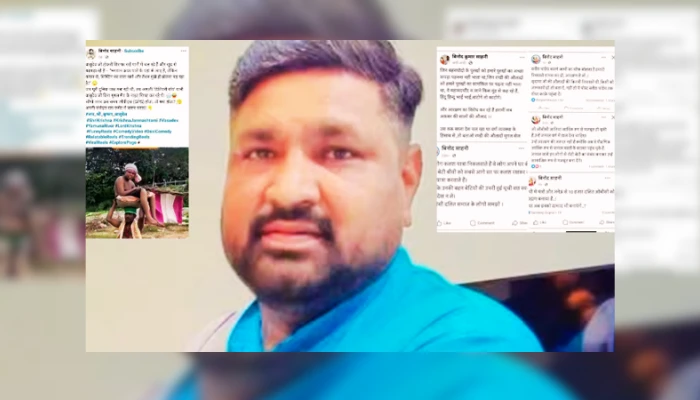
Case Summary
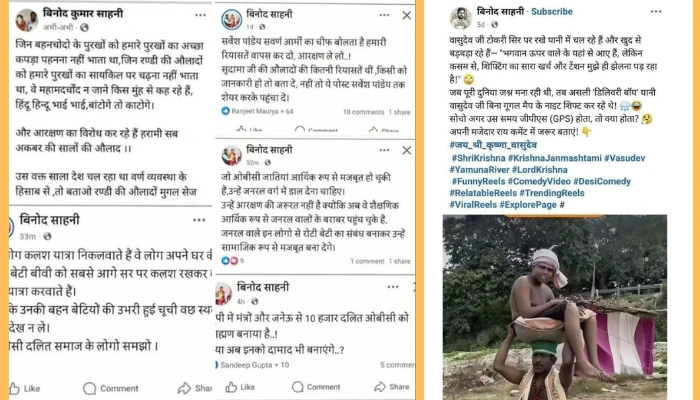
In Gonda, Uttar Pradesh, Hindu beliefs, religious practices and members of the Hindu community were demeaned and mocked in a series of social-media posts made by utensil trader Vinod Kumar Sahni. The posts came to light after Vinod Kumar Sahni died in Lucknow on 10 September 2026. Reports about his death drew attention to his social-media activity, including a series of posts that allegedly contained derogatory remarks about Hindus, Hindu religious traditions, Brahmins, Hindu women and girls, and revered Hindu figures. The posts, which included comments on Hindu beliefs and practices, subsequently became the subject of public discussion. In one of his posts, he used derogatory and abusive language against Hindus who opposed reservation, describing them as descendants of Akbar while also mocking the assertion that “all Hindus are brothers”. He wrote: “Those batads whose ancestors disdained our ancestors for wearing fine clothing, those sons of whrs who were against our ancestors riding bicycles, I wonder how the motherfukes can state, ‘All Hindus are brothers, and if divided, you will be killed.’ All the batads who are opposing reservation are Akbar’s descendants.” He also attempted to defend the Mughal rulers while commenting on the Varna system. He said the entire country followed the Varna system during that period. In another social-media post, he commented on Sarvesh Pandey, the chief of the ‘Savarna Army’, and mocked the Brahmin community by referring to the descendants of Sudama. “Sarvesh Pandey, the chief of the ‘Savarna Army’, declares, ‘Return our princely states to us, and you may retain the reservation.’ If anyone knows how many princely states the descendants of Sudama actually held, please let us know. Otherwise, share this post so it reaches Sarvesh Pandey,” he wrote, implying in the same context that Brahmins were poor and akin to beggars. He also mocked Hindu women and girls while referring to the Kalash procession, a Hindu religious practice. Addressing members of the Dalit community, he wrote: “These people organise the Kalash procession, making their daughters, sisters and wives lead it with pots on their heads so that no one sees their protruding breasts and private parts.” The post made sexually explicit and humiliating references to Hindu daughters, sisters and wives participating in the religious procession. In another post, he mocked Other Backward Classes (OBC) for having become financially prosperous and stated that they should be moved to the General category. He wrote that they did not require reservation because they had reached parity with the General category in education and economic status. He added that their social position would be strengthened through marital and social ties with General category communities. He also made a contemptuous reference to around 10,000 members of the Dalit and OBC communities who participated in a religious ceremony and wore the sacred thread, or Janeu, during the recitation of mantras. He questioned whether those who had adopted the Brahmin identity would also become sons-in-law of the community. Further, he also mocked the Hindu account of the birth of Lord Krishna by ridiculing Vasudev, Lord Krishna’s father, who is traditionally described as carrying the infant Krishna across the Yamuna. He wrote: “Vasudev is wading through the waters with a basket on his head, muttering to himself, ‘He’s come directly from the Almighty, yet I’m the one bearing all the costs and stress.’ While the world was celebrating, the true ‘delivery boy’ Vasudev was toiling through the night without Google Maps.” He further wrote: “Just picture what would have happened if GPS (Global Positioning System) had been available back then. Do share your amusing thoughts in the comments.” He attached an image of a man carrying a grown boy on his head to the post, mocking the traditional account associated with the birth of Lord Krishna.
Case Images
Why it is Hate Crime ?
The primary category selected in this case is: Hate speech against Hindus. The subcategory selected is: Anti-Hindu slurs, mocking faith. Anti-Hindu slurs and the deliberate mocking of the Hindu faith owing to religious animosity involve the use of derogatory terms, stereotypes, or offensive references to religious practices, symbols, or figures. One of the common anti-Hindu slurs used against Hindus is “cow-worshipper” and “cow piss drinker”. The intention of using these terms is to demean and mock Hindus as a group and their religious beliefs, since Hindus consider the cow holy. Additionally, some symbols and the slurs attached to them have a historical context that exacerbates the insult, hate, stereotyping, dehumanisation and oppression against Hindus. Cow worship has been used for centuries to denigrate Hindus, insult their faith and oppress Hindus specifically as a religious group. There has been overwhelming documentation about how cow slaughter has been used to persecute Hindus, with cow meat being thrown in temples and places of worship. There has also been overwhelming documentation that cow meat (beef) has been force-fed to Hindus to either forcefully convert them to Islam or denigrate their faith. Apart from cow worship, the Swastika – which holds deep religious significance for Hindus – has also been misinterpreted and distorted to be used as a slur against Hindus. Similarly, the worship of the Shivling has been used by supremacist ideologies and religions to denigrate Hindus owing to religious animosity. Such slurs and denigration stem from inherent animosity and hate towards Hindus and their faith; therefore, it is categorised as hate speech targeted at Hindus specifically owing to their religious identity. This case has been added to the Hinduphobia Tracker because Vinod Kumar Sahni repeatedly used social media to mock Hindu religious practices and ridicule revered Hindu figures, while using abusive and sexually degrading language. The posts were not directed at an ordinary political or social disagreement. They repeatedly singled out Hinduism and matters sacred to Hindus for ridicule and contempt, making the Hindu faith and Hindu religious identity the specific targets of his conduct. Primarily, Sahni’s posts directly attacked Hindus as a religious community through abusive and degrading language. His used profane abuse while mocking Hindus who opposed reservation. This was not merely criticism of reservation policy. The post used a religiously charged reference to Akbar to demean Hindus and attached abusive language to their identity as members of the Hindu community. By directing such language at Hindus in the context of their religious identity, Sahni treated the community itself as an object of contempt. The reference to Akbar was particularly inflammatory because Mughal rule is associated with the oppression, persecution, and violence faced by Hindus. So calling Hindus as “Akbar’s descendants” was therefore not a neutral historical reference. He deliberately attached the identity of a Mughal ruler to Hindus as an insult, portraying them as descendants of a figure associated with the oppression of their own religious community. The expression was calculated to demean Hindus by invoking a historical identity that stood in direct opposition to their own religious and civilisational identity, making the reference particularly offensive and inflammatory. Further, Sahni deliberately selected Hindu religious practices as subjects of ridicule. His remarks about the Kalash procession specifically referred to Hindu daughters, sisters and wives participating in a Hindu religious procession and subjected them to sexually explicit and humiliating descriptions. The post therefore did more than insult individual women. It used a Hindu religious practice as the setting for sexual humiliation and presented the participation of Hindu women in that practice as something to be mocked. This demeaned both the women and the religious observance with which the Hindus were associated. Thereby again expressing that Hindu religion and all those practising Hindu religion are subject of mockey and contempt. The same pattern was evident in his remarks about the Janeu ceremony. The Janeu and the recitation of mantras are expressions of Hindu religious practice. By ridiculing the ceremony and the people participating in it, he turned a Hindu religious observance into an object of contempt and mocked those who expressed their faith through it. Further, he directed his mockery towards a revered Hindu figure and a sacred Hindu narrative. In his post concerning the birth of Lord Krishna, he reduced Vasudev to a “delivery boy” and mocked the traditional account of Vasudev carrying the infant Krishna across the Yamuna. He further invoked GPS to ridicule the episode and attached an image of a man carrying a grown boy on his head. Lord Krishna is a central and revered figure in Hinduism, while the account of his birth forms part of Hindu religious tradition. Turning this sacred narrative into a joke therefore subjected an important element of Hindu faith to deliberate ridicule. The repeated selection of Hindu religious subjects made the hostility's religious nature clear. The systematic targeting of Hindu devotees, Hindu women, Hindu religious practices, the sacred thread, Hindu religious narratives and Lord Krishna were not unrelated subjects. They were recognisable elements of Hindu religious identity and practice, repeatedly used as material for abuse, sexual humiliation and mockery. The pattern showed that Hinduism itself was being treated as an object of contempt. It was outright Hinduphobia at play. Taken together, the posts established a repeated pattern of anti-Hindu slurs and deliberate mockery of Hindu faith. The deliberate and repeated targeting of the Hindu faith and its adherents through abusive language, sexualised humiliation and mockery of sacred traditions constituted Hinduphobia. Accordingly, the case has been included under Hate Speech Against Hindus, subcategory Anti-Hindu slurs, mocking faith. Disclaimer: The Hinduphobia Tracker records the incident date based on when the victim's suffering began, rather than the date the matter is reported in the media. In this case, the original social media posts did not mention the dates they were made. Therefore, 10 September 2026, the date of Vinod Kumar Sahni’s death, has been recorded as the incident date, as the posts came into public and media attention following his death.


Case Status
Unknown


Perpetrators Details
Perpetrators
Others
Perpetrators Range
One Person
Perpetrators Gender
male
 Sources




