Hindu religious sentiments hurt: Hindu deities insulted, offensive remarks circulated on social media
 Fatehpur, Uttar Pradesh, India
  9 September, 2026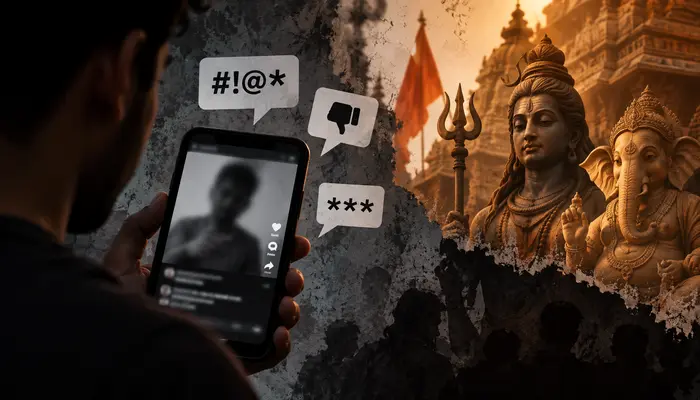
Case Summary
In Chakia town, in the Khakhreru police station area, a man used derogatory and objectionable language against Hindu deities, with the remarks intended to spread hatred in society and hurt religious sentiments. A video of the remarks went viral on social media, following which Sub-Inspector Hariom Mishra investigated the matter. The investigation found that the video contained objectionable comments. The police subsequently began examining the viral video and the facts connected with it. Police registered a case under the relevant sections and assigned the investigation to Sub-Inspector Vishal Yadav. Police identified the man as 22-year-old Vishwanath, also known as Bijaynath Kori, a resident of Chakia town in the Khakhreru police station area.
Why it is Hate Crime ?
The primary category selected in this case is: Hate speech against Hindus. The subcategory selected is: Anti-Hindu slurs, mocking faith. Anti-Hindu slurs and the deliberate mocking of the Hindu faith owing to religious animosity involve the use of derogatory terms, stereotypes, or offensive references to religious practices, symbols, or figures. One of the common anti-Hindu slurs used against Hindus is “cow-worshipper” and “cow piss drinker”. The intention of using these terms is to demean and mock Hindus as a group and their religious beliefs, since Hindus consider the cow holy. Additionally, some symbols and the slurs attached to them have a historical context that exacerbates the insult, hate, stereotyping, dehumanisation and oppression against Hindus. Cow worship has been used for centuries to denigrate Hindus, insult their faith and oppress Hindus specifically as a religious group. There has been overwhelming documentation about how cow slaughter has been used to persecute Hindus, with cow meat being thrown in temples and places of worship. There has also been overwhelming documentation that cow meat (beef) has been force-fed to Hindus to either forcefully convert them to Islam or denigrate their faith. Apart from cow worship, the Swastika – which holds deep religious significance for Hindus – has also been misinterpreted and distorted to be used as a slur against Hindus. Similarly, the worship of the Shivling has been used by supremacist ideologies and religions to denigrate Hindus owing to religious animosity. Such slurs and denigration stem from inherent animosity and hate towards Hindus and their faith; therefore, it is categorised as hate speech targeted at Hindus specifically owing to their religious identity. The incident qualified for documentation because it involved the use of objectionable and derogatory remarks directed at Hindu deities, who occupy the highest place of reverence in Hinduism. The remarks were made in a social media video and were linked to an attempt to spread hatred in society and hurt Hindu religious sentiments. Such speech was not merely criticism or personal opinion; it targeted figures held sacred by Hindus, making it a clear instance of anti-Hindu hate speech. Firstly, insulting Hindu deities constituted a direct affront to Hinduism. Hindu deities are regarded as sacred and divine beings at the heart of Hindu faith, worship and spiritual life. The use of derogatory and objectionable language against them had not merely expressed disagreement with a religious idea; it had demeaned figures whom Hindus worship, respect, and hold in the highest religious regard. Such language had therefore targeted the sacred foundations of Hindu belief and had shown contempt towards objects of Hindu devotion. Hurting Hindu religious sentiments had represented an attack on the beliefs and sacred values that had shaped the religious identity of Hindus. The remarks had targeted matters that Hindus regard as deeply sacred, thereby causing offence to their faith and undermining the reverence associated with their religious traditions. This had affected not only an abstract belief but also the dignity and sense of religious belonging of Hindu devotees who hold these deities in profound respect. Altogether, the conduct crossed the boundary of ordinary disagreement by directing contemptuous language towards the sacred religious framework of Hinduism. It diminished the sanctity accorded to Hindu deities and created an atmosphere of disrespect towards Hindu faith and worship, reinforcing hostility towards beliefs central to the religious identity of Hindus. Accordingly, this case has been documented in the Hinduphobia Tracker's Hate Crime Database as an instance of religiously motivated hostility directed against Hinduism and the religious identity of the Hindu community. Disclaimer: The Hinduphobia Tracker records incidents based on when an event occurred or when the victim's ordeal began. None of the media sources covering this case has specified the exact date the incident occurred. Therefore, for documentation purposes, we recorded the date as when the incident was reported in the media: 9th August 2026.


Case Status
Complaint filed


Perpetrators Details
Perpetrators
Others
Perpetrators Range
One Person
Perpetrators Gender
male
 Sources




