Hindu religious procession’s traditional music restricted near a mosque in Mumbai; police say it would hurt 'Muslim sentiments'
 Mumbai, Maharashtra, India
  5 September, 2026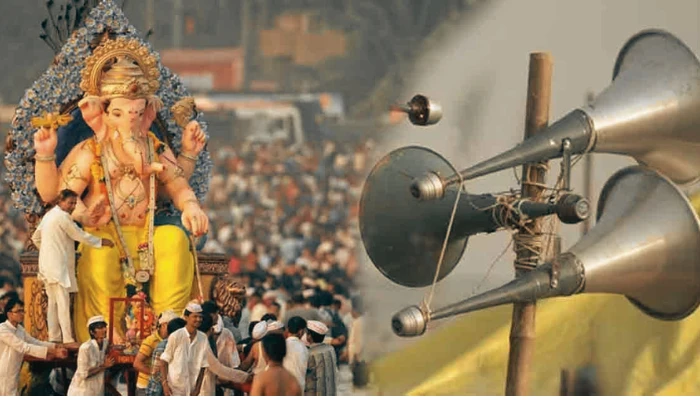
Case Summary
In Mumbai, Maharashtra, a Ganesh procession was targeted by the Mumbai Police. As the procession passed by a mosque along its designated route, police restricted the playing of traditional musical instruments, stating that it would hurt the sentiments of the Muslim community. The incident took place on 6 September 2026 during the Shri Ganesh procession in Malvani, a few days before Ganesh Chaturthi celebrations, a revered Hindu festival. At around 8 p.m., when the procession was passing along the roadside near Jama Masjid, police stopped the traditional dhol-tasha instruments from being played. The police cited concerns that the Hindu religious music would hurt the religious sentiments of Muslims because the procession was passing near the mosque. The police subsequently permitted the traditional instruments to be played again once the procession had moved away from the mosque. The incident occurred a few days after the Malad-Malvani Police had restricted the setting up of Ganeshotsav pandals in the area. Police had asked Ganeshotsav pandal committees to produce proof of permission for the previous five years and stated that Ganpati pandals would otherwise not be permitted. Senior police officials subsequently intervened and allowed the pandals to be set up without imposing the requirement. Hindus expressed outrage after videos of the incident circulated on social media. The restriction on traditional musical instruments during the Hindu Ganesh procession, specifically because it was passing near a mosque, drew criticism over the treatment of Hindu religious celebrations.
Why it is Hate Crime ?
This case is being added to the tracker under the primary category: Restriction/ban on Hindu practices. The subcategory selected is: Administration restricting religious practice. In several cases, it is seen that the administration/state disallows a religious practice owing to prejudicial orders and concerns, targeted specifically against the Hindu community. Such restriction/prohibition would be considered documented as a hate crime because the orders are often a result of pressure by groups that harbour animosity towards Hinduism and Hindus. Often, the restriction by the authorities is driven by bias, hostility, or prejudice against the specific community being stopped from holding a religious practice, by pressure groups that harbour animosity towards Hindus, intrinsic to their faith. Since practices are intrinsic to the faith of the Hindus, such prejudicial restriction is considered a curtailing of the fundamental rights of the Hindu community. In several cases, for example, the authorities ban a Hindu religious practice due to pressure from groups opposed to the religion. In other instances, the prohibition is selectively enforced against one religious group (Hindus) while others are allowed to proceed. There are still other cases where the authorities preemptively restrict a religious practice by Hindus because those who hold animosity towards Hindus may get “provoked”, leading to them being violent, thereby assuaging the sentiments of those who hold animosity towards Hindus by curtailing the religious rights of Hindus. Such acts and orders are prejudiced, indicating discriminatory motives owing to the capitulation to groups that harbour animosity towards Hindus and therefore would be categorised as a religiously motivated hate crime since the original pressure leading to the order itself is a result of hatred/bias/prejudice/religious hate against Hindus. This case is a clear example of a religiously driven hate crime because a Hindu religious procession was selectively targeted for restrictions by the Mumbai Police under the pretext that its traditional music would hurt the religious sentiments of the Muslim community. This unfairly treated a legitimate expression of Hindu faith and religious practice as provocative and hurtful to others, showcasing clear-cut institutionalised bias against Hindu festivals and processions. The authorities effectively placed the burden of maintaining communal harmony on Hindu devotees by requiring them to curtail their religious expression, rather than ensuring that both communities could peacefully coexist. The underlying concern was therefore not merely the regulation of a public procession, but the unequal principle on which the restriction was imposed. Traditional dhol-tasha instruments form an important part of Hindu religious processions and celebrations, including those associated with Ganesh Chaturthi. Their use is an expression of devotion and contributes to the religious character of the procession. Selectively stopping these instruments when the procession approached a mosque therefore treated the ordinary expression of Hindu faith itself as provocative to Muslims. The restriction was not imposed because the devotees were engaging in violence, aggression or any unlawful activity, but simply because their religious music was considered capable of hurting Muslim sentiments. The authorities thus appeared to regard a peaceful Hindu religious practice as something that had to be curtailed to prevent another community from taking offence. The devotees were proceeding along a designated route that had been permitted through the relevant administrative and policing arrangements. They were not entering the mosque, obstructing worshippers, deviating from the route or provoking anyone. Yet, when the procession passed near Jama Masjid, the police stopped the playing of the dhol-tasha and permitted it again only after the procession moved away from the mosque. This showed that the restriction was specifically linked to the presence of the Hindu procession near a Muslim place of worship. The authorities therefore appeared willing to curtail a lawful Hindu religious practice to appease the Muslim community and prevent its sensitivities from being affected. Such an approach reversed the principle of equal protection and religious freedom. India is a plural society in which different religions necessarily share streets, neighbourhoods and public spaces, requiring mutual accommodation. The State has an obligation to facilitate such coexistence without privileging one community's sensitivities over another's religious freedom. There was no constitutional principle requiring Hindu devotees to stop their procession, silence their devotional music or dilute their religious observance merely because another community might object to it. The State should have maintained public order while allowing both communities to practise their faith peacefully, rather than making Hindu devotees bear the cost of communal harmony. By treating the presumed sensitivities of Muslims as sufficient grounds to restrict the lawful religious expression of Hindus, the authorities effectively placed one community's perceived discomfort above another community's religious freedom. The unequal nature of this approach became particularly significant when contrasted with the treatment of Islamic religious processions. The Mumbai Police had not imposed comparable restrictions on Islamic processions during occasions such as Muharram or Eid merely because Islamic slogans, devotional songs or other religious expressions were being carried through public spaces, including areas in the vicinity of temples. Yet, when a Hindu procession passed near a mosque, the police specifically stopped its traditional religious music on the grounds that it would hurt Muslim sentiments. This raised a fundamental question: was Hinduism being treated as inferior to other religions? The selective restriction suggested that Hindu religious expression was being subjected to a standard that was not similarly applied to Islamic religious expression. The willingness to restrict a peaceful Hindu procession specifically because it passed near a mosque, while not placing an equivalent burden on Islamic religious processions in comparable circumstances, showcased deep-seated institutional bias against Hinduism and created the impression that Hindu religious sentiments were considered less worthy of protection. The timing made the restriction even more disproportionate. Ganesh Chaturthi is a once-a-year Hindu festival, and the procession formed part of this limited annual religious celebration. The refusal to accommodate traditional instruments even for this brief occasion, despite the procession following its designated route, showed that the authorities were unwilling to make even minimal accommodation for Hindu religious expression. It demonstrated that Hindu practices had to be trimmed, softened or silenced whenever the Muslim community's sensitivities were supposedly at stake. Treating the mere passing of a peaceful Hindu procession near a mosque as sufficient reason to suppress its religious music effectively portrayed an ordinary expression of Hindu faith as a source of communal disturbance. This was particularly significant because the devotees were not throwing substances, attacking anyone, issuing threats or engaging in any act of aggression; they were simply peacefully carrying out a lawful religious procession and playing traditional devotional music. The police action also occurred against a well-documented pattern of Islamic supremacist behaviour in areas surrounding mosques, dargahs and other places where Muslims exercise significant influence or form a majority, where such areas are treated as 'Muslim areas', and the presence of Hindus or the passage and celebration of Hindu religious processions are viewed as a challenge to Islamic dominance. Hindu processions have consequently faced disproportionate opposition and Hindus have been targeted merely for passing through, living in or celebrating their festivals in such areas, reflecting an assertion of Muslim territorial dominance. This context made the present case even more serious because, instead of taking responsibility for protecting Hindu devotees from such communal hostility and ensuring that they could peacefully exercise their religious rights, the Mumbai Police restricted the Hindu procession itself while it passed near the mosque. Rather than confronting the threat of possible communal violence, the authorities effectively appeased those who might object by requiring Hindus to curtail their religious celebration. This created the deeply troubling impression that Hindus must sacrifice their religious expression to preserve communal harmony, instead of the State safeguarding them and ensuring that those threatening or opposing their lawful religious practices were held responsible. Such an approach reinforced the perception of deep-seated institutional hostility towards Hinduism and Hindu religious expression. Overall, this case demonstrated institutionalised discrimination against Hindus and their religious procession. Therefore, it is being added to the hate crime database of the Hinduphobia Tracker.


Case Status
Unknown


Perpetrators Details
Perpetrators
State and Establishment
Perpetrators Range
Unknown
Perpetrators Gender
unknown
 Sources




