Hindu temple vandalised, consecrated idols beheaded by unknown miscreants in South 24 Parganas, West Bengal
 North 24 Parganas district, West Bengal, India
  6 September, 2026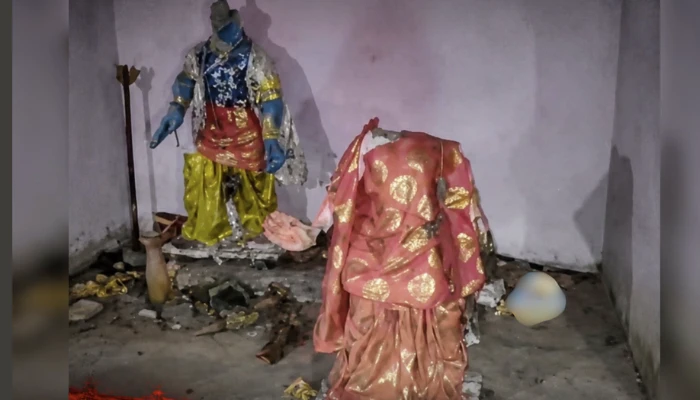
Case Summary
In Narayanpur village under Canning Police Station in South 24 Parganas, West Bengal, a Hindu temple was desecrated during the night by unidentified miscreants. They vandalised several idols of Hindu deities by cutting off their heads on 7 September 2026. The incident came to light when local residents discovered that multiple idols inside the temple were damaged, with reports indicating that the heads of the idols were severed. The vandalism occurred overnight, suggesting that the perpetrators entered the temple premises under cover of darkness to carry out the act. News of the desecration spread quickly through Narayanpur village, drawing attention from devotees and local residents who gathered at the temple to assess the damage. Police began an investigation into the incident following reports of the vandalism. Authorities stated that the identity and motive of those responsible were yet to be established, and that the investigation would be crucial in determining exactly what happened. Officials emphasised the need for a swift and impartial inquiry to identify those responsible and take strict legal action if the allegations were confirmed. The incident raised serious questions among residents about the security of places of worship and the safety of religious sites in the South 24 Parganas area. Local voices stressed that a place of worship was a place of faith, and that any deliberate attack on such a site deserved serious attention and a lawful response. The incident was recorded as part of a wider pattern of temple vandalism cases reported across the region during late August and early September 2026.
Why it is Hate Crime ?
This case is added to the tracker under the primary category: Attack on Hindu religious representations. The subcategory selected is: Desecration of Hindu religious symbols. Icons and symbols, or a religious representation of a spiritual ideal, are widely revered in Hinduism. Iconography is of vital significance in the Hindu milieu. It helps connect people’s spiritual beliefs with the real world. Iconography within the Hindu faith takes several shapes and forms. Murtis are of great significance to Hindus, to which daily rituals, prayers and offerings are made. Besides the murtis, there are several other symbols which have deep significance in the Hindu faith – the Om and Swastika, for example. Since these Hindu religious symbols hold paramount importance in Hinduism, any desecration of symbols, icons, murtis, religious representations and manifestations is driven by animosity towards the faith itself, which manifests itself through these murtis, icons and symbols. Therefore, any desecration of these Hindu religious symbols and representations is considered religiously motivated hate crimes under this category. The other subcategory selected is: Attack on Temples. In Hinduism, a temple is the abode of the Deity. The Deity in the Temple is consecrated, thereby making it a real, breathing entity. Hindus believe that not just the Deity but the temple premises themselves are sacred to Hindus since Hindus hold the faith that the entire Temple space is an amalgamation of the divine energy of the deity. Given the central significance of Temples in Hindu Dharma, any attack against a Hindu Temple or its peripheral premises is an attack on the faith itself and is born out of animosity towards the faith, of which the Temple is a central tenet. Any manner of attack against a Temple and/or its premises would therefore be considered a religiously motivated hate crime. This case constituted a clear instance of a religiously motivated hate crime because unidentified miscreants deliberately desecrated consecrated deity idols installed at a Hindu temple by severing the heads of the idols and damaging them in an act of targeted vandalism. The act was not an instance of ordinary vandalism, accidental damage, or random destruction of property. It specifically targeted consecrated Hindu deity idols located within a functioning Hindu place of worship, thereby striking directly at sacred symbols of Hindu faith and causing profound distress to the local Hindu community. In Hinduism, consecrated deity idols were not regarded as mere artistic representations or decorative objects. Through rituals of consecration known as prana pratishtha, they were consecrated to embody the living presence of the deity and served as the focal point of worship, devotion, and spiritual connection between devotees and the Divine. Hindu devotees offered prayers, rituals, and religious observances before these idols on a daily basis. Consequently, the deliberate mutilation or destruction of a consecrated idol was experienced not merely as damage to property but as a direct assault on the deity's sacred presence and on the religious beliefs of the devotees who worshipped there. Further, the deliberate decapitation of the idols carried profound religious significance. Decapitation was among the most severe and degrading forms of desecration that could be inflicted upon a sacred idol, as it intentionally disfigured the deity's most recognisable and revered features. The act went beyond ordinary damage or vandalism and involved the deliberate mutilation of consecrated objects of worship at the heart of Hindu devotional life. By specifically severing the idols' heads, the perpetrators targeted sacred symbols that held immense religious importance for devotees, inflicting maximum religious offence and causing deep distress within the Hindu community. The nature of the desecration demonstrated a profound disregard for Hindu religious sentiments and the sanctity of Hindu places of worship. The manner in which the act was carried out further demonstrated its targeted nature. The perpetrators did not merely damage the temple premises or engage in indiscriminate destruction. Instead, they specifically attacked the idols, severed their heads from the bodies, and left the damaged idols within the temple. Such conduct reflected a deliberate act of desecration directed at the sacred forms of the deities themselves. The targeting of consecrated idols within a temple setting indicated hostility towards what the idols represented: the living devotional presence of Hindu deities and the religious identity of the Hindu community that worshipped there. The deliberate desecration of consecrated idols inside a Hindu temple inevitably carried a message that Hindu sacred symbols and places of worship could be violated and dishonoured. Such acts created fear, insecurity, and anguish among devotees and extended beyond ordinary criminal damage. By targeting revered representations of Hindu deities within a temple environment, the perpetrators attacked central symbols of Hindu religious identity and wounded the sentiments of the wider Hindu community. Therefore, since this incident involved the deliberate desecration of consecrated deity idols within a Hindu place of worship, causing deep injury to Hindu religious sentiments and undermining the sanctity of a revered religious institution, it fell within the parameters of a religiously motivated hate crime and was added to the hate crime database of the Hinduphobia Tracker. It is important to mention here that though the last update was that the miscreants were unknown, regardless, the action stemmed out of hatred against Hinduism and resulted in the desecration of the sacred temple and would therefore be considered a religiously motivated hate crime.


Case Status
Unknown


Perpetrators Details
Perpetrators
Unknown
Perpetrators Range
Unknown
Perpetrators Gender
unknown
 Sources




