Hindu women selectively targeted: Muslim man uses fake AI-edited videos to sexualise and target Hindu victims
 Delhi, India
  14 January, 2026
Case Summary
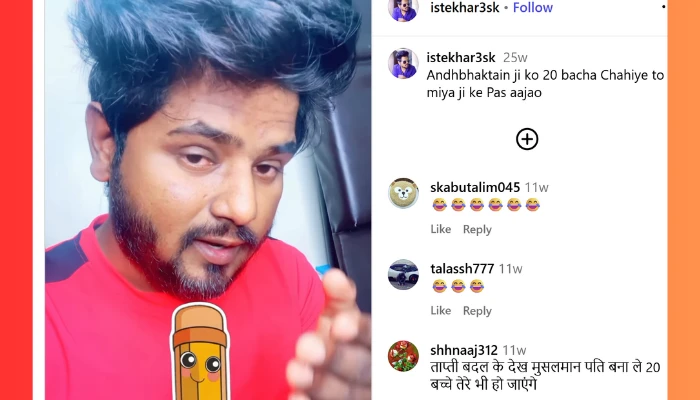
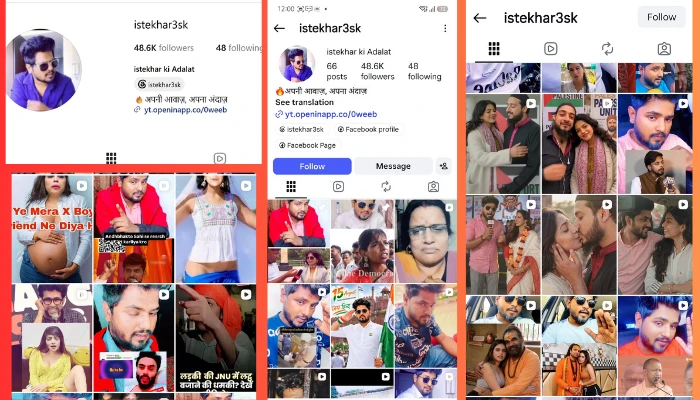
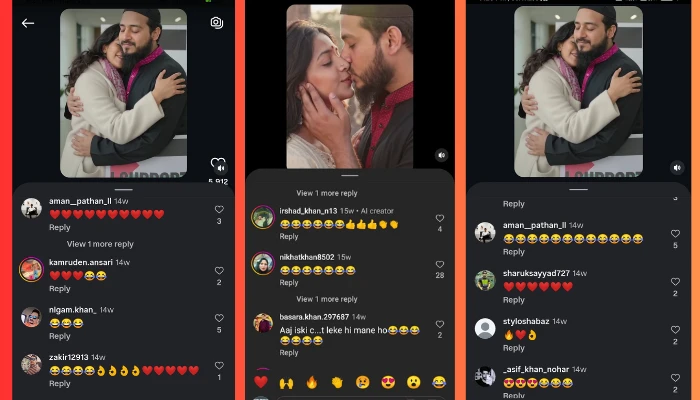
In Delhi, the modesty of Hindu women was outraged by a man who used his Instagram account to create and circulate AI-edited videos that placed them in romantic and sexually suggestive scenarios with Muslim men. The accused, identified in posts as Istekhar Sheikh (Instagram: @istekhar3sk), with 48.6K (4,86,000) followers, shared content featuring intimate kissing scenes and vulgar overlays, including crude animations and text such as “wait for pelai.” Upon further investigation of the Instagram account, the Hinduphobia Tracker observed that the user habitually indulged in posting derogatory, sexual and objectionable videos specifically targeting Hindu women. The incident came to light after an X account, @treeni, drew attention to the matter in a post dated 4 September 2026. In one of the video clips, a Hindu woman was shown stating that Muslims had many children while Hindus had one or two; the man in the video was then seen responding with a derogatory remark, calling her “maal” and suggesting she visit a Muslim man if she wanted more children. Further, the accused used a saffron-coloured, unsharpened pencil to represent Hindus and a green-coloured, sharpened pencil to represent Muslims, framing the imagery in a charged communal context and showing Hindus as impotent. A separate post targeted Hindu creator Khushbu Pandey with an AI-generated clip showing her in an intimate scene with a Muslim man. The post, shared on an account, attracted 247K (2,47,000) views and a wave of abusive comments, including sexualised taunts and derogatory remarks. Several users on social media expressed outrage and tagged Delhi Police, demanding action against the account and the harassment. At the time of writing, Delhi Police had not issued an official response regarding the incident. As of the time of writing, Delhi Police has not publicly issued an official response or reported any action taken regarding these specific allegations. Several users on social media continued to press for an FIR and platform-level takedowns, citing laws against deepfakes, defamation, and IT Act provisions.
Case Images
Why it is Hate Crime ?
The primary category selected in this case is: Attack resulting in death. The subcategory selected is: Attacked for Hindu identity. In several cases, Hindus are attacked merely for their Hindu identity without any perceived provocation. A classic example of this category of religiously motivated hate crime is a murder in 2016. 7 ISIS terrorists were convicted of shooting a school principal in Kanpur because they got ‘triggered’ seeing the Kalava on his wrist and the tilak that he had put. In this, the Hindu victim had offered no provocation except for his Hindu religious identity. The motivation for the murder was purely religious, driven by religious supremacy. Such cases where Hindus are targeted merely for their religious identity would be documented as a hate crime. Under this category, cases where the attack led to the death of the Hindu victim/s would be documented. The case was included in the Hinduphobia Tracker because the conduct specifically targeted Hindu women and Hindu identity through sexualised AI manipulation, communal stereotyping and religiously derogatory content. The religious element was central to the abuse, as Hindu women were singled out because of their identity and placed in degrading contexts involving Muslim men. The conduct went beyond ordinary online harassment. The use of crude expressions such as “maal” reduced Hindu women from individuals with dignity and agency to objects of sexual consumption. In the context in which the term was used, it was not merely vulgar language; it degraded the women, invited the audience to view them through a sexual lens, and reinforced the communal character of the abuse by directing that degradation at Hindu women. The sexualised AI content further amplified this effect by presenting fabricated intimate situations as material for public entertainment. Moreover, the content was not directed at an individual grievance unrelated to religion. Hindu identity formed the recurring basis of the material, while Muslim identity was positioned in contrast to it. The use of religiously charged sexual imagery and derogatory language therefore turned the content into an expression of hostility towards Hindus rather than merely offensive or defamatory online conduct. The repeated targeting of Hindu women also showed a conscious disregard for their dignity and religious identity. Importantly, the content was circulated before a large audience in a manner that encouraged further sexualisation of the targeted women. The reactions of users who expressed a desire to spend time with the women demonstrated how such content could turn humiliation into collective sexual objectification. By presenting Hindu women as subjects of such entertainment, the posts encouraged an audience to participate in their degradation rather than recognise their dignity and religious identity. This also created an intimidating environment for Hindu women who publicly created content about Hinduism, as sexual humiliation and mass ridicule could be used to discourage them from expressing their religious views openly. Taken together, the conduct showed a mindset that treated Hindu women and their religious identity as subjects of sexual and communal ridicule. The motive behind the acts was to demean Hindu women by associating their Hindu identity with sexual humiliation and to reinforce a disparaging comparison between Hindus and Muslims. The deliberate creation, framing and circulation of such material made the conduct a targeted expression of anti-Hindu hostility and justified its inclusion as a Hinduphobia Tracker case. Disclaimer: The first video targeting a Hindu woman was posted on 15 January 2026. Therefore, 15 January 2026 was recorded as the date of the incident.


Case Status
Unknown


Perpetrators Details
Perpetrators
Muslim Extremists
Perpetrators Range
One Person
Perpetrators Gender
male
 Sources




