Anti-Hindu fake news spread on social media: Bangladesh video falsely presented as Hindus persecuting Muslims in India
 Turkey
  8 September, 2026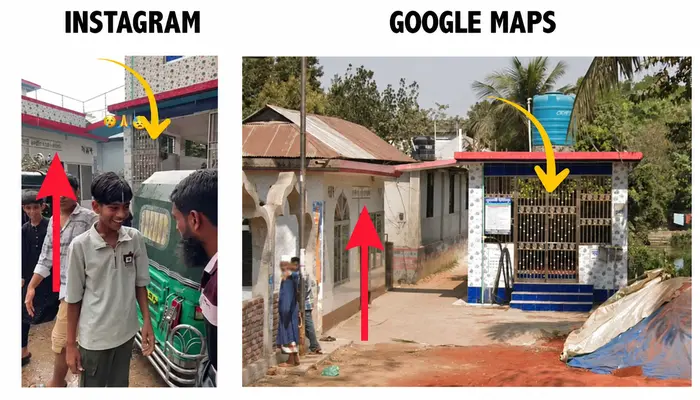
Case Summary
Anti-Hindu fake news was spread on social media through a video showing a man tied to a tree with a rope and beaten by several youths. The video was falsely presented as footage from India, with social media users claiming that it showed Hindu youths persecuting and torturing a Muslim man in India. The claim was false, as the video was actually from Bangladesh and the incident had no communal angle. The video was circulated by several social media handles, mostly Turkish-language accounts. A user named “PSPS TR PSPS” shared the footage with a Turkish-language caption claiming that “extremist Hindus in India” were oppressing and torturing Muslims and calling for the alleged incident to be publicised worldwide. Another user, “Turan0636”, also shared the video with a Turkish caption falsely presenting it as an incident from India and claiming that India was oppressing Muslims. The posts thus attributed an incident from Bangladesh to India and falsely portrayed Hindus as perpetrators of anti-Muslim violence. However, a fact-check published by DFRAC, a media portal, established that the viral video was not from India but from Bangladesh and that the incident had no communal angle. Bangladeshi fact-checker Shohanur Rahman also confirmed to DFRAC that the footage was from Bangladesh and was unrelated to any communal dispute. The Hinduphobia Tracker team had independently investigated this matter and found out that the same video had also been circulated by several Bangladeshi users before being presented with the false India-related narrative. On July 15, 2026, Facebook user “১৪০০ বছর”, a resident of Dhaka, Bangladesh, posted the video with a Bengali caption which, when translated, read: “There comes a point in a person's life when Allah turns His face away from them.” Another Facebook user, “Nazmul Official”, from Noakhali, Bangladesh, also shared the footage with a Bengali caption questioning the condition of Bangladesh and asking whether the country was heading towards ruin because of the “sick generation”. These posts established that the footage was actually from Bangladesh, not India and that it had already been circulating among Bangladeshi users before it was falsely attributed to India. The Hinduphobia Tracker team also examined the visual evidence cited in the DFRAC fact-check. The team traced the video's earlier circulation in Bangladesh and identified a Bengali inscription visible on a building in the footage as belonging to the South Vingla Bari Central Jame Mosque in the Debidwar area of Bangladesh’s Chittagong Division. The mosque structure and inscription visible in the footage corresponded with the identified location, further confirming that the video had been falsely attributed to India. The Hinduphobia Tracker team also traced the video's subsequent circulation and found that an X user identified as Arun Yadav had falsely attributed the footage to Nepal, presenting it as an instance of Hindus persecuting Muslims there. The investigation showed that the same footage had been given multiple false geographical and communal contexts, including claims linking it to Hindu persecution of Muslims in India and Nepal, despite the incident having originated in Bangladesh and having no communal angle.
Why it is Hate Crime ?
The primary category selected in this case is: Hate speech against Hindus. Within this, the subcategory selected is: Anti Hindu subversion and prejudice. The tertiary category selected is: Anti-Hindu Fake News or Downplaying Hate speech is defined as any speech, gesture, conduct, writing, or display that is prejudicial against a specific individual and/or group of people, which is leading to or may lead to violence, prejudicial action or hate against that individual and/or group. Media plays a specific and overarching role in perpetuating prejudicial attitudes towards a community owing to unfair, untrue coverage and/or misrepresentation/misinterpretation, selective coverage and/or omission of facts of/about issues affecting a specific religious group. This type of bias can dehumanise the victim group, making it easier for others to justify harmful actions against them, which aligns with the objectives of hate speech laws aimed at preventing such harm. It is often observed that the media takes a prejudicial stand against the Hindu community, driven by their need to shield the aggressor community, which happens to be a numeric minority; however, it is the one perpetrating violence against Hindus. For example, the media is often quick to contextualise religiously motivated crimes against Hindus, omit or misrepresent facts that point towards religiously motivated hate crimes, justify and/or downplay religiously motivated hate crimes, or simply present fake news to stereotype Hindus. Such media bias leads to the denial of persecution and is often used to dehumanise Hindus, leading to justification for violence against them. For example, the media covered several fake allegations of Hindus targeting Muslims and forcing them to chant Jai Shree Ram. Most of these cases were proved false and fabricated after police investigation. These fake news reports were subsequently never retracted or clarified. Such fake news led to the justification of violence and dehumanisation of Hindus based on the argument that since Hindus targeted Muslims and forced them to chant Jai Shree Ram, the dehumanisation of Hindus and violence against them was par for the course and merely a retaliation. Such media bias leads to a prejudicial portrayal of Hindus and offers a justification for violence against them and therefore is considered hate speech under this category. This incident qualified as an anti-Hindu hate incident because unrelated violence in Bangladesh was deliberately misrepresented as an act of violence by Hindus against Muslims in India and Nepal. The content did not merely misidentify the location of an incident; it falsely assigned criminal and violent conduct to Hindus on the basis of their religious identity and used the fabricated attribution to construct a narrative in which Hindus were portrayed as persecuting and abusing Muslims. By presenting unrelated footage as evidence of alleged Hindu brutality, the posts falsely blamed the Hindu community for acts with which it had no connection, promoted a hostile and derogatory portrayal of Hindus, and contributed to prejudice and animosity against them. Firstly, the false attribution directly associated Hindu identity with violence against Muslims. The video showed a man being beaten after being tied to a tree, but the incident had actually taken place in Bangladesh and had no communal dimension. Despite this, the footage was presented as showing Hindu youths torturing a Muslim man in India and, in another instance, as showing Hindus attacking Muslims in Nepal. This transformed an unrelated incident into fabricated evidence of violence supposedly committed by Hindus. By falsely attributing the acts shown in the footage to Hindus, the posts unjustly blamed members of the Hindu community for cruelty, brutality and communal violence without any factual basis. Secondly, the narrative generalised the alleged conduct to Hindus as a collective religious community. The captions did not confine their accusations to identifiable individuals whose actions had been verified; instead, they made sweeping assertions about “extremist Hindus” and the treatment of Muslims by Hindus. This framing encouraged viewers to regard the fabricated incident as evidence of how Hindus, as a community, supposedly behave towards Muslims. Such collective blame is prejudicial because it takes an unrelated act of violence and falsely presents it as the conduct of an entire religious group, thereby portraying Hindus as inherently intolerant, violent and hostile towards Muslims. Thirdly, the deliberate use of disturbing visual material made the false accusations particularly inflammatory. The footage showed a man being restrained and beaten, giving the accompanying claims an appearance of authenticity and making the allegations against Hindus more emotionally compelling. By pairing this graphic imagery with false claims that Hindus were responsible for the violence, the posts encouraged viewers to associate Hindus with cruelty and abuse against Muslims. The use of genuine footage from an unrelated incident in support of a fabricated accusation therefore amplified the potential for anger, resentment and hostility towards Hindus. The subsequent circulation of the same footage with different false geographical attributions further amplified this negative portrayal. The video had first circulated among Bangladeshi users before being falsely presented as an incident involving Hindus in India and Nepal. Each false attribution detached the footage from its actual context and inserted Hindu identity into a narrative in which Hindus were blamed for violence against Muslims. The repeated use of the same footage to make such accusations therefore went beyond an isolated factual error and helped reproduce and amplify a harmful stereotype of Hindus as perpetrators of religious violence. Overall, since this case meets the parameters of hate speech, it is being recorded in the hate crime database of the Hinduphobia Tracker. Disclaimer: Since the majority of the misleading social media posts and false claims in this case were circulated by Turkish-language accounts, the Hinduphobia Tracker team has recorded the location of the incident as Turkey for documentation purposes. This is based on the location from which the perpetrators circulated the false claims and made the remarks, rather than the actual location of the incident shown in the video, which was Bangladesh. The Hinduphobia Tracker records incidents based on the date on which the offence occurred rather than the date on which it was reported by the media. However, in the present case, the exact date on which the perpetrators made or circulated the false claims could not be established. Therefore, 8 September 2026, the date on which the relevant media report was published, has been selected as the indicative incident date for documentation purposes only.


Case Status
Unknown


Perpetrators Details
Perpetrators
Unknown
Perpetrators Range
From 2 To 5
Perpetrators Gender
unknown
 Sources




