Hindu journalist doxxed and threatened with fate of TJ Joseph, whose hands were chopped over 'blasphemy' allegations
 Cochin, Kerala, India
  30 August, 2026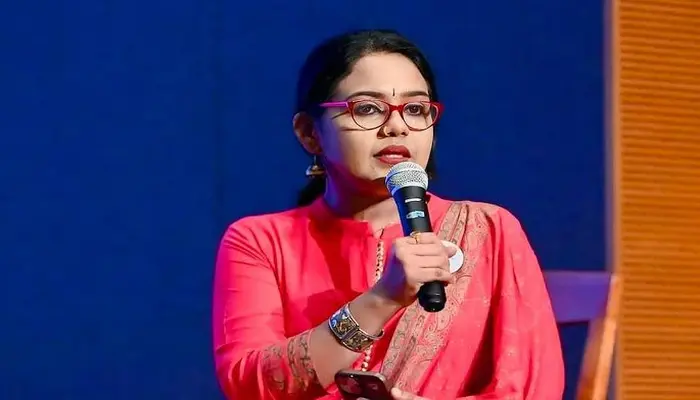
Case Summary
In Kerala, a Hindu journalist and Big TV Senior Coordinating Editor, Aparna Kurup, was doxxed and subjected to violent death threats by members of the Muslim community. The threats came after she criticised misogynistic remarks made by Islamic cleric Sheikh Abubakr Ahmad, popularly known as Kanthapuram A.P. Aboobacker Musliyar, Kerala’s Grand Mufti. The perpetrators threatened to subject her to “T.J. Joseph-style treatment”. This referred to the 2010 attack on Christian professor T.J. Joseph, whose hand was chopped off by Muslims over unproven allegations of 'blasphemy'. The threats came after Kurup took a strong stance against Aboobacker Musliyar’s sexist remarks concerning women being confined to their homes. The remarks were made during the ‘Big Dialogue’ programme hosted by Kurup on 31 August 2026, during which she criticised the cleric’s views. She stated that old seventh-century laws that were regressive towards women could not be applied today. Following this, death threats were directed at the Hindu victim by Muslims. Kurup said that she had faced cyberbullying from political parties and others in the past, but this time she was more worried because her family had also been targeted. The harassment took place across social media platforms, including Facebook and Instagram. Fake profiles published her address, photographs of her family and details of everyone living with her. Kurup said this was the first time she had experienced such targeting and that she was worried about sending her child outside. She also said that her inboxes were filled with threats. She said that a Muslim person had offered ₹1 crore to anyone who would “make me understand” (make Kurup understand). She questioned what this meant and whether it was a threat of violence, such as holding a knife to her throat or cutting off her hands. A group of Muslims also threatened her by saying, “Remember TJ Joseph; Kerala already has an example of Joseph.” She further stated that videos, messages and photographs containing false information about the Big Dialogue discussion were circulated with the intention of tarnishing her reputation and modesty. Notably, T.J. Joseph was a Christian professor of Malayalam at Newman College in Thodupuzha. On 4 July 2010, six Muslims associated with the Popular Front of India (PFI), an Islamic terror outfit, attacked him while he was returning home from church with his sister and mother. They intercepted his car and chopped off his hand below the wrist with an axe, while also stabbing him in the leg and arm. The attack followed mere allegations of blasphemy over an examination question Joseph had prepared for second-year Bachelor of Commerce (BCom) students. Following the controversy, Big TV succumbed to pressure from Muslims and issued an apology on 1 September 2026 in Kurup’s name. The channel stated that some remarks made during the discussion on gender discrimination against women should have been omitted. It expressed regret if the comments had hurt anyone’s religious sentiments or beliefs. The channel further stated that the video had been removed from all its social media platforms because it had the potential to spread misunderstanding in society while addressing the demand for equal status and social justice for women, irrespective of their religion. Kurup subsequently clarified that the objective of the discussion had been to promote social justice and equal status for women belonging to all religious backgrounds. She stated that attempts had been made to mislead the public, following which the apology was issued and the video was removed from all platforms. Despite the apology, the harassment and death threats continued, with multiple social media handles, including fake accounts, continuing to target Kurup. She subsequently filed a police complaint over the death threats, following which the Kochi City Cyber Police registered a First Information Report (FIR) against Abdul Basil of Kozhikode and an unidentified person. The accused were booked under Sections 192, 351(1), 353 and 3(5) of the Bharatiya Nyaya Sanhita and Section 67 of the Information Technology Act, 2000. The FIR stated that the accused had circulated videos, messages and photographs containing false information about the discussion and had threatened to physically assault Kurup. The threats caused fear and unrest, disturbed public peace and posed a threat to her safety. Police said they were tracking others who had issued threats against her on social media and that they could be added as accused as the investigation progressed. Police also said Abdul Basil was associated with an Islamic organisation and would be summoned for questioning. Meanwhile, Bharatiya Janata Party (BJP) Alappuzha South District President Sandeep Vachaspati came out in support of Kurup and highlighted that Islamic extremists were targeting her. He stated that there were reports of attacks on some Big TV offices in the Malabar region. However, he accused the channel’s management of surrendering to pressure from Muslim extremists, failing to report the matter or take legal action, and publishing an apology in Kurup’s name. Big TV editor-in-chief Sujaya Parvathy also supported Kurup and said that she and the organisation did not agree with continuing to pursue and attack her after the apology. She stated that Big TV would not leave Kurup to be “hunted”. The Kerala Working Journalist Union (KWJU) and several journalists in Kerala also extended their support to her. Notably, the controversy arose after Islamic Sunni cleric Sheikh Abubakr Ahmad, popularly known as Kanthapuram A.P. Aboobacker Musliyar, spoke at the Hubbul Rasool conference in Kochi. He said, “Women should remain confined within their homes. They should not enter the public sphere. The Holy Quran says so.” Musliyar claimed that his remarks were not intended to belittle women but to honour and protect them. He warned that bringing women into the public sphere would result in “great destruction” and said that this was why Islam prescribed purdah. Musliyar also stated that religious scholars, particularly the Samastha Kerala Jamiyyathul Ulama, had advocated this position for around a century. Musliyar objectified women by comparing them to a gold necklace purchased from a jewellery shop. He explained that such an item was carefully taken out of a cupboard, box and wrapping before being displayed to a customer. He contrasted this with a neighbouring shop selling stone grinders, which, according to him, could be left outside by the roadside without the same concern for their value or safety. The cleric further argued that if a gold necklace were placed by the roadside, anyone passing by could touch it, ultimately affecting its beauty and value. He drew a direct parallel between the necklace and women, arguing that they had to be kept safely inside a box to retain their beauty and value. He said that such restrictions enabled women to “maintain their dignity” and suggested that they should therefore be viewed as protective rather than discriminatory.
Case Images

Why it is Hate Crime ?
The primary category selected in this case is: Hate Speech against Hindus. The subcategory selected is: Violent Threats. Violent threats, explicit, implicit or implied, is the most dangerous form of hate speech since it goes beyond discriminatory and prejudicial language to express the intent of causing harm to an individual or a group of people based on their religious identity and faith. There could be several different kinds of threats that are issued to Hindus based on religious animosity. An explicit threat would mean the direct threat of violence towards an individual Hindu, a group of Hindus or Hindus at large. Physical violence, death threats, threats of destruction of property belonging to Hindus and threats of genocide would mean explicit threats against Hindus for their religious identity. Implicit threats may not be a direct threat but implied through the use of symbols of actions – for example – in the Nupur Sharma case, other than explicit threats, there were also implicit threats when Islamists took to the streets to burn and beat her effigies. It implies that they want to do the same to Nupur Sharma – thereby is considered an implicit threat. Violent threats can be delivered in person, through letters, phone calls, graffiti, or increasingly through social media and other online platforms. It would be important to understand that a threat – explicit or implicit, online or offline – to an individual who happens to be a Hindu does not qualify as a religiously motivated threat. Such a threat, while vile and dangerous, could be owing to non-religious reasons and/or personal animosity. To qualify as a religiously motivated threat, it would need to exhibit an indication that the individual is being targeted for religious reasons and/or owing to his/her religious identity as a Hindu. The other subcategory selected is: Doxxing and harassment of Hindu for religious reasons. Doxxing is the act of making available publicly personal, identifiable information of an individual with the intention of compromising their safety, security and privacy. When doxing is done with religious animosity forming the basis of the intention, it often involves severe consequences like loss of employment, physical harm, physical threat, harassment and/or discrimination for the victim’s religious beliefs. Such doxxing also involves projecting the religious beliefs, affiliations, and rituals of the victim, specifically a Hindu, in a manner that can lead to loss of employment, physical harm, physical threat, harassment and/or discrimination. Apart from doxxing, harassment would also include misrepresentation of an individual's views and religious beliefs that would invite abuse, loss of employment, physical harm, physical threat, harassment and/or discrimination owing to religious hate and animosity. There have been several such instances where religious animosity by one section has led to the doxxing and harassment of Hindus. For example, when a Hindu who worked in the UAE commented on the historical persecution of Hindus at the hands of Muslim invaders, his information was leaked online leading to loss of employment, physical harm, physical threat, harassment and/or discrimination. In another case, a Hindu man’s information was leaked online, leading to violent attacks, after he responded with an emoji to a post about Tipu Sultan, the Islamic tyrant who persecuted Hindus. Such cases are born out of intrinsic religious animosity towards Hindus and therefore, would be considered religiously motivated hate speech. This case was a clear example of a religiously driven hate crime because a Hindu journalist was subjected to death threats, doxxing and intimidation by Muslim individuals after she criticised misogynistic remarks made by an Islamic cleric. This went beyond the kind of online abuse, threats or trolling that women face for condemning misogyny. The clearest religious marker was the perpetrators’ invocation of the 2010 attack on Christian professor T.J. Joseph, including the threat that Kurup would receive “T.J. Joseph-style treatment”. Joseph had been brutally attacked by Muslims following an unproven allegation of blasphemy, during which his hand was chopped off. By specifically invoking his case after Kurup criticised an Islamic cleric, the perpetrators indicated that they viewed her criticism as a religious offence against Islam, akin to blasphemy, rather than merely a disagreement over the cleric’s sexist views. The reference therefore showed that the threats were rooted in hostility towards Kurup’s Hindu identity and her challenge to Islamic supremacy, making the invocation of Joseph a deliberate form of religious intimidation. The religious character of the intimidation was further evident from the fact that the threats continued even after Big TV issued an apology and expressed regret if any remarks had hurt the religious sentiments or beliefs of members of the Muslim community. Kurup also clarified that the discussion had sought to promote social justice and equal status for women from all religious backgrounds. Despite this, her address, family photographs and other personal details continued to be circulated, while threats were issued against her. This demonstrated that the matter was not simply about an offensive remark or ordinary online hostility. The perpetrators continued to target a Hindu woman even after an apology had been issued, showing that their hostility was directed at her for challenging views associated with Islamic authority rather than merely objecting to the wording of her criticism. The T.J. Joseph reference was particularly significant because it carried the threat of real-world violence against non-Muslims, including Hindus, over an alleged offence against Islamic religious sentiments. Joseph’s unproven blasphemy allegation had preceded a brutal assault in which his hand was chopped off. By invoking that case against Kurup after she criticised the Islamic cleric, the perpetrators placed her criticism within the same framework of religious transgression and used Joseph’s fate as a warning of the consequences she could face. Combined with the continued death threats and doxxing, this demonstrated clear communal hostility and showed that the intimidation was rooted in hatred towards Kurup’s religious identity and her opposition to Islamic supremacy, making the incident a clear case of religiously motivated hate crime. The decision to dox Kurup demonstrated that the perpetrators were prepared to cross every limit in their attempt to intimidate her. Doxxing exposes a person’s address, family and other personal details, creating an immediate sense of insecurity not only for the victim but also for those around her. By deliberately exposing such information while simultaneously issuing death threats and invoking communal violence, the perpetrators showed that they wanted the intimidation to extend beyond the online sphere and potentially manifest on the ground. This significantly escalated the nature of the incident from religiously driven threats to a serious form of religious intimidation with real-world implications, making it a clear case of a religiously motivated hate crime. Such acts stem from an Islamic supremacist mindset in which non-Muslims, particularly Hindus, are viewed as religiously inferior, and Hindus challenging Islamic dominance is an act of religious transgression. In this case, the targeting of a Hindu journalist for criticising an Islamic cleric, followed by religiously charged threats, doxxing and the invocation of the T.J. Joseph attack, reflected an attempt to intimidate her into silence for challenging views associated with Islam. The perpetrators’ conduct therefore reflected hostility towards Hindu identity and an effort to assert religious dominance through intimidation and fear. The severity of these threats lay in their potential to translate religious intimidation into actual violence and Muslim mob mobilisation against Hindus. Between 1 January 2023 and 7 September 2026, Hinduphobia Tracker documented nearly 74 cases where Muslims raised the “Sar Tan Se Juda” beheading slogan against Hindus who were merely accused of blasphemy against Islam or Islamic figures, as well as those who challenged Islamic authority. During the same period, it documented nearly 75 attacks on Hindus over allegations of blasphemy. This demonstrated that allegations of offending Islamic religious sentiments carried real-world consequences. The invocation of the T.J. Joseph attack therefore amounted to a serious religious threat, signalling that Kurup’s criticism of an Islamic cleric was being treated as a religious offence akin to blasphemy and had the potential to invite violent retaliation. Since the victim was a Hindu, the threat also carried clear communal ramifications, rooted in hostility towards her faith identity. Overall, since this case meets the parameters of a religiously driven offence, it is being added to the hate crime database of the Hinduphobia Tracker. Disclaimer: The Hinduphobia Tracker records incident dates based on when the victim’s ordeal began rather than when the incident was reported by the media. In the present case, media reports stated that Kurup began receiving death threats and was subjected to doxxing immediately after the episode of her show aired on 31 August 2026. Henceforth, 31 August 2026 has been recorded as the indicative incident date for documentation purposes only. In this case, the perpetrator count has been recorded as two, referring to Abdul Basil of Kozhikode and the unidentified person against whom the police registered a case. However, the actual number of perpetrators was higher, as a large number of Muslims were involved in threatening and harassing Kurup across social media. The count of two therefore represented a conservative estimate based only on the individuals named or formally included in the police case and was recorded for documentation purposes only.
Victim Details
Total Victim
1
Deceased
0
Gender
- Male 0
- Female 1
- Third Gender 0
- Unknown 0
Caste
- SC/ST 0
- OBC 0
- General 0
- Unknown 1
Age Group
- Minor 0
- Adult 1
- Senior Citizen 0
- Unknown 0


Case Status
Complaint registered


Perpetrators Details
Perpetrators
Muslim Extremists
Perpetrators Range
From 2 To 5
Perpetrators Gender
male
 Sources




