Hindu faith denigrated on social media: Muslim man makes derogatory remark against Goddess Kali
 Delhi, India
  27 August, 2026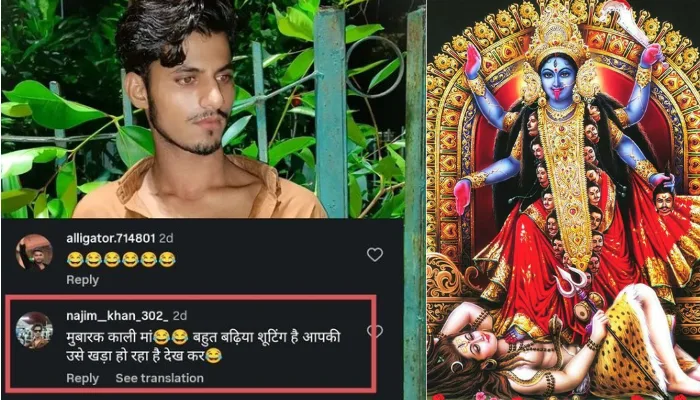
Case Summary
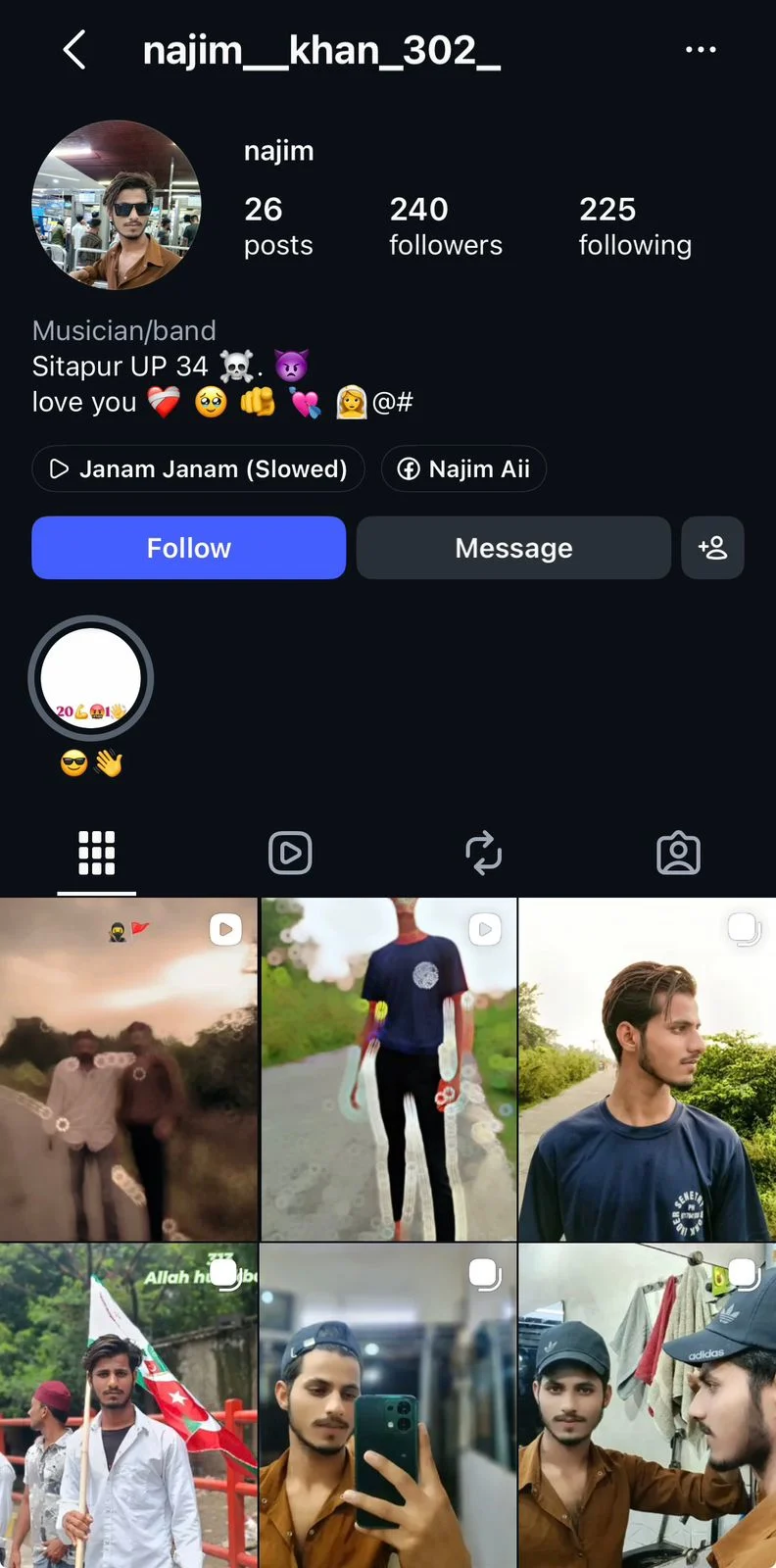
In Delhi, revered Hindu deity Goddess Kali was denigrated on social media by a Muslim man named Najim Khan. The accused made sexually suggestive and derogatory remarks against Goddess Kali in a public comment on Instagram. The incident came to light when a screenshot of Najim Khan’s comment went viral on X (formerly Twitter). Several pro-Hindu social media handles, including 'UP Hindu Sena', shared the screenshot and raised the matter on the platform, demanding action against the accused. The screenshot showed Khan making derogatory and sexually suggestive remarks against Goddess Kali. In the comment, he wrote, “Congratulations, Kali Mata. Your shooting is very good. Seeing it is making me aroused,” accompanied by laughing emojis. The post triggered outrage on social media, with several users demanding the accused’s arrest. Following the circulation of the screenshot, UP Hindu Sena tweeted that he was originally from Sitapur district, Uttar Pradesh. Hindu users subsequently tagged Sitapur Police on X, seeking action against him. Sitapur Police responded from its official X handle and stated that the matter had been brought to the attention of the Station House Officer of Khairabad Police Station for investigation. The police also requested that any additional details or a formal complaint concerning the incident be submitted at the concerned police station. The Hinduphobia Tracker team subsequently contacted Khairabad Police Station to verify the details. The team spoke to Inspector Anil Singh, who confirmed that Najim Khan was a resident of Parsada village under Machhreta Police Station in Sitapur district. Inspector Anil Singh further confirmed that Khan was living in Delhi, where he worked as a labourer. He stated that the matter had been transferred to Machhreta Police Station for further action. He also confirmed Khan’s full name as Najim Khan and stated that he was 20 years old and the son of Musheer Khan. The Hinduphobia Tracker team then contacted Machhreta Police Station and spoke to Inspector Rajneesh Verma. He confirmed that Najim Khan had indeed made the derogatory remarks against Goddess Kali. However, according to the police, Khan claimed that he had made the objectionable comment by mistake. Following this, the police instructed him to delete the comment and write an unconditional apology to Hindus, which he did. Machhreta Police Station further confirmed to the Hinduphobia Tracker team that no official complaint or case had been registered against Najim Khan in connection with the incident. Thus, while the police confirmed that Khan had made the objectionable remarks against Goddess Kali, the matter did not result in the registration of a formal case. At the time of writing this report, the Hinduphobia Tracker team had independently verified the occurrence of the incident through the viral screenshot and direct communication with the concerned police officials. The police confirmed the accused’s identity, his connection to Parsada village in Sitapur district, his residence and employment in Delhi, and his having made the derogatory remarks against Goddess Kali.
Case Images
Why it is Hate Crime ?
The primary category selected for this case is: Hate speech against Hindus. The subcategory selected for this case is: Anti-Hindu slurs, mocking faith. Anti-Hindu slurs and the deliberate mocking of the Hindu faith owing to religious animosity involve the use of derogatory terms, stereotypes, or offensive references to religious practices, symbols, or figures. One of the common anti-Hindu slurs used against Hindus is “cow-worshipper” and “cow piss drinker”. The intention of using these terms is to demean and mock Hindus as a group and their religious beliefs, since Hindus consider the cow holy. Additionally, some symbols and the slurs attached to them have a historical context that exacerbates the insult, hate, stereotyping, dehumanisation and oppression against Hindus. Cow worship has been used for centuries to denigrate Hindus, insult their faith and oppress Hindus specifically as a religious group. There has been overwhelming documentation about how cow slaughter has been used to persecute Hindus, with cow meat being thrown in temples and places of worship. There has also been overwhelming documentation that cow meat (beef) has been force-fed to Hindus to either forcefully convert them to Islam or denigrate their faith. Apart from cow worship, the Swastika – which holds deep religious significance for the Hindus – has also been misinterpreted and distorted to be used as a slur against Hindus. Similarly, the worship of the Shivling has been used by supremacist ideologies and religions to denigrate Hindus owing to religious animosity. Such slurs and denigration stem from inherent animosity and hate towards Hindus and their faith; therefore, it is categorised as hate speech targeted at Hindus specifically owing to their religious identity. This case was a clear example of a religiously driven hate crime, as the Muslim perpetrator made derogatory and sexually suggestive remarks regarding revered Hindu goddess Kali. Hindu deities hold profound religious and cultural significance for Hindus and are revered, honoured, respected and held in the highest regard as manifestations of the divine. Goddess Kali, in particular, is one of the most revered forms of the Divine Mother in Hinduism. She is worshipped as a powerful manifestation of Shakti, the divine feminine power, and is associated with protection, strength, destruction of evil and the triumph of righteousness over negative forces. For all Hindu devotees, Goddess Kali is not merely a religious figure or an artistic representation, but a sacred manifestation of the Divine Mother who is worshipped with devotion and whose presence is deeply embedded in Hindu religious practice, traditions and spiritual life. Therefore, making derogatory remarks against Goddess Kali and stating that seeing her made him sexually aroused amounted to the deliberate sexualisation and degradation of a sacred Hindu deity. The obscene remark demonstrated profound disregard for Hindu religious sentiments and the sanctity of the Hindu faith. By deliberately attaching a sexual meaning to a revered Hindu deity, the perpetrator showed clear animosity towards Hinduism, its sacred figures and the sentiments of its followers. The fact that the perpetrator made these remarks publicly on social media further demonstrated the deliberate nature of the act. By posting the objectionable comment on Instagram, rather than making such a statement in a private or isolated setting, he placed the remarks before a potentially wide audience and made them capable of being circulated, viewed and shared by others. The public nature of the post increased its potential to offend and hurt the religious sentiments of Hindus and ensured that the derogatory remarks were directed towards a wider audience. This demonstrated that the act was not simply a private thought or personal reaction but involved the public denigration of a revered Hindu deity. Although the perpetrator later claimed that he had made the objectionable comment by mistake, the nature and content of the remark did not support such an explanation. A detailed, sexually explicit and derogatory statement about a specific Hindu deity could not reasonably be characterised as an accidental or inadvertent act. The explanation that the comment was made “by mistake” therefore appeared to function merely as an excuse after the remarks had attracted attention. If the act were genuinely an accidental mistake, there was no reason for the supposed mistake to take the specific form of sexualising and denigrating a Hindu deity. The fact that the remark was directed specifically at Goddess Kali, a sacred figure of Hindu worship, demonstrated that the target of the derogatory statement was not incidental. The subsequent deletion of the comment and apology did not alter the nature of the original act. The remarks were rooted in hostility towards Hinduism and its sacred figures, and describing such deliberate and specific sexualisation of a Hindu deity as a “mistake” did not diminish the religious hostility expressed through the comment. This case was therefore a clear example of religiously driven hate speech directed at a revered Hindu deity and was accordingly added to the hate crime database of the Hinduphobia Tracker. Disclaimer: The Hinduphobia Tracker records the incident date based on when the incident actually occurred, rather than the date on which it was subsequently reported or brought to public attention. In this case, UP Hindu Sena posted about the incident on 30th August 2026, while the screenshot of the objectionable Instagram comment showed that it had been posted two days earlier. Therefore, 28th August 2026 has been recorded as the indicative incident date by the Hinduphobia Tracker for documentation purposes only. Since the perpetrator was living in Delhi at the time of the incident, the location of the incident has been recorded as Delhi for documentation purposes only.


Case Status
Complaint not filed


Perpetrators Details
Perpetrators
Muslim Extremists
Perpetrators Range
One Person
Perpetrators Gender
male
 Sources




