Hindu nationalist ideology branded ‘hateful’ in America as US Congresswoman Rashida Tlaib targets RSS chief
 New York, United States
  30 August, 2026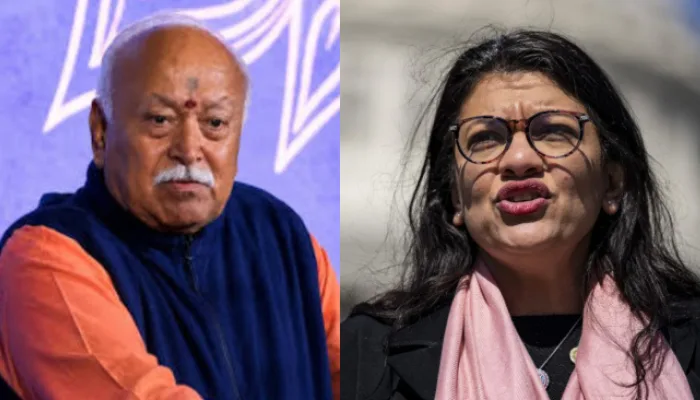
Case Summary
On 27 August 2026, during her visit to New York, US Congresswoman Rashida Tlaib criticised RSS Sarsanghchalak Dr Mohan Bhagwat on X, describing his “Hindu nationalist ideology” as “hateful” and saying Bhagwat and the ideology were “not welcome in our communities.” She also accused the Rashtriya Swayamsevak Sangh of responsibility for violence and pogroms against Muslims, Sikhs, Dalits, Christians and other groups. Tlaib’s remarks came after Bhagwat addressed gatherings in New York, where he spoke about India’s unity in diversity and described Dharma as a principle extending beyond worship. He also stated that a person who believed Muslims should be driven out of India could not be considered a Hindu in the true sense of the term. The 2026 remarks followed earlier interventions by Tlaib in which she associated Hindu nationalism and Hindu political organisations with religious persecution and minority oppression. In 2019, following the abrogation of Article 370, she introduced H.Res. 724, criticising the Indian government over its actions in Jammu and Kashmir and supporting Kashmiri self-determination. Her position focused on restrictions, communication controls and alleged human-rights violations in the region. Hindu-American organisations, however, criticised such narratives for giving insufficient attention to the persecution and displacement of Kashmiri Hindus, including the exodus of Kashmiri Pandits following killings, threats and intimidation by Islamist militants. In 2022, Tlaib co-sponsored H.Res. 1196 with Ilhan Omar, Jim McGovern and Juan Vargas. The resolution criticised alleged human-rights and religious-freedom violations in India and urged the US government to consider designating India a Country of Particular Concern. The Hindu American Foundation strongly criticised the resolution, arguing that it presented a one-sided and inflammatory account of religious violence in India and gave insufficient attention to violence against Hindus. The Foundation specifically pointed to incidents including the killing of Hindu tailor Kanhaiya Lal by Islamist extremists, targeted killings of Hindus in Kashmir and the displacement of hundreds of thousands of Kashmiri Pandits. It argued that the resolution's framing disproportionately portrayed Hindus as perpetrators of religious violence while overlooking documented instances in which Hindus were victims. Tlaib adopted similar language again in June 2023, when she joined Representatives Cori Bush, Ilhan Omar and Jamaal Bowman in boycotting Prime Minister Narendra Modi’s joint address to the US Congress. In their statement, the lawmakers accused Modi’s government of targeting Muslims and other minorities and enabling “Hindu nationalist violence”. They described allowing Modi to address Congress as shameful and called on other lawmakers to join the boycott. Her 2026 remarks against Bhagwat therefore represented a further escalation in her public criticism of Hindu nationalism. Rather than limiting her criticism to a specific government policy, Tlaib directly described Hindu nationalist ideology as “hateful” and said that Bhagwat and the ideology were “not welcome” in American communities. The remarks also came despite Bhagwat's own statements during his New York visit emphasising religious coexistence and rejecting the idea that Muslims should be excluded from India. The episode consequently became another point of contention over how Hindu nationalism, Hindu political identity and India's treatment of religious minorities are characterised in American political discourse.
Why it is Hate Crime ?
The first primary category selected is: Hate speech against Hindus. The subcategory selected is: Anti-Hindu slurs, mocking faith. Anti-Hindu slurs and the deliberate mocking of the Hindu faith owing to religious animosity involve the use of derogatory terms, stereotypes, or offensive references to religious practices, symbols, or figures. One of the common anti-Hindu slurs used against Hindus is “cow-worshipper” and “cow piss drinker”. The intention of using these terms is to demean and mock Hindus as a group and their religious beliefs, since Hindus consider the cow holy. Additionally, some symbols and the slurs attached to them have a historical context that exacerbates the insult, hate, stereotyping, dehumanisation and oppression against Hindus. Cow worship has been used for centuries to denigrate Hindus, insult their faith and oppress Hindus specifically as a religious group. There has been overwhelming documentation about how cow slaughter has been used to persecute Hindus, with cow meat being thrown in temples and places of worship. There has also been overwhelming documentation that cow meat (beef) has been force-fed to Hindus to either forcefully convert them to Islam or denigrate their faith. Apart from cow worship, the Swastika – which holds deep religious significance for Hindus – has also been misinterpreted and distorted to be used as a slur against Hindus. Similarly, the worship of the Shivling has been used by supremacist ideologies and religions to denigrate Hindus owing to religious animosity. Such slurs and denigration stem from inherent animosity and hate towards Hindus and their faith; therefore, it is categorised as hate speech targeted at Hindus specifically owing to their religious identity. The other subcategory selected is: Mocking/ denigrating Hindu leaders. Hate speech is defined as any speech, gesture, conduct, writing, or display that is prejudicial against a specific individual and/or group of people, which is leading to or may lead to violence, prejudicial action or hate against that individual and/or group. Religious leaders are often seen as representatives of the community, especially the community’s religious faith and beliefs. Mocking or denigrating a religious leader specifically owing to his religious identity and/or the religious rituals he observes can be considered hate speech because the motivating factor of the speech is animosity and/or dislike for what he represents – the religious beliefs and faith of the community. It is important to note that mere insulting words against an individual do not constitute hate speech. It is entirely possible that insulting words are used for an individual, however, the specific speech is not the result of religious hate and/or animosity towards the professed faith of the religious leader, but the individual himself. For the speech to be considered hate speech, the speech itself or the motivating factor behind the speech has to be religious in nature. Such speech which denigrates Hindu religious leaders specifically owing to animosity towards the faith they profess and the community faith they represent will be treated as hate speech under this category. The other subcategory selected is: Anti-Hindu subversion and prejudice. Hate speech is defined as any speech, gesture, conduct, writing, or display that is prejudicial against a specific individual and/or group of people, which is leading to or may lead to violence, prejudicial action or hate against that individual and/or group. Media plays a specific and overarching role in perpetuating prejudicial attitudes towards a community owing to unfair, untrue coverage and/or misrepresentation/misinterpretation, selective coverage and/or omission of facts of/about issues affecting a specific religious group. This type of bias can dehumanise the victim group, making it easier for others to justify harmful actions against them, which aligns with the objectives of hate speech laws aimed at preventing such harm. It is often observed that the media takes a prejudicial stand against the Hindu community driven by their need to shield the aggressor community which happens to be a numeric minority, however, is the one perpetrating violence against Hindus. For example, the media is often quick to contextualise religiously motivated crimes against Hindus, omit or misrepresent facts that point towards religiously motivated hate crimes, justify and/or downplay religiously motivated hate crimes, or simply present fake news to stereotype Hindus. Such media bias leads to the denial of persecution and is often used to dehumanise Hindus, leading to justification for violence against them. For example, the media covered several fake allegations of Hindus targeting Muslims and forcing them to chant Jai Shree Ram. Most of these cases were proved false and fabricated after police investigation. These fake news reports were subsequently never retracted or clarified. Such fake news led to the justification of violence and dehumanisation of Hindus based on the argument that since Hindus targeted Muslims and forced them to chant Jai Shree Ram, the dehumanisation of Hindus and violence against them was par for the course and merely a retaliation. Such media bias leads to a prejudicial portrayal of Hindus and offers a justification for violence against them and therefore is considered hate speech under this category. This case qualified as religiously motivated hate speech because Rashida Tlaib went beyond disagreement with a particular political position and explicitly characterised an ideology associated with a major Hindu organisation as “hateful” and declared that Mohan Bhagwat and that ideology were “not welcome” in American communities. The formulation attached hostility and supremacy directly to a Hindu-associated ideological identity and its most prominent organisational representative. The concern therefore arose not merely from criticism of an individual leader, but from the broader portrayal of a major current of Hindu cultural and civilisational mobilisation as inherently threatening and objectionable. These instances reflected her sheer hatred towards the Hindu faith and clear Hinduphobia regardless of the history involved. The Rashtriya Swayamsevak Sangh holds substantial cultural and organisational significance within Hindu society and has, for a century, mobilised Hindus around questions of cultural continuity, social organisation, service, national identity and civilisational consciousness. Mohan Bhagwat, as its Sarsanghchalak, consequently represents far more than an individual political personality to its supporters. When he was denigrated specifically through his association with Hindu nationalism and the RSS, the attack acquired a wider religious dimension because the language was directed at the Hindu worldview and institutional identity he represents. This was particularly significant because Bhagwat’s New York remarks themselves emphasised unity in diversity and rejected the proposition that Hindu identity required hostility towards Muslims. The language also contributed to a prejudicial portrayal of Hindu collective identity. Describing Hindu nationalism broadly through the vocabulary of hatred, supremacy, pogroms and minority persecution risks creating the impression that Hindu civilisational assertion itself is intrinsically intolerant. Such framing can extend beyond the organisation being criticised and affect Hindus who identify with Hindu cultural revival, Hindu institutions or the preservation of Hindu civilisational interests. Political criticism remains legitimate, but when Hindu-associated terminology is repeatedly presented primarily as a synonym for extremism or oppression, it can reinforce stereotypes of Hindus as inherently majoritarian, violent or hostile towards other faiths. Tlaib’s previous interventions provided additional context for this concern. Her positions concerning Jammu and Kashmir, H.Res. 1196 and the boycott of Prime Minister Narendra Modi’s congressional address repeatedly foregrounded allegations of Hindu nationalist violence, state oppression and persecution of minorities. Hindu-American organisations objected that such narratives often marginalised or omitted Hindu victims, including the displacement and targeted killings of Kashmiri Hindus, Islamist violence against Hindus and other incidents demonstrating that Hindus themselves have been victims of religious persecution. This asymmetry is relevant because prejudice can also operate through selective presentation: one community is repeatedly associated with aggression while violence suffered by that same community receives substantially less recognition. The Kashmir issue is particularly significant in this context. Any portrayal of religious conflict in Kashmir that focuses extensively on state action and minority grievances while giving inadequate recognition to the mass displacement of Kashmiri Pandits following Islamist killings, threats and intimidation produces an incomplete picture of religious persecution in the region. Hindu advocacy organisations have repeatedly objected to narratives that discuss Kashmir primarily through the framework of Indian or Hindu majoritarian oppression while failing to give equivalent visibility to Kashmiri Hindu victimhood. Such selective framing contributes to the erasure of Hindu suffering and strengthens a broader narrative in which Hindus are positioned predominantly as perpetrators rather than victims. The same concern applied to Tlaib’s support for H.Res. 1196, which Hindu-American organisations criticised for portraying religious violence in India disproportionately through the lens of minority victimhood and Hindu aggression. When combined with her later description of Bhagwat’s “Hindu nationalist ideology” as hateful and unwelcome, the sequence reflected a continuing pattern in which Hindu-linked institutions, political terminology and leadership were repeatedly associated with intolerance, supremacy and violence. The issue was therefore not one isolated criticism, but the cumulative effect of a recurring framework that Hindu organisations have argued contributes to the stigmatisation of Hindu identity and suppresses recognition of Hindu persecution. Taken together, the denigration of Mohan Bhagwat in his capacity as the leader of a major Hindu organisation, the sweeping characterisation of Hindu nationalism as hateful, and the broader pattern of narratives that foreground Hindu-associated aggression while marginalising Hindu victimhood established the religious dimension of the case. The rhetoric had the effect of delegitimising an important Hindu institution and the ideological identity associated with it, while reinforcing prejudicial stereotypes surrounding Hindu collective assertion. For these reasons, the case met the parameters of anti-Hindu hate speech, denigration of a Hindu leader, and anti-Hindu subversion and prejudice, and was added to the Hate Crime Database of the Hinduphobia Tracker.
Victim Details
Total Victim
1
Deceased
0
Gender
- Male 1
- Female 0
- Third Gender 0
- Unknown 0
Caste
- SC/ST 0
- OBC 0
- General 0
- Unknown 1
Age Group
- Minor 0
- Adult 0
- Senior Citizen 1
- Unknown 0


Case Status
Unknown


Perpetrators Details
Perpetrators
Muslim Extremists
Perpetrators Range
One Person
Perpetrators Gender
female
 Sources




