Attack on Hindu sentiments: Muslim man denigrates Hinduism, Hindu women, sacred religious symbols and Durga Puja on social media
 Cachar, Assam, India
  30 August, 2026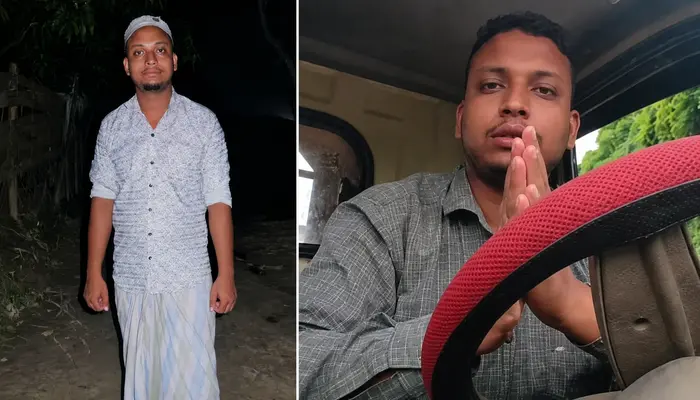
Case Summary
In Katigorah, Cachar district, Assam, Hindu women and sacred Hindu traditions were denigrated on Facebook by a Muslim man named Minarul Haque. His remarks concerned Hindu customs and festivals, including Durga Puja, as well as traditional symbols worn by Hindu women, such as shakha (white conch-shell bangles) and sindoor (vermilion). This incident came to light on the evening of Monday, 31 August 2026, when the Bharatiya Janata Party Katigorah Mandal Mahila Morcha lodged a written complaint against Haque at Katigorah Police Station. Haque, a resident of Balirbond, Gobindapur, Katigorah, had made objectionable remarks during a Facebook live session. A spokesperson for the Mahila Morcha expressed outrage over the remarks targeting Hindu women, their religious practices and festivals. She questioned how Haque could disrespect Hindu women who followed these traditions and wore shakha and sindoor. She also rejected the possibility of the matter being resolved through a Facebook video or post of apology, stating that such an apology could not erase the insult to their cultural, family and social values. The organisation demanded immediate legal action and Haque’s arrest that night. Bishalakkha Deb, the Bharatiya Janata Party Katigorah Mandal President, explained the grounds of the complaint and said that Haque had gone live on Facebook and made highly objectionable remarks concerning Hindu women, local leaders, Durga Puja and the local Member of the Legislative Assembly. Deb warned the administration that if the police failed to arrest and take legal action against Haque that night, more than 1,000 Hindu women and party workers associated with the Mahila Morcha would surround and gherao Katigorah Police Station the following day. He also warned that Haque would be held responsible if any communal tension or other untoward incident occurred during the forthcoming Durga Puja celebrations and urged the authorities to take strict legal action against him. Katigorah Police arrested Haque approximately one hour after the complaint was lodged. Naba Kumar Saikia, the Officer-in-Charge of Katigorah Police Station, was named in local coverage of the incident, and Bharatiya Janata Party leaders thanked him for the prompt police action. Police examined Haque’s Facebook posts, the content and context of the remarks, and the legal provisions applicable to the matter. The situation in Katigorah was also monitored to prevent any untoward incident. Subsequently, Haque appeared in a video and apologised for the remarks he had made about Hindu women and the Hindu community. He described his conduct as a mistake, expressed remorse and assured that he would not repeat such actions in the future. Following this, Haque’s father personally contacted the Katigorah Bharatiya Janata Party Mahila Morcha, explained his son’s condition, expressed deep remorse over the incident and assured the organisation that such behaviour would not recur. Following Haque’s apology and the assurance given by his father, the Katigorah Bharatiya Janata Party Mahila Morcha decided to forgive him and withdraw the complaint. The organisation stated that the decision was taken with the objective of maintaining peace and harmony in the community.
Why it is Hate Crime ?
The primary category selected in this case is: Hate speech against Hindus. The subcategory selected is: Anti-Hindu slurs, mocking faith. Anti-Hindu slurs and the deliberate mocking of the Hindu faith owing to religious animosity involve the usage of derogatory terms, stereotypes, or offensive references to religious practices, symbols, or figures. One of the common anti-Hindu slurs used against Hindus is “cow-worshipper” and “cow piss drinker”. The intention of using this term is to demean and mock Hindus as a group and their religious beliefs since Hindus consider the cow holy. Additionally, some symbols and the slurs attached to them have a historical context that exacerbates the insult, hate, stereotyping, dehumanisation and oppression against Hindus. Cow worship has been used for centuries to denigrate Hindus, insult their faith and oppress Hindus specifically as a religious group. There has been overwhelming documentation about how cow slaughter has been used to persecute Hindus with cow meat being thrown in temples and places of worship. There has also been overwhelming documentation where cow meat (beef) has been force-fed to Hindus to either forcefully convert them to Islam or denigrate their faith. Apart from cow worship, the Swastika – which holds deep religious significance for the Hindus – has also been misinterpreted and distorted to use as a slur against Hindus. Similarly, the worship of the Shivling has been used by supremacist ideologies and religions to denigrate Hindus owing to religious animosity. Such slurs and denigration stem out of inherent animosity and hate towards Hindus and their faith, therefore, it is categorised as hate speech targeted at Hindus specifically owing to their religious identity. This case qualified as a religiously motivated hate crime because the Muslim perpetrator made derogatory remarks against Hindu women, Sanatan Dharma, Durga Puja, and Hindu religious and cultural symbols such as shakha and sindoor, offending the religious sentiments of Hindus. Firstly, the denigration of Sanatan Dharma, or Hinduism, constituted the most direct religious marker of the incident. Sanatan Dharma is one of the world’s oldest living religious traditions and is practised by millions of people, who regard their faith, beliefs, deities, sacred traditions and religious practices as deeply revered and sacred. For the Hindu community, Hinduism is not merely a cultural identity but a religious faith that forms an integral part of their spiritual and social lives. Therefore, directing derogatory remarks at Hinduism amounted to denigrating the faith itself and the religious identity of the people who followed it. The remarks had gone beyond criticism of an individual practice or a particular personal belief and had instead subjected a revered religious tradition to contempt and disrespect. This made the targeting of Sanatan Dharma a clear religious element of the offence and directly hurt the religious sentiments of Hindus. Secondly, the remarks had specifically targeted Hindu women in connection with their observance of Hindu religious and cultural traditions. This distinction was important because the women had not been referred to merely on the basis of gender. Their identity as Hindu women who followed recognised Hindu customs and wore traditional religious and cultural symbols had formed part of the subject matter of the offensive remarks. References to Hindu mothers and sisters who observed these traditions had therefore extended the insult to women precisely in the context of their Hindu identity and religious observance. The conduct had consequently demeaned both the women concerned and the religious and cultural traditions through which they expressed their faith and community identity. Since this instance demonstrated hostility towards Hindu women due to their faith identity, it amounts to an instance of religiously motivated hate speech. Moreover, denigrating Durga Puja constituted another direct and unmistakable religious marker. Durga Puja is a major Hindu festival centred on the worship of Goddess Durga, a deeply revered manifestation of Shakti, the divine feminine power. For Hindu devotees, Goddess Durga represents strength, protection and the triumph of good over evil, and the festival involves sacred prayers, rituals, offerings and devotional practices. It is therefore not merely a cultural celebration but an important expression of Hindu faith and devotion, observed with deep reverence by millions of Hindus. By making derogatory remarks about Durga Puja, the perpetrator demonstrated hostility towards a sacred Hindu religious observance and the beliefs associated with it. Such denigration hurts the religious sentiments of the Hindu community by treating a deeply revered festival and object of devotion with contempt. The reference to shakha and sindoor had further reinforced the religious and cultural nature of the targeting. Shakha refers to traditional white conch-shell bangles worn by many married Bengali Hindu women, while sindoor refers to the red vermilion traditionally worn by married Hindu women. Both have religious significance beyond their physical appearance and are associated with Hindu marital and cultural traditions. By incorporating these symbols into derogatory remarks, the perpetrator had demeaned visible expressions of Hindu womanhood, marriage and cultural identity. The insult had therefore extended to tangible symbols through which Hindu women expressed their connection to longstanding religious and cultural customs. The targeting had also encompassed Hindu religious customs and traditions more broadly. Such customs form an important part of how Hindu families and communities preserve religious practices, cultural values and collective identity across generations. The objectionable remarks had therefore not singled out an isolated or incidental practice. Instead, they had brought together several recognisable markers of Hindu identity, including Sanatan Dharma, Hindu women, Durga Puja, shakha, sindoor and Hindu religious customs. The cumulative nature of these references demonstrated that the content had been directed towards identifiable aspects of Hindu religious and cultural life. Overall, since this case meets the parameters of a religiously driven hate speech, it is being added to the hate crime database of the tracker. Disclaimer: The Hinduphobia Tracker records incidents based on when an event occurred or when the victim's ordeal began. It is important to clarify that none of the media sources covering this case has specified the exact date when the incident occurred. Therefore, for documentation purposes, we have recorded the date based on when the incident was reported in the media, 31st August 2026.


Case Status
Arrested


Perpetrators Details
Perpetrators
Muslim Extremists
Perpetrators Range
One Person
Perpetrators Gender
male
 Sources




