Hindu faith denigrated: Maa Kali depicted in inappropriate clothes holding a cigarette in her hand in AI generated video
 Mumbai, Maharashtra, India
  25 August, 2026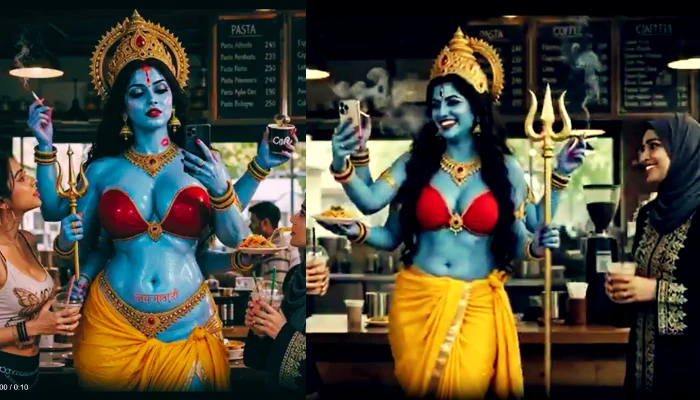
Case Summary
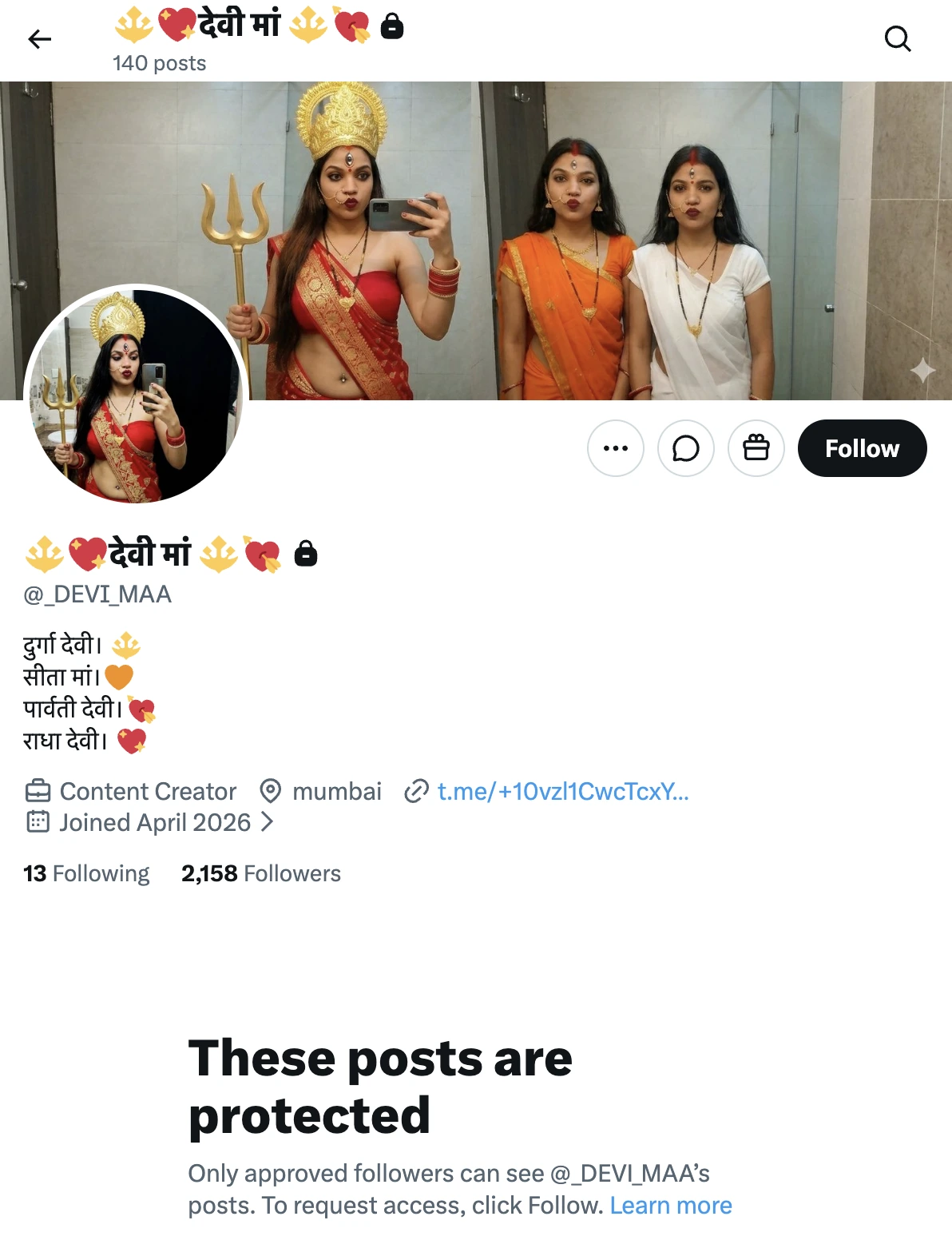
Hindu religious sentiments were outraged after a social media account posted an AI (Artificial Intelligence)-generated video depicting the Hindu goddess, Maa Kali, in a profoundly disrespectful, outrageous and inappropriate manner. In the video, a multi-armed, blue-skinned figure resembling a Hindu deity (with crown, trident, and jewellery) was shown. The Hindu goddess was depicted scantily dressed, wearing a bralette and styled in a manner akin to a commercial dance performer. The video also showed the Hindu deity casually carrying a cigarette in her hand. The portrayal depicted the revered deity in a sexually suggestive and undignified manner. When the team at Hinduphobia Tracker investigated further, they found that the post was shared by the X account @_DEVI_MAA, a Mumbai-based content creator account displaying Hindu devotional imagery and invoking Durga Devi, Sita Maa, Parvati Devi and Radha Devi in its bio. The account had 2,158 followers and 13 accounts followed, and showed that it had joined X in April 2026. The account was protected, meaning its posts could only be viewed by approved followers. The AI-generated video shared by this account, showed the goddess wearing a bralette and dancer-like attire, casually smoking, and holding a smartphone and a food plate in a modern coffee shop while interacting with two women, one in Western attire and one in hijab, substantially departing from the traditional iconography of the revered Hindu goddess. In the video, the deity was seen asking the girls standing nearby why they do not worship her now. The girl in the video replied, “ Devi Maa, we girls have grown modern, so we don’t worship you”. Meanwhile, the other Muslim girl replied: “Devi, I can't worship you”. Social media users strongly condemned the deliberately obscene and irreverent portrayal of Maa Kali, pointing out that the depiction had been stripped of the goddess's traditional iconography and instead presented her in revealing, dancer-like attire while holding a cigarette. They described the portrayal as a gross insult to a revered Hindu deity and called for the account to be removed from X.
Case Images
Why it is Hate Crime ?
This case has been added to the Hinduphobia tracker under the primary category of Attack on Hindu religious representation. The subcategory selected is: Iconoclastic representation of Hindu Gods/Goddesses. An icon is a symbol of someone or something that is revered, or a religious representation of a spiritual ideal. Iconography is of vital significance in the Hindu milieu. It helps connect people’s spiritual beliefs with the real world. Iconography within the Hindu faith takes several shapes and forms. Murtis are of most significance to Hindus, to which daily rituals, prayers and offerings are done. Besides the murtis, there are several other symbols which have deep significance in the Hindu faith – the Om and Swastika for example. Any iconoclastic representation of these symbols, images and murtis is an affront to the religious beliefs and faith of the Hindu community itself since the symbols and icons are deeply religious in nature. In this sub-category of crime, we would record hate crimes and iconoclastic representations, in words, art, or any other form of representation of symbols that hold religious significance for the Hindu community. Since these symbols, icons and murtis are central to the Hindu faith, any iconoclastic representation of these symbols is born out of animosity towards the faith itself, manifesting itself through these symbols, and therefore, these representations would be considered religiously motivated hate crimes. The othercategory selected is: Hate speech against Hindus, and within this, the subcategory is: Anti-Hindu slurs, mocking faith. Anti-Hindu slurs and the deliberate mocking of the Hindu faith owing to religious animosity involve the usage of derogatory terms, stereotypes, or offensive references to religious practices, symbols, or figures. One of the common anti-Hindu slurs used against Hindus is “cow-worshipper” and “cow piss drinker”. The intention of using this term is to demean and mock Hindus as a group and their religious beliefs since Hindus consider the cow holy. Additionally, some symbols and the slurs attached to them have a historical context that exacerbates the insult, hate, stereotyping, dehumanisation and oppression against Hindus. Cow worship has been used for centuries to denigrate Hindus, insult their faith and oppress Hindus specifically as a religious group. There has been overwhelming documentation about how cow slaughter has been used to persecute Hindus with cow meat being thrown in temples and places of worship. There has also been overwhelming documentation where cow meat (beef) has been force-fed to Hindus to either forcefully convert them to Islam or denigrate their faith. Apart from cow worship, the Swastika – which holds deep religious significance for the Hindus – has also been misinterpreted and distorted to use as a slur against Hindus. Similarly, the worship of the Shivling has been used by supremacist ideologies and religions to denigrate Hindus owing to religious animosity. Such slurs and denigration stem out of inherent animosity and hate towards Hindus and their faith, therefore, it is categorised as hate speech targeted at Hindus specifically owing to their religious identity. This case was included in the Hinduphobia Tracker because it involved the deliberate degradation of a revered Hindu goddess through an AI-generated representation that stripped her of her sacred dignity and presented her as an object of ridicule. Hindu deities are an integral part of the Hindu religion, and Hindu goddesses are one of the most revered manifestations as they represent the Divine Mother. Any deliberate attempt to mock, sexualise or insult a revered Hindu deity undermines the sanctity of Hinduism and is deeply offensive to Hindu devotees. In this case, the AI-generated video directly attacked the dignity of Devi Maa by presenting her in a vulgar, frivolous and degrading manner. The portrayal was not a random or misguided act, but a carefully constructed representation that used a revered Hindu deity as the subject of ridicule and disrespect. It is also significant to note here that the video drew a clear contrast between the treatment of the Hindu goddess and the Muslim woman. While the Muslim woman was depicted wearing a hijab that covered her body and was presented in a respectful manner consistent with Islamic religious norms, the Hindu goddess was portrayed in a vulgar and sexually suggestive manner. This unequal treatment was central to the offensive nature of the content. The contrast did not merely depict two different characters; it placed a respected representation of Islam while showing that the Hindu religion is perverted. Further, the dialogue added another layer of religious mockery by presenting the Hindu girl’s decision not to worship the goddess as a sign of being “modern”, while the Muslim woman was shown adhering to and respecting her Islamic values. This deliberate contrast portrayed Hindu worship as outdated and unworthy of respect, while placing Islamic religious values in a dignified position. It therefore targeted Hindu devotees and the belief that Hindu gods and goddesses were worthy of worship, seeking to ridicule and undermine the religious practice of worshipping Hindu deities. Such conduct constituted religious hate because it went beyond creative expression or ordinary criticism and instead deliberately demeaned a sacred Hindu figure and the religious beliefs associated with her. The video further mocked the practice of worshipping the deity, thereby turning a central aspect of Hindu faith into an object of ridicule. Moreover, by publicly circulating such content, the social media account amplified the insult and exposed Hindu religious beliefs to deliberate mockery. The conduct demonstrated hostility towards the sanctity of Hindu faith and the religious sentiments of Hindus, making the religious identity of the target central to the offence. Furthermore, the use of artificial intelligence made the portrayal intentional rather than a spontaneous or accidental depiction. The content required the creation of a specific visual representation, the selection of how the deity would appear and behave, and the construction of dialogue around her worship. These elements worked together to produce a deliberately irreverent portrayal of a Hindu goddess. The account then circulated the content publicly, extending the insult beyond a private expression and exposing a revered Hindu religious figure to public ridicule. The portrayal therefore demeaned the Hindu faith by associating its revered goddess with vulgarity, frivolity and disgrace, while according comparable religious identity to the Muslim character through a respectful depiction. By presenting Hinduism in a degrading manner while maintaining respect towards Islam, the video created a disparaging comparison that lowered the dignity of Hindu religious beliefs and their sacred figures. This demonstrated that the religious identity of the Hindu deity was central to the mockery rather than incidental to the content. The deliberate contrast, combined with the ridicule of Hindu worship, showed a conscious effort to portray Hindu religious identity as inferior, perverted and deserving of ridicule. Finally, this contrast showed that the content did not merely use religious figures for entertainment but consciously placed one faith in a respectful position while portraying the other as perverted, disgraceful and worthy of ridicule. The deliberate disparity in representation demonstrated an intent to demean Hinduism and its sacred figures, making the Hindu religious identity central to the offence. Therefore, the case was added to the Hinduphobia tracker.


Case Status
Unknown


Perpetrators Details
Perpetrators
Others
Perpetrators Range
One Person
Perpetrators Gender
female
 Sources




