'If Hindu girls cannot be converted, then why was Pakistan formed’, Muslim panelist questions curbs on conversion
 Sindh, Pakistan
  30 August, 2022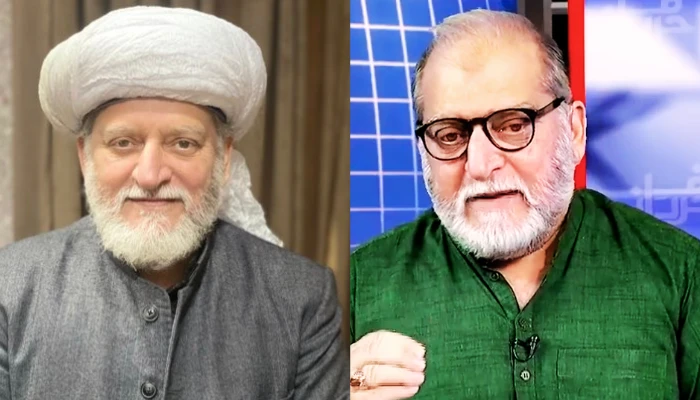
Case Summary
An old video of Pakistani journalist and political commentator Orya Maqbool Jan resurfaced on social media on 31 August 2026, drawing attention to remarks that trivialised the religious identity and vulnerability of Hindu and Christian girls. The remarks were made while he was opposing the Forced Religious Conversion Bill, 2021, during which he argued for lowering the age threshold for conversion and questioned why Pakistan was created if Hindu and Christian girls were not allowed to convert to Islam. The video circulating on 31 August 2026 was actually a 2022 recording in which Jan discussed the proposed legislation on forced religious conversion during an interview. He questioned how the Senate committee was examining the bill and objected to committee members not receiving copies of the proposed law for review. While he acknowledged that forced conversion had no place in Islam, he strongly opposed the proposed restrictions on conversion by persons below 18 years of age. While discussing the age restriction, Jan specifically referred to Hindu and Christian girls. He argued that a 13- or 14-year-old “woman” could have a boyfriend, leave with him and enter into a court marriage, yet would be prevented from converting to Islam under the proposed legislation. By making this comparison, he questioned the safeguards the bill sought to provide to minors and presented the conversion of underage non-Muslim girls to Islam as a matter of individual choice. Jan went further by questioning the very rationale behind Pakistan’s creation in the context of restrictions on the conversion of Hindus and Christians. He asked, in substance, that if Hindus and Christians could not convert to Islam, then what was the identity of Pakistan and why had it been created. His remarks therefore directly linked the conversion of non-Muslims to Pakistan’s religious identity and portrayed restrictions on such conversions as contrary to the country’s purpose. The remarks were particularly significant because the proposed bill sought to regulate forced religious conversion and provide safeguards for minors below 18 years of age. By questioning those protections and presenting the conversion of 13- and 14-year-old Hindu and Christian girls to Islam as a matter of personal choice, Jan’s comments undermined the need for safeguards intended to protect minors from religious coercion. The remarks also reduced the vulnerability of non-Muslim girls to a question of Pakistan’s religious purpose, effectively treating their conversion to Islam as something that should remain unrestricted. The video circulated on 31 August 2026 was therefore an older recording from 2022, not a statement Jan made on the date it went viral. It is included here because the remarks resurfaced and gained renewed attention on social media on that date. The proposed bill later did not materialise and was subsequently struck down.
Why it is Hate Crime ?
This case is being added to the tracker under the primary category: Hate Speech against Hindus. The subcategory selected is: Anti-Hindu slurs, mocking faith. Anti-Hindu slurs and the deliberate mocking of the Hindu faith owing to religious animosity involve the usage of derogatory terms, stereotypes, or offensive references to religious practices, symbols, or figures. One of the common anti-Hindu slurs used against Hindus is “cow-worshipper” and “cow piss drinker”. The intention of using this term is to demean and mock Hindus as a group and their religious beliefs since Hindus consider the cow holy. Additionally, some symbols and the slurs attached to them have a historical context that exacerbates the insult, hate, stereotyping, dehumanisation and oppression against Hindus. Cow worship has been used for centuries to denigrate Hindus, insult their faith and oppress Hindus specifically as a religious group. There has been overwhelming documentation about how cow slaughter has been used to persecute Hindus, with cow meat being thrown in temples and places of worship. There has also been overwhelming documentation where cow meat (beef) has been force-fed to Hindus to either forcefully convert them to Islam or denigrate their faith. Apart from cow worship, the Swastika – which holds deep religious significance for the Hindus – has also been misinterpreted and distorted to use as a slur against Hindus. Similarly, the worship of the Shivling has been used by supremacist ideologies and religions to denigrate Hindus owing to religious animosity. Such slurs and denigration stem from inherent animosity and hate towards Hindus and their faith; therefore, it is categorised as hate speech targeted at Hindus specifically owing to their religious identity. This case was included in the Hinduphobia Tracker because Orya Maqbool Jan’s remarks targeted the religious identity of Hindu girls while discussing a bill that sought to prevent the forced conversion of non-Muslims to Islam. The religious trigger was clear: the discussion concerned protecting Hindu minors from being forcibly converted to Islam. The bill under discussion was designed to prevent forced conversion of non-Muslims to Islam and to provide protection to persons below 18 years of age. The commentator first used reassuring words and then quickly retorted that if Hindu girls were not converted to Islam, then the purpose of creating Pakistan would fail. Moreover, the commentator implied that if a 13-year-old “woman” could go with her boyfriend and enter a court marriage, then she could also be converted to Islam. This line of argument ignored the core intent of the bill, which spoke of forcible conversion and not willful conversion, and thereby normalised the idea that underage Hindu girls ought to be available for religious transfer. Therefore, he stressed the point that religious conversion of Hindu girls was the primary motive, and this bill stopped them from doing it. Further, a minor below 18 is legally treated as a child because this age is recognised as a limitation on mature decision-making and informed consent. A child cannot be expected to possess the same understanding, independence and ability to distinguish complex consequences as an adult. Due to their age, they have no understanding of consent and could not distinguish between right and wrong. For this reason, every country kept the age of a minor below 18 and placed special safeguards around them. This was precisely why the proposed law sought to provide additional protection to minors rather than treating their religious conversion in the same manner as an adult's voluntary change of faith. The commentator’s challenge to this safeguard, specifically through the lens of Hindu girls, signalled a contempt for Hindu religious boundaries and portrayed Hindu identity as expendable in service of a majoritarian religious narrative. The way the panellist modulated his argument exposed the underlying intent behind his remarks. He first acknowledged that forced conversion was not permitted in Islam, but immediately shifted to questioning why Hindu girls could not be converted before the age of 18. This contradiction showed that his concern was not with voluntary conversion, but with removing safeguards that protected non-Muslim minors from forced conversion. His reference to the purpose of Pakistan further revealed the ideological nature of his argument, as he presented the conversion of Hindus and Christians to Islam as being connected to the very purpose of the state. This reflected a mindset in which the religious identity of Hindus was treated as something that could be overridden through conversion, displaying deep hostility towards the right of Hindus to retain their faith. In this specific case, it is important to also explain the dynamics of religious conversions in Pakistan. It is true that there are several religious conversions around the world that are completely voluntary and undertaken of one's own free will, driven by a change in faith. However, the broader environment facing Hindus in Pakistan further strengthens concerns in cases involving conversion and religious coercion. Religious conversions in Pakistan have an especially predatory nature. Pakistan, being an Islamic nation, harbours specific animosity towards non-Muslims, especially Hindus. Human rights organisations, minority rights groups, and numerous documented cases have shown that abductions, forced conversions, forced marriages, blasphemy accusations, and intimidation are not isolated incidents but form part of a recurring pattern affecting the Hindu minority. Over the years, Hindu families have repeatedly reported that girls were abducted, converted to Islam, married to their abductors, and then prevented from returning to their families through social, religious, and institutional pressure. The situation is made even more severe by Pakistan's blasphemy laws and the atmosphere surrounding them. Blasphemy accusations often carry devastating consequences, including mob violence, social persecution, and extrajudicial killings. For minority Hindus, the mere threat of such an accusation can become a powerful tool of intimidation. Minority rights advocates have repeatedly warned that this climate of fear makes it difficult for Hindu victims and their families to openly resist coercion, challenge conversions, or seek justice without risking further harm. Viewed cumulatively, these incidents point towards a sustained pattern in which Islamists target vulnerable members of the Hindu minority through coercion, intimidation, conversion pressure, and the misuse of religious and legal mechanisms. The repeated nature of these incidents across different regions of Pakistan ascertains a well-established strategy of marginalising Hindu communities and weakening their ability to preserve their religious identity. Thus, the remarks sought to undermine the protection available to Hindu minors against forced conversion and to present the conversion of Hindus to Islam as integral to Pakistan’s religious identity. By questioning why Hindu girls could not be converted before the age of 18, the perpetrator normalised the targeting of vulnerable Hindu minors for conversion. His framing also diminished the right of Hindus to retain their faith without coercion or pressure. The remarks therefore reflected religious animosity towards Hindu identity and promoted a narrative in which the conversion of Hindus was treated as desirable, making the statement an expression of hate against Hindus. Disclaimer: Here it becomes important to note that the video of the discussion went viral on 31 August 2026, while the year of the incident was identified as 2022. However, the exact date and month when the incident occurred were not mentioned. Therefore, to document this case, we have chosen 31 August 2022 as the date, combining the known year with the day and month of the reporting date. This date is not accurate but only indicative of the year.


Case Status
Unknown


Perpetrators Details
Perpetrators
Muslim Extremists
Perpetrators Range
One Person
Perpetrators Gender
male
 Sources




