Hindu heritage erased in Pakistan: 100-Year-old Hindu temple demolished to construct a Madarsa
 Punjab, Pakistan
  20 August, 2026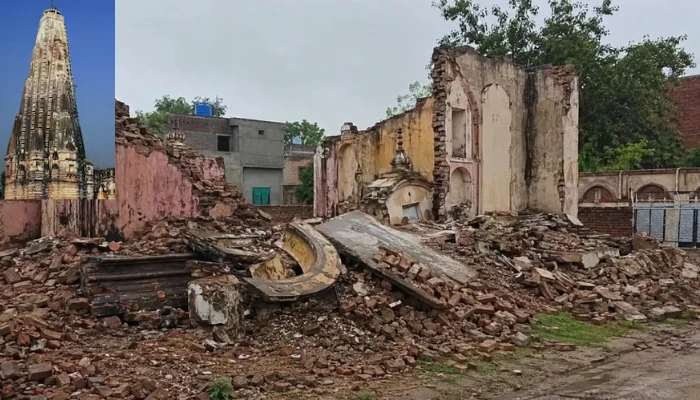
Case Summary
In Punjab province of Pakistan, a 100-year-old ancient Hindu temple was demolished by members of Tehreek-e-Labbaik Pakistan (TLP) on 21 August, 2026. The temple was demolished to make way for the construction of a madarsa on the adjoining land. According to the news agency Press Trust of India (PTI), the temple was estimated to be 100 to 125 years old and stood on approximately 1,000 square metres of land in Siraj village of Narowal, about 130 kilometres from Lahore. The temple had served as a historic place of worship for the local Hindu community. The dispute over the adjoining land had its roots in earlier decisions of the Evacuee Trust Property Board (ETPB), which oversees minority religious properties and sites in Pakistan. The land adjacent to the temple had previously been leased to a madarsa. Due to years of non-payment of rent and non-compliance with the agreed conditions, the ETPB’s Sialkot Deputy Administrator cancelled the lease on 29 January 2026. Following the cancellation, the administration issued orders to evict the illegal occupants and seal the premises. However, the orders were not implemented on the ground, and the madarsa continued to operate from the premises. According to the Pakistan Masiha Millat Party (PMMP) and residents, individuals associated with the Tehreek-e-Labbaik Pakistan (TLP) demolished the temple structure during the night of 21 August, 2026. The minority organisation and residents stated that the temple land was being forcibly acquired to expand the nearby madarsa. Following the demolition, the metal from the temple’s dome or spire, old bricks and other valuable debris were removed from the site. PMMP President Aslam Parvez Sahotra subsequently raised the matter with the Punjab government. On 28 August, 2026, he met the Additional Home Secretary of Punjab and submitted a written complaint regarding the demolition and removal of the temple material. Local Hindu and minority representatives strongly objected to the destruction of the historic temple. Hindu community leader Ratan Lal and other representatives demanded that the government immediately restore the historic site to its original form and provide protection to other minority religious sites in the area. Ratan Lal also stated that the presence of the illegal madarsa and constant threats had made local Hindus hesitant to visit the sacred site. The PMMP demanded strict action against those responsible, the immediate removal of the illegal encroachment, and the restoration of the temple to its original form. It also called for enhanced security for Hindu temples, Sikh gurdwaras and Christian churches across Punjab, raising wider concerns over the safety of non-Muslim religious sites. The government, however, rejected claims that the temple had been deliberately demolished. Rana Iftikhar, a senior ETPB official, acknowledged that the structure was 100 to 125 years old but said it had collapsed naturally due to torrential monsoon rains. He also stated that the temple land had not been leased to anyone.
Why it is Hate Crime ?
This case has been added to the tracker under the primary category: Attack on Hindu religious representations. The sub-category selected is: Attack on Temples. In Hinduism, a temple is the abode of the Deity. The Deity in the Temple is consecrated, thereby making it a real, breathing entity. Hindus believe that not just the Deity but the temple premises themselves are sacred to Hindus since Hindus hold the faith that the entire Temple space is an amalgamation of the divine energy of the deity. Given the central significance of Temples in Hindu Dharma, any attack against a Hindu Temple or its peripheral premises is an attack on the faith itself and is born out of animosity towards the faith, of which the Temple is a central tenet. Any manner of attack against a Temple and/or its premises would therefore be considered a religiously motivated hate crime. The other category selected for this case is: Desecration of Hindu religious symbol. Icons and symbols or a religious representation of a spiritual ideal are widely revered in Hinduism. Iconography is of vital significance in the Hindu milieu. It helps connect people’s spiritual beliefs with the real world. Iconography within the Hindu faith takes several shapes and forms. Murtis are of most significance to Hindus, to which daily rituals, prayers and offerings are done. Besides the murtis, there are several other symbols which have deep significance in the Hindu faith – the Om and Swastika for example. Since these Hindu religious symbols hold paramount importance in Hinduism, any desecration of symbols, icons, murtis, religious representations and manifestations, is driven by animosity towards the faith itself which manifests itself through these murtis, icons and symbols. Therefore, any desecration of these Hindu religious symbols and representations is considered religiously motivated hate crimes under this category. This case was included in the Hinduphobia Tracker because the destruction of an ancient Hindu temple directly attacked a sacred institution of Hinduism and harmed the religious identity of the Hindu community. A Hindu temple is not merely an old building or a historical monument; it is a sacred space associated with the presence of the Deity, where devotees worship, offer prayers and maintain their connection with their faith. The Deities installed in a temple are consecrated and therefore hold deep religious reverence for Hindus. The sanctity of a temple does not diminish with age; rather, an ancient temple gains greater religious and cultural significance as generations of devotees continue to worship there. The fact that this temple had stood for 100 to 125 years therefore made its destruction an even greater loss to the Hindu community, as it represented generations of Hindu religious worship, heritage and cultural continuity. Its destruction consequently constituted an attack on a sacred Hindu space and on the religious identity associated with it. More importantly, the incident had to be viewed against the wider treatment of Hindus in Pakistan. Hindus had faced repeated attacks on temples and other religious sites, while Hindu women and minors had been subjected to abduction, forced conversion and marriage, and members of the community had also faced violence because of their faith. In this environment, the destruction of another ancient Hindu religious site could not be viewed merely as the loss of a dilapidated structure. It further diminished the religious space available to an already vulnerable minority and reinforced the insecurity surrounding Hindu places of worship. The targeting of a Hindu temple therefore reflected hostility towards a distinctly Hindu religious institution and the community whose faith it represented. The religious nature of the offence became further evident from the treatment of the temple and the adjoining property. The madarsa was operating from the adjoining land despite the cancellation of its lease and the order to evict the occupants. Thus, an illegal structure that was ordered to be removed remained in place, while the legally standing ancient Hindu temple was destroyed. The situation resulted in a sacred Hindu site being lost while the structure whose occupation had been ordered to end continued to remain. This was therefore not simply a dispute over an ordinary parcel of land; it directly affected a protected Hindu place of worship and the religious rights of the Hindu community. The official response also failed to recognise the religious harm suffered by the Hindu community. Officials denied that the lease to the madarsa was issued and rejected the account that the temple was deliberately destroyed, stating instead that it collapsed due to heavy rains. However, the removal of the temple’s metalwork, old bricks, and other debris from the site could not have occurred solely through natural collapse; these materials required manual removal. The official explanation therefore failed to account for the removal of material from the remains of the ancient Hindu temple. In the wider context of the persistent persecution of Hindus in Pakistan, this response further reflected the vulnerability of Hindu religious sites and the failure to adequately protect them. The destruction therefore represented a direct assault on Hindu religious heritage and the community’s right to preserve and access its sacred places. The circumstances surrounding the adjoining madarsa land strengthened the religious dimension of the offence, while the subsequent official denial failed to provide meaningful protection to the affected Hindu community. The conduct demonstrated disregard for the sanctity of Hindu worship and the religious rights of Hindus. The destruction of an ancient Hindu temple in these circumstances therefore constituted a religiously motivated hate crime against Hindus and warranted its inclusion in the Hinduphobia Tracker.


Case Status
Complaint filed


Perpetrators Details
Perpetrators
Muslim Extremists
Perpetrators Range
Unknown
Perpetrators Gender
unknown
 Sources




