Idols of Hindu deities deliberately desecrated during theft at Hindu temple in Delhi
 Delhi, India
  27 August, 2026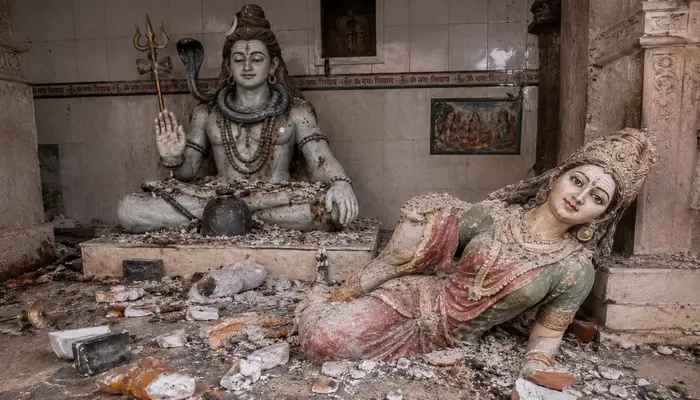
Case Summary
In Tikri village of Delhi’s Narela Industrial Area, an ancient Shiva temple was targeted by thieves, who broke open the temple’s donation box and stole the cash kept inside. During the incident, the idols of Lord Shiva and Goddess Parvati were deliberately vandalised and desecrated. According to local resident Deep Khatri, villagers reached the temple after receiving information about the incident and checked the CCTV footage installed on the premises. The footage showed that the perpetrators had remained inside the temple for around five hours on the night of 28 August 2026, while carrying out the theft. After taking the cash from the donation box, they deliberately broke the idols of Lord Shiva and Goddess Parvati. The police registered a case of theft and began an investigation. Outer North District Deputy Commissioner of Police Shobhit D. Saxena said that the incident was being investigated, while police teams worked to identify and apprehend those involved based on the CCTV footage. The incident caused anger among local residents, particularly over the theft and vandalism at the Hindu place of worship.
Why it is Hate Crime ?
This case has been added to the tracker under the primary category of: Attack on Hindu religious representation. Under this, the sub-category selected is: Desecration of Hindu religious symbol. Icons and symbols or a religious representation of a spiritual ideal are widely revered in Hinduism. Iconography is of vital significance in the Hindu milieu. It helps connect people’s spiritual beliefs with the real world. Iconography within the Hindu faith takes several shapes and forms. Murtis are of most significance to Hindus, to which daily rituals, prayers and offerings are done. Besides the murtis, there are several other symbols which have deep significance in the Hindu faith – the Om and Swastika for example. Since these Hindu religious symbols hold paramount importance in Hinduism, any desecration of symbols, icons, murtis, religious representations and manifestations, is driven by animosity towards the faith itself which manifests itself through these murtis, icons and symbols. Therefore, any desecration of these Hindu religious symbols and representations is considered religiously motivated hate crimes under this category. The other sub-category selected here is - Attack on temples. In Hinduism, a temple is the abode of the Deity. The Deity in the Temple is consecrated, thereby, making it a real, breathing entity. Hindus believe that not just the Deity but the temple premises itself are sacred to Hindus since Hindus hold the faith that the entire Temple space is an amalgamation of the divine energy of the deity. Given the central significance of Temples in Hindu Dharma, any attack against a Hindu Temple or its peripheral premises is an attack on the faith itself and is born out of animosity towards the faith, of which, the Temple is a central tenet. Any manner of attack against a Temple and/or its premises would therefore be considered a religiously motivated hate crime. The incident constituted an attack on Hindu religious representations because the perpetrators did more than enter the temple to steal cash. After breaking open the donation box and taking the money, they specifically proceeded to damage the idols of Lord Shiva and Goddess Parvati, two sacred Hindu deities. The sequence of events was significant because the theft itself could have been completed without interfering with the idols. Instead, the perpetrators remained inside the temple for around five hours and, after accessing the donation box, broke the sacred representations installed for Hindu worship. The destruction of the idols therefore added a distinct element of desecration to the offence and directly targeted objects that held religious significance for the Hindu community. In Hinduism, idols are not regarded merely as decorative objects or material possessions but as sacred manifestations or representations of the deities worshipped by devotees. Through consecration rituals and regular worship, an idol becomes an integral part of the spiritual and ritual life of the temple and its devotees. Devotees offer prayers, flowers, food, lamps and other forms of worship before the deity, making the idol a central element of daily Hindu religious practice. Hindu temples themselves are sacred spaces dedicated to the worship of deities, the performance of rituals and the observance of religious customs, and they serve as important centres of spiritual and communal life. The temple and the consecrated idols within it are therefore deeply connected to Hindu faith, worship and religious traditions, with their sanctity protected through established customs and rituals. Deliberately desecrating idols of Lord Shiva and Goddess Parvati therefore affected the sanctity of the place of worship and deprived devotees of the intact religious representations through which they practised their faith. Such deliberate destruction can cause religious offence and distress beyond the immediate material loss caused by the theft, as it attacks symbols that are central to Hindu religious practice and belief. Therefore, breaking into a Hindu temple, forcibly entering its premises, and subsequently vandalising the sacred idols did not merely amount to an ordinary theft. The perpetrators specifically targeted an ancient Hindu place of worship and proceeded to break the idols of Lord Shiva and Goddess Parvati, which were central religious representations for the Hindu devotees worshipping at the temple. The specific nature of the target, the sacred character of the idols and the deliberate destruction of Hindu religious representations therefore gave the incident a distinct religious dimension beyond the theft of cash.


Case Status
Arrested


Perpetrators Details
Perpetrators
Unknown
Perpetrators Range
Unknown
Perpetrators Gender
unknown
 Sources




