Hindu woman lured, raped, pressured to convert to Islam and forced into prostitution by Muslim man posing as Hindu in Varanasi
 Varanasi, Uttar Pradesh, India
  27 February, 2020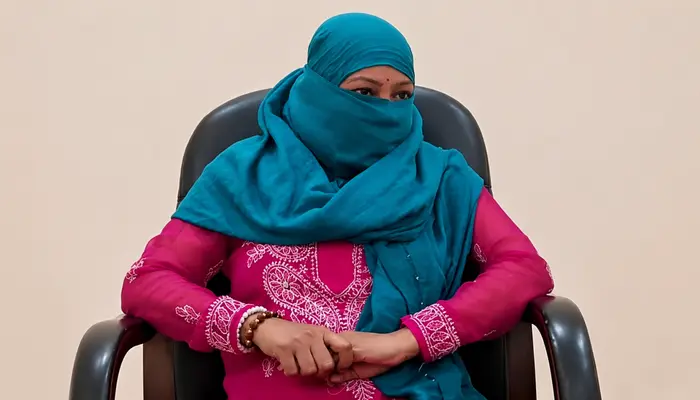
Case Summary
In Varanasi, Uttar Pradesh, a Hindu woman from West Bengal was lured into a relationship by a Muslim man who concealed his identity and posed as a Hindu. The accused was identified as Mohammad Faiz, who pretended to be “Sunny Mishra” and married her in a temple according to Hindu rituals to gain her trust. The victim was drugged, raped and pressured to convert to Islam. When she resisted conversion, Faiz and his brother, Ibrahim Sheikh, threatened to make her obscene videos public and issued death threats against her. They used the videos to blackmail her and force her into prostitution. According to media reports, on 28 February 2020, the woman, a resident of Mulajor Road in Bhatpara, Jagatdal, North 24 Parganas, West Bengal, travelled to Varanasi with a female friend to offer prayers at the Kashi Vishwanath Temple. During the visit, she met Mohammad Faiz, who introduced himself as “Sunny Mishra”. He told her that he could help her find a rented room and gave her his mobile number. He subsequently obtained her phone number, remained in contact with her and gradually became a close friend. During the visit, he guided the woman to a hotel in Patel Nagar, where they stayed for around two hours before visiting other temples and leaving Varanasi on a night train. After she returned to West Bengal, Faiz continued contacting her and persuaded her to return to Varanasi by promising to marry her through a legal court marriage. Trusting him, she left home without informing her family and carried her personal identification documents because she intended to inform her parents after completing the marriage. Faiz brought her to Varanasi and kept her in hotels in the Patel Nagar area. There, he gave her alcohol and intoxicating substances, took advantage of her incapacitated condition and had sexual intercourse with her without her consent. He also secretly recorded obscene and explicit videos of her. Faiz later took her to the Kashi Vishwanath Temple located inside the Banaras Hindu University campus, where he performed a ritual marriage ceremony and represented it as legally valid. He subsequently disclosed that his real name was Mohammad Faiz and that he was Muslim. He continued promising to marry her while making conversion a condition for the marriage. He pressured her to adopt Islam and promised to marry her through nikah after her conversion. When she opposed the conversion, Faiz and his brother Ibrahim threatened to circulate her obscene videos and threatened to kill her. They used the recordings to blackmail her and force her into the illegal prostitution trade. Faiz and Ibrahim sent the woman to various hotels in Varanasi and outside the city and forced her to engage in sexual activities with customers and travellers staying at the hotels. Faiz regularly transported her to different hotels in his car and concealed the identities of the men she was made to meet. She was forced to meet multiple men, while Faiz, Ibrahim and other accomplices, including Faiz’s friends, were involved in the operation. The money received from the customers was kept by the two brothers. The proceeds from the prostitution were collected directly through bank accounts with the State Bank of India and Utkarsh Small Finance Bank and through Quick Response (QR) code scanners linked to the accused. The accused received and spent the money generated through the illegal activity. When the woman resisted being forced into prostitution, Faiz and Ibrahim subjected her to physical assault and abuse. Faiz continued promising to marry her and also got her to execute a No Objection Affidavit concerning the prostitution activity. When she threatened to approach the police, Faiz issued further threats, telling her that he would cut her into pieces and throw her away. He also told her that even if she approached the police, he would be released within two days and take revenge, after which her condition would be terrifying, and nobody would be able to save her. He further threatened that her mother would eventually see her hanging from the ceiling. On 25 November 2025, according to the later account given in the complaint, Faiz took the woman to a rented house in Purushottam Puri Colony, Kotwa Road, Phulwaria. The house belonged to a person identified as Bharat Lal. Faiz had been staying in the rented premises, and the woman was taken there before being sent to Delhi as part of the conspiracy. During her absence, at around 10:30 pm, the lock of the room was broken and her household belongings were taken. The stolen items included gold bangles weighing approximately 20 grams and ₹25,000 in cash. Some reports dated the theft to December 2025, while the later account specified 25 November 2025. The woman subsequently approached Cantt Police Station and Adampur Police Station regarding the matter. She said that she spent around 20 days approaching local police officers and seeking registration of her complaint, but a First Information Report was not initially registered. She then personally approached the Police Commissioner of Varanasi, wept and pleaded for justice and strict action against Faiz and the others. Following the Commissioner’s intervention, the police ordered action in the case. Cantt Police Station subsequently registered a First Information Report on the basis of the Commissioner’s order, and the investigation was assigned to Senior Sub-Inspector Ram Kewal Yadav. Cantt Inspector Raj Kishore Pandey confirmed that Faiz was arrested and produced before the court. The court remanded him to 14 days of judicial custody, following which he was sent to jail. The police began searching for the other accused, Ibrahim. On 3 August 2026, the woman gave her account of the case to the media in Varanasi. During the interaction, she stated that she belonged to the Brahmin community and described the events since 2020, including how Faiz had approached her while concealing his Muslim identity and using the Hindu name “Sunny Mishra”, gained her trust by promising marriage, sexually assaulted her after giving her alcohol and intoxicating substances, secretly recorded obscene videos of her, performed a ritual marriage ceremony while concealing his actual identity, later pressured her to convert to Islam and marry through nikah, and used the recordings to blackmail and force her into prostitution. She also spoke about the involvement of Ibrahim and other accomplices, the collection of prostitution proceeds through bank accounts and Quick Response (QR) codes, the physical abuse and death threats she faced, the theft of her jewellery, cash and household belongings, and her repeated attempts to obtain police assistance before approaching the Police Commissioner.
Why it is Hate Crime ?
The primary category selected in this case is: Crimes against women in relationships and other sexual crimes. The subcategory selected is: Man pretends to be Hindu. The tertiary categories selected are: Name changed and Marries as per Hindu rituals. When a non-Hindu man pretends to be a Hindu to deceive a Hindu woman into a relationship, the act is seen as triggered by mala fide intentions. In some cases, the woman eventually accepts the man’s original religious identity and converts after the man’s identity is revealed. These cases could be argued as cases of religious brainwashing and a result of the pressure a woman feels after getting into a relationship with a man. The woman, it can be argued, also changed her religious identity because of the stigma she believes she might face if she chooses to walk out of a deceptive relationship. However, for the purpose of documenting hate crimes, the cases in this subcategory are limited to those where there is explicit violence aimed at religious conversion against the wishes of the victim (force-feeding beef, blackmailing with intimate videos, rape on refusal to convert, etc), or if the woman herself complains of the man’s religious deception. In such cases, it is established that the deception of the non-Hindu man had a specific aim of religious conversion or targeting of the victim due to her Hindu religious identity, therefore making it a religiously motivated hate crime. The second subcategory selected is: Forced conversion after marriage. In such cases, a non-Hindu man marries a Hindu woman, and the force/pressure to convert to any Abrahamic faith, like Islam, begins after marriage. In such cases, typically, two patterns emerge. First, when the relationship is consensual, and the religious identity of the perpetrator is known to the Hindu woman in the relationship. The marriage could be under the Special Marriages Act, where neither parties are required to convert their religion for the marriage to be considered legitimate. While the victim in such cases enters matrimony assuming that religious identity is not a barrier, the non-Hindu man starts to pressure the woman to convert her religion after marriage. The second is when the woman gets into a marriage with the man, pretending to share her faith. Later, when the truth is revealed, the man starts pressuring the woman to convert her religion and give up her religious identity. In both situations, there is application of force by the perpetrator, including the denial of the woman’s religious rights. Some of the means by which the woman is forced/pressured to convert include force-feeding beef, being forced to read the Kalma, being forced to wear a hijab, forced to undergo Halala, etc. There are several instances where, after marriage, the woman voluntarily converts to Islam. Such cases are often argued to be a result of religious brainwashing, however, for the purpose of documenting religiously motivated hate crimes, in the absence of the victim complaining of forced conversion, such cases do not form a part of the database. The third subcategory selected is: Blackmailed to convert. When Hindu women are in a relationship with non-Hindu men, there are cases where the woman is blackmailed to convert her religion, owing to her religious identity of being a Hindu. Such relationships may be consensual, with the religious identity of the non-Hindu man known to the victim; however, there could be cases where the relationship is not consensual, and the non-Hindu man starts blackmailing a Hindu woman to convert her religion. In these cases, it is often seen that the Hindu woman is blackmailed with intimate photos and/or videos, threats of harm to her or her family, threats of violence, etc. Such cases are driven by specific religious motivations and against the religious identity of the victim and are therefore qualified as hate crimes. The fourth subcategory selected is: Assault or threat upon refusal to convert. When Hindu women are in a relationship with non-Hindu men, there are cases where the woman faces threats or assault after she refuses to convert and change her religious identity owing to pressure/force by the non-Hindu man. Such relationships may be consensual, with the religious identity of the non-Hindu man known to the victim. Somewhere along the relationship, the non-Hindu man starts pressuring the Hindu woman to convert to Islam and, upon her refusal, assaults or threatens the victim. Such cases are driven by specific religious motivations and against the religious identity of the victim and are therefore qualified as hate crimes. Cases where the Hindu woman converts to Islam and does not file a complaint about the force or threat are not considered part of the hate tracker, even though it may be argued that the woman was brainwashed or threatened to convert to Islam. In this case, the Hindu woman was deceived into a relationship and temple marriage by a Muslim man pretending to be Hindu. She was subsequently drugged, raped and pressured to convert to Islam. When she refused, she was threatened and blackmailed and was eventually forced into prostitution. Firstly, the perpetrator’s act of deception by posing as a Hindu itself demonstrated a clear disregard for the victim’s religious identity and trust. By hiding his true identity, the Muslim man manipulated the Hindu woman’s trust and approached her under false pretences, indicating a deliberate effort to deceive her. This constituted a direct violation of her right to make an informed choice about whom she chose to marry, as she was kept unaware of the perpetrator’s actual religious identity. Thus, the perpetrator’s deliberate decision to conceal his Muslim identity and present himself as a Hindu strongly underscored the religious dimension of the crime. In such instances, identity concealment is not just a deceptive tactic for personal reasons but a calculated strategy rooted in religious profiling and targeting. The accused knew that the victim, being Hindu, would likely refuse his advances if she knew his real identity, and he circumvented this by lying, which directly pointed to religiously driven intent. This deception reflects a larger pattern where Hindu women are specifically singled out using false identities by Muslim men. Such targeted victimisation based on religion demonstrates a fundamental disregard for Hinduism and exposes deeper animosity towards Hindu women and their beliefs, making it a religiously driven hate crime. Following this, the fact that the victim was lured into a temple marriage deepened the religious deception, as the perpetrator used a sacred Hindu institution to reinforce the false identity he had adopted. The marriage ceremony made the victim believe that she was marrying a Hindu man and gave her a greater sense of security and legitimacy in the relationship, thereby making her more vulnerable to subsequent exploitation. Hindu temples and marriage rituals hold deep religious and cultural significance, with such ceremonies regarded as sacred and solemn. By using a temple marriage as a means of gaining the trust of a Hindu woman while concealing his actual religious identity, the perpetrator exploited the sanctity attached to Hindu marriage for his own purposes. This demonstrated a disregard for the religious significance of the ceremony, which he used as a tool to deceive and trap the victim. His subsequent pressure on her to abandon her Hindu faith further underscored the extent to which the sacredness of the marriage had been instrumentalised as part of her exploitation. The victim was then raped after being given alcohol and intoxicating substances, and her obscene videos were secretly recorded and later used to blackmail her into converting to Islam. This showcased the predatory nature of the sexual violence she experienced. The rape was directly connected to the subsequent blackmail, coercion and pressure to convert, making the sexual violence part of a broader pattern of exploitation rather than an isolated act. The perpetrators exploited her physical and emotional vulnerability, recorded her in a compromising condition and then used those recordings to control and intimidate her. In the context of the perpetrator having first concealed his Muslim identity and posed as a Hindu, the use of sexual violence and its subsequent exploitation to pressure her towards conversion demonstrated a clear religious dimension to the abuse. The sexual violence therefore formed part of a wider pattern of religiously targeted victimisation and coercion. The subsequent pressure to convert to Islam further demonstrated the religious hostility underlying the crime. The perpetrator made conversion a condition for nikah and sought to compel the victim to abandon her Hindu faith despite her clear refusal. Conversion that is imposed through threats, blackmail, intimidation or coercion is not an expression of religious choice or personal conviction, but a direct violation of the victim’s religious autonomy and her right to retain and practise her faith. By attempting to forcibly strip the victim of her Hindu religious identity, the perpetrator demonstrated a fundamental disregard for her religious beliefs and boundaries. The coercive demand that she renounce Hinduism and adopt Islam therefore went beyond personal abuse and constituted an attack on her religious identity itself. Such an attempt to forcibly alter a person’s faith, particularly through intimidation and threats, reflected deep-seated religious animosity and constituted a religiously motivated hate crime. The threats and blackmail used to enforce this coercion further underscored the hostile nature of the conduct. The perpetrator and his brother threatened to make the victim’s obscene videos public and used the recordings to intimidate her when she resisted their demands. The threats and blackmail deprived her of any meaningful ability to make a free decision about her religious identity and were used to compel her to submit to demands that included conversion to Islam. Using sexual humiliation and threats as tools to pressure a Hindu woman into changing her religion demonstrated the extreme lengths to which the perpetrators were willing to go to impose religious coercion upon her. The subsequent forcing of the victim into prostitution further demonstrated the extreme exploitation and dehumanisation to which she was subjected. After deceiving her through a false Hindu identity, sexually exploiting her, blackmailing her and pressuring her to convert, the perpetrators forced her to engage in sexual activities with other men and derived financial benefit from her exploitation. This represented a further escalation of the abuse, reducing the victim to a means of generating financial gain while stripping away her dignity, bodily autonomy and religious freedom. The progression from identity-based deception to sexual violence, religious coercion, blackmail and forced prostitution demonstrated the severity and sustained nature of the victimisation. Her Hindu identity was exploited at the outset of the relationship and remained central to the subsequent coercion imposed upon her. Since this case meets the parameters of a religiously motivated crime, it is being added to the Hinduphobia Tracker’s hate crime database.
Victim Details
Total Victim
1
Deceased
0
Gender
- Male 0
- Female 1
- Third Gender 0
- Unknown 0
Caste
- SC/ST 0
- OBC 0
- General 1
- Unknown 0
Age Group
- Minor 0
- Adult 1
- Senior Citizen 0
- Unknown 0


Case Status
Case sub-judice


Perpetrators Details
Perpetrators
Muslim Extremists
Perpetrators Range
From 2 To 5
Perpetrators Gender
male
 Sources




