Revered Hindu deities denigrated by Islamic cleric on social media in Bareilly, Uttar Pradesh
 Bareilly, Uttar Pradesh, India
  26 August, 2026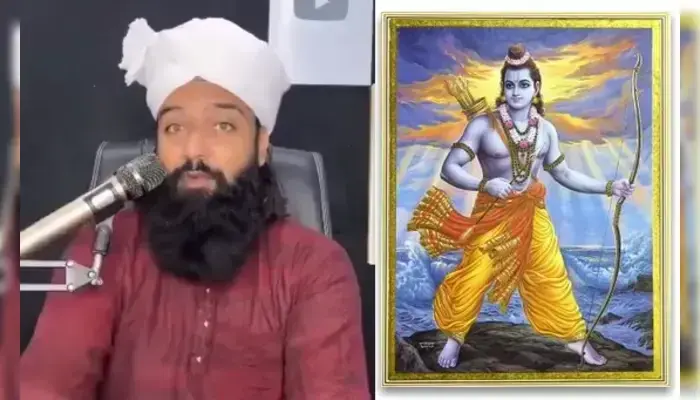
Case Summary
In Baheri, Bareilly, Uttar Pradesh, Maulana Maroof Raza Khan posted a video from his Facebook account containing objectionable remarks about Hindu deities Lord Rama and Lord Krishna. According to the complaint filed by Rajat Pandit, a resident of Mangadpur, the Muslim accused, Maulana Maroof Raza Khan, had uploaded a video in which he questioned the belief that Lord Rama and Lord Krishna were gods and made insulting remarks, stating that they were human beings because they had been born, had parents, married and had children. In the video, Khan also discussed the Islamic concept of monotheism and stated that Allah had no children and was the creator of the universe, presenting this as a basis for describing Allah as God, while belittling Hindu deities. The remarks were offensive to Hindu religious beliefs and hurtful to the religious sentiments of Hindus. Following the circulation of the video, Baheri police took action against Khan and initially proceeded against him under Section 170 of the Bharatiya Nagarik Suraksha Sanhita (BNSS). On the complaint submitted by Rajat Pandit, police subsequently registered an FIR and arrested the accused on 27 August 2026. The complainant also provided police with a copy of Khan's Facebook page and requested an investigation into the video and the social media accounts that had circulated it. Police began examining the authenticity and source of the video, the context of the remarks and the digital evidence relating to its dissemination.
Why it is Hate Crime ?
This case is being added to the tracker under the primary category: Hate speech against Hindus. The subcategory selected is: Anti-Hindu slurs, mocking faith. Anti-Hindu slurs and the deliberate mocking of the Hindu faith owing to religious animosity involve the use of derogatory terms, stereotypes, or offensive references to religious practices, symbols, or figures. One of the common anti-Hindu slurs used against Hindus is “cow-worshipper” and “cow piss drinker”. The intention of using this term is to demean and mock Hindus as a group and their religious beliefs, since Hindus consider the cow holy. Additionally, some symbols and the slurs attached to them have a historical context that exacerbates the insult, hate, stereotyping, dehumanisation and oppression against Hindus. Cow worship has been used for centuries to denigrate Hindus, insult their faith and oppress Hindus specifically as a religious group. There has been overwhelming documentation about how cow slaughter has been used to persecute Hindus, with cow meat being thrown in temples and places of worship. There has also been overwhelming documentation that cow meat (beef) has been force-fed to Hindus to either forcefully convert them to Islam or denigrate their faith. Apart from cow worship, the Swastika – which holds deep religious significance for Hindus – has also been misinterpreted and distorted to be used as a slur against Hindus. Similarly, the worship of the Shivling has been used by supremacist ideologies and religions to denigrate Hindus owing to religious animosity. Such slurs and denigration stem from inherent animosity and hate towards Hindus and their faith; therefore, it is categorised as hate speech targeted at Hindus specifically owing to their religious identity. The incident qualified as a hate crime because the remarks specifically targeted core Hindu religious beliefs and revered Hindu deities. Lord Rama and Lord Krishna are among the most widely revered figures in Hinduism, and questioning their divinity while making disparaging references to their birth, parentage, marriages and children directly concerned beliefs that are central to Hindu religious tradition. The remarks therefore had a clear religious target and were capable of degrading figures and beliefs that hold profound spiritual significance for Hindus. The religious nature of the remarks was further evident from the theological comparison underlying them. Islam is strictly monotheistic, meaning that Muslims believe in one God, Allah, who is the sole creator and is not born, does not have parents or children, and is not part of a lineage. Hindu religious traditions, by contrast, encompass diverse understandings of the divine, including traditions centred on the worship of multiple deities such as Lord Rama and Lord Krishna. Within Hinduism, these figures are revered as divine manifestations or forms of God, depending on the particular theological tradition. Therefore, evaluating the divinity of Lord Rama and Lord Krishna solely through characteristics such as birth, parentage, marriage and children and contrasting those characteristics with the Islamic conception of Allah amounted to a direct comparison between fundamentally different religious understandings of the divine. The nature and framing of Khan's statements gave the comparison a distinctly disparaging character. He used the fact that Lord Rama and Lord Krishna were born, had parents, married and had children as a basis for stating that they were human beings rather than gods, while presenting Allah's lack of such characteristics and his role as creator as a basis for recognising Allah as God. The comparison consequently did not merely explain the difference between Islamic monotheism and Hindu conceptions of divinity; it questioned and diminished the divine status of specifically Hindu deities while presenting the Islamic conception of God as the superior or valid conception of divinity. This distinction is important in assessing the religious character of the remarks because the statements singled out Hindu religious figures for rejection of their divine status. The remarks were made with the intention of portraying Islam and its concept of God as superior while belittling Hindu religious beliefs. By contrasting the Islamic conception of Allah with the human characteristics attributed to Lord Rama and Lord Krishna, the statement presented the Islamic understanding of divinity as the valid or superior one while diminishing the sacred status accorded to Hindu deities. This framing placed Hindu religious beliefs in an inferior position and contributed to the disparagement of Hinduism and its revered figures. The targeting of Lord Rama and Lord Krishna was significant because these figures are worshipped by Hindus and are associated with important religious traditions, scriptures, festivals and forms of devotion. Consequently, derogatory statements about them are an attack on religious symbols and beliefs that form part of Hindu religious identity. The fact that the remarks were disseminated through social media further increased their potential reach, allowing the content to be viewed and circulated beyond the immediate audience for whom it may originally have been intended. These acts of insulting Hinduism and Hindu gods stem from Islamic theology, which harbours disdain and hatred for polytheistic faiths, and which categorises Hindus as ‘polytheists’, and their worship of deities as "shirk", thereby fostering hatred against them. Such actions make the religiously motivated nature of the crime even more evident. While Muslims are entitled to uphold their belief in one God, singling out Hinduism's traditions of deity worship for disparagement and using Islamic monotheism to belittle those beliefs demonstrated religious hostility towards Hindus rather than merely expressing one's own religious conviction. The incident therefore had a clear religion-based nexus: the subjects of the remarks were specifically Hindu deities, the statements challenged their divine status, and the comparison was made by contrasting Hindu beliefs concerning these deities with the Islamic doctrine of monotheism. The hurt to Hindu religious sentiments arose directly from the denigration of figures that Hindus regard as sacred and divine. The incident was therefore not merely an interfaith theological disagreement; the manner in which the comparison was framed specifically disparaged central Hindu religious figures and beliefs. On these grounds, the incident constituted religiously motivated hate speech against Hindus and qualified as a hate crime under the Tracker's methodology.


Case Status
Arrested


Perpetrators Details
Perpetrators
Muslim Extremists
Perpetrators Range
One Person
Perpetrators Gender
male
 Sources




