Anti‑Hindu propaganda: Newspaper dubs student clash as “saffron hooliganism”, deliberately insulting Hindu symbols
 Kolkata, West Bengal, India
  20 August, 2026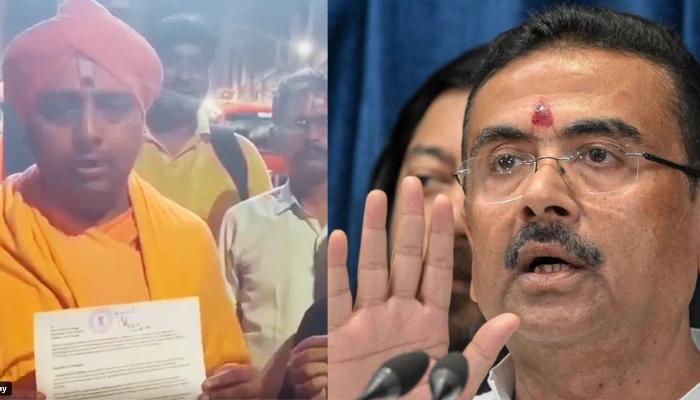
Case Summary
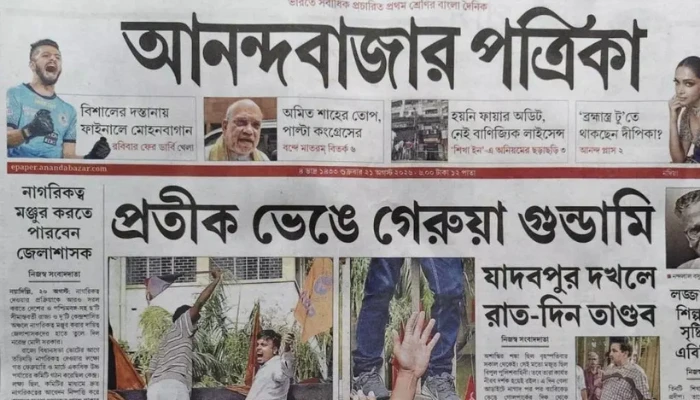
In Kolkata, West Bengal, Hinduism was derogated and downplayed when clashes between student groups were addressed as 'saffron hooliganism' by the editorial team of Anandabazar Patrika. The newspaper used the phrase “gerua gundami”, or saffron hooliganism, in a front-page report on 21 August to report clashes at Jadavpur University. An FIR was registered for the use of the term “saffron hooliganism” since saffron is linked to the religious symbol of the Sanatan tradition and the accused equated it with the word “hooliganism”, hurting the sentiments of “crores of Hindus”. According to reports, the incident took place at Jadavpur University on August 20, when a group from the Students' Federation of India (SFI), a major left-wing student organisation, was collecting 10 rupees from each student at Tamluk Mahavidyalaya. Students of the Akhil Bharatiya Vidyarthi Parishad (ABVP) spotted them, confronted them, and forced them to leave. This resulted in a clash between the two groups. The clash continued into the early hours of Thursday, 20 August 2026. Both groups blamed each other for the violence and accused the other of bringing people from outside the university onto the campus. Several students were injured and taken to a hospital. Accounts of how the clash began differed among the sources. While Megh reports stated that the confrontation began after ABVP students spotted SFI members collecting 10 rupees from students, confronted them and asked them to leave the premises, The Wire reported that the clash ensued in connection with a general meeting of the Faculty of Engineering and Technology Students’ Union (FETSU). Thus, the two reports provided different accounts of the immediate circumstances leading to the confrontation. This incident was reported in the newspaper Anandabazar Patrika on the morning of 21 August 2026, with the headline “protik bhenge gerua gundami” (“Saffron hooliganism through the destruction of symbols”), portraying the ABVP group as the culprits. Notably, the Akhil Bharatiya Vidyarthi Parishad is the student wing of the Rashtriya Swayamsevak Sangh. Thereafter, objecting to the use of the term ‘Saffron’ against Hindus in a derogatory manner, a complaint was received at Bowbazar Police Station on Thursday (August 27, 2026) from Sanjay Shastri Maharaj. He described himself in the letter as a saffron-clad Hindu monk, arguing that saffron represents renunciation, sacrifice and the Sanatan tradition rather than any particular political ideology or organisation. The complaint sought a first information report against the editorial team of Anandabazar Patrika over the newspaper having used “gerua gundami”, or saffron hooliganism, on its front page. Sanjay Shastri enclosed a copy of the report and a printout of the headline with his complaint to the police, particularly naming Ishani Dutta Ray and Soma Mukherjee, whom he described as being involved in the newspaper’s editorial responsibilities, and sought action against them. The complainant further asked the police to investigate who proposed the expression, who approved it, who was involved in editing the report and deciding the headline, and whether those involved knew or intended that the wording could hurt religious sentiments. West Bengal Chief Minister Suvendu Adhikari on Friday, 28 August 2026, asked newspaper Anandabazar Patrika to apologise for using the phrase “saffron hooliganism” in its headline to describe the August 20, 2026 clash between student groups at Jadavpur University. “I will ask a news outlet in West Bengal to do political campaigns, political criticism,” Adhikari said at an event to mark the Hindu festival Raksha Bandhan. “But don’t attack saffron. The result will be terrible. You will not be able to handle the terrible consequences.” He added: “Apologise within 24 hours. Print it on the first page…the writing was wrong. Otherwise, there will be a protest by those wearing saffron.” The chief minister did not name Anandabazar Patrika in his speech. However, the comments came amid criticism of the newspaper by Bharatiya Janata Party leaders. As of the date of writing this report, Anandabazar Patrika had not issued an apology for the headline or the use of the derogatory expression.
Case Images
Why it is Hate Crime ?
This case has been added to the tracker under the primary category of Hate speech against Hindus. The sub-category selected here is Anti-Hindu subversion and prejudice. Hate speech is defined as any speech, gesture, conduct, writing, or display that is prejudicial against a specific individual and/or group of people, which is leading to or may lead to violence, prejudicial action or hate against that individual and/or group. Media plays a specific and overarching role in perpetuating prejudicial attitudes towards a community owing to unfair, untrue coverage and/or misrepresentation/misinterpretation, selective coverage and/or omission of facts of/about issues affecting a specific religious group. This type of bias can dehumanise the victim group, making it easier for others to justify harmful actions against them, which aligns with the objectives of hate speech laws aimed at preventing such harm. It is often observed that the media takes a prejudicial stand against the Hindu community, driven by their need to shield the aggressor community, which happens to be a numeric minority; however, it is the one perpetrating violence against Hindus. For example, the media is often quick to contextualise religiously motivated crimes against Hindus, omit or misrepresent facts that point towards religiously motivated hate crimes, justify and/or downplay religiously motivated hate crimes, or simply present fake news to stereotype Hindus. Such media bias leads to the denial of persecution and is often used to dehumanise Hindus, leading to justification for violence against them. For example, the media covered several fake allegations of Hindus targeting Muslims and forcing them to chant Jai Shree Ram. Most of these cases were proved false and fabricated after police investigation. These fake news reports were subsequently never retracted or clarified. Such fake news led to the justification of violence and dehumanisation of Hindus based on the argument that since Hindus targeted Muslims and forced them to chant Jai Shree Ram, the dehumanisation of Hindus and violence against them was par for the course and merely a retaliation. Such media bias leads to prejudicial portrayal of Hindus and offers a justification for violence against them and therefore, is considered hate speech under this category. The other sub-category relevant is: Anti-Hindu slurs, mocking faith. Anti-Hindu slurs and the deliberate mocking of the Hindu faith owing to religious animosity involve the usage of derogatory terms, stereotypes, or offensive references to religious practices, symbols, or figures. One of the common anti-Hindu slurs used against Hindus is “cow-worshipper” and “cow piss drinker”. The intention of using this term is to demean and mock Hindus as a group and their religious beliefs since Hindus consider the cow holy. Additionally, some symbols and the slurs attached to them have a historical context that exacerbates the insult, hate, stereotyping, dehumanisation and oppression against Hindus. Cow worship has been used for centuries to denigrate Hindus, insult their faith and oppress Hindus specifically as a religious group. There has been overwhelming documentation about how cow slaughter has been used to persecute Hindus, with cow meat being thrown in temples and places of worship. There has also been overwhelming documentation where cow meat (beef) has been force-fed to Hindus to either forcefully convert them to Islam or denigrate their faith. Apart from cow worship, the Swastika – which holds deep religious significance for the Hindus – has also been misinterpreted and distorted to use as a slur against Hindus. Similarly, the worship of the Shivling has been used by supremacist ideologies and religions to denigrate Hindus owing to religious animosity. Such slurs and denigration stem from inherent animosity and hate towards Hindus and their faith; therefore, it is categorised as hate speech targeted at Hindus specifically owing to their religious identity. The case was included in the Hinduphobia Tracker because a sacred Hindu religious symbol was deliberately used as a derogatory label to describe violent conduct, turning an identifier of Hindu faith into a term of abuse. In Sanatana Dharma and the Hindu religious tradition, the term Saffron, or gerua/bhagwa, holds deep significance; it represents renunciation, sacrifice, and spiritual discipline. Equating this sacred colour with “hooliganism” therefore did not merely criticise a student group or political conduct; it attached criminal and degrading characteristics to the whole Hindu community. The expression was particularly prejudicial because it transformed a religiously significant Hindu identifier into a negative descriptor for misconduct. Such framing blurred the distinction between criticism of an organisation or individuals and disparagement of the religious identity associated with the symbol. By placing “saffron” alongside “hooliganism”, the wording created the impression that those identified with saffron were essentially hooligans and criminals. The association did not remain limited to the individuals involved in the clash; it placed a negative meaning on a symbol used to represent Hindu religious identity. Such a portrayal struck at the core of Hindu religious symbolism by presenting a sacred marker of the faith as a symbol of criminality and disorder. The wording therefore encouraged readers to view Hindu-associated individuals through a prejudicial lens rather than judging them solely on their conduct. Furthermore, the conduct displayed a clear bias against Hindu religious identity by selectively associating the violence with the group identified through a saffron-associated organisation, despite the clash involving both student groups. The framing singled out the Akhil Bharatiya Vidyarthi Parishad, the student wing of the Rashtriya Swayamsevak Sangh, while the opposing group belonged to the Left-wing Students’ Federation of India. By attributing the wrongdoing through the religiously loaded expression “saffron hooliganism”, the newspaper did more than criticise the conduct of one student organisation; it attached the misconduct to that organisation's Hindu-associated identity while shielding the opposing Left-wing group from the same characterisation. This selective framing created a prejudicial association between Hindu identity and hooliganism and reinforced an anti-Hindu narrative in which Hindu-affiliated groups were presented as inherently aggressive or disorderly. Moreover, the religious symbol was not incidental to the expression; it was used as the very descriptor through which the wrongdoing was characterised. This made the Hindu religious association central to the derogation. Instead of confining criticism to the actions of the students involved, the wording converted a sacred Hindu identifier into a pejorative, stripping it of its religious significance and using it to convey contempt for those associated with it. Such treatment normalised the denigration of Hindu symbols under the guise of political or journalistic criticism. In addition, the expression was given prominence in the headline, making it the defining description by which readers encountered the incident. It was therefore not a passing reference within the report but a deliberate editorial choice placed before the newspaper’s readership. The manner in which the expression was selected and prominently presented showed a conscious disregard for the religious meaning attached to saffron. Finally, the conduct revealed its motive through the deliberate use of a Hindu religious identifier to stigmatise one side of the clash. Instead of restricting criticism to the conduct of the students involved, the wording made saffron itself carry the blame. This turned Hindu religious symbolism into a vehicle for portraying Hindu-associated individuals as hooligans and criminals. The act therefore went beyond political or student-related criticism and amounted to the deliberate denigration of Hindu religious identity, constituting hate speech against Hindus. Disclaimer: The Hinduphobia Tracker records the date on which the victim’s ordeal occurred rather than when the media reported it. Accordingly, this incident was recorded on 21 August 2026, when the derogatory publication was published. In this case, two perpetrators, Ishani Dutta Ray and Soma Mukherjee, were selected for inclusion as they were specifically named in the FIR filed in connection with the incident.


Case Status
Complaint filed


Perpetrators Details
Perpetrators
Others
Perpetrators Range
From 2 To 5
Perpetrators Gender
female
 Sources




