Hindu residents, including minors, targeted for forced Christian conversion under pretext of prayer meetings in West Bengal
 North 24 Parganas district, West Bengal, India
  31 August, 2026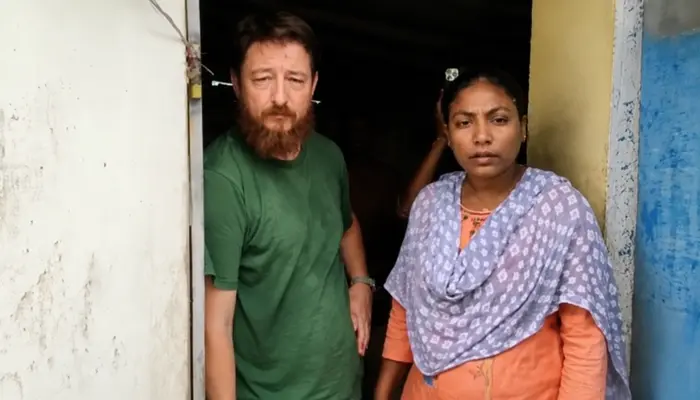
Case Summary
In the Hingalganj Assembly Constituency area of North 24 Parganas district, West Bengal, Hindus, including minors, were targeted for forced Christian conversion by Christian missionary members. The conversion activities were conducted under the pretext of attending prayer meetings and participating in religious activities at 'house churches' in the area. According to media reports, the perpetrators included a Christian man from Argentina who had been residing in the area for several months, along with a local Christian woman who had previously followed Hinduism but had converted to Christianity. During his stay, the Argentine missionary learned Bengali and established several house churches across the locality, where he conducted Christian prayer meetings and other religious activities. He and the woman were also involved in efforts to convert members of the local Hindu community to Christianity. A video of the incident circulated on social media, in which local Hindu residents were seen confronting the foreign missionary at the entrance of his residence after discovering a religious gathering taking place inside the house. They questioned the missionary and the local Christian woman about the purpose of the meeting. The man and woman described the gathering as a private prayer session, while the residents stated that Hindu women and children from the neighbourhood had been brought inside for conversion to Christianity. When questioned about her religious background, the local Christian woman stated that she had abandoned her traditional Hindu faith to follow Jesus. The residents questioned why Hindu families were being targeted and led away from their ancestral faith, and stated that religious conversion activities would not be tolerated in a Hindu neighbourhood. The foreign missionary attempted to justify the activity under the pretext of religious freedom. The local residents responded that authentic religious practice belonged in established churches and objected to what they described as covert conversion activities being conducted in residential neighbourhoods without the consent of the local community. The residents demanded an immediate halt to the conversion session and rejected the argument that activities conducted behind closed doors were permissible. The local group then forced the organisers to shut down the session and ordered all the individuals gathered inside the premises to vacate the house immediately. Following the incident, local Hindu residents staged a protest over the conversion activities. The reports also raised questions about the scale of missionary activity in the region and whether such activities were being monitored in accordance with the law.
Why it is Hate Crime ?
The primary category selected in this case is: Predatory Proselytisation. Within this, the subcategory selected is: Proselytisation by grooming, brainwashing, manipulation or subtle indoctrination. The tertiary categories selected are: Pattern of targeting Hindus, Conversion of Minor. Religious brainwashing essentially means the often subtle and forcible indoctrination to induce someone to give up their religious beliefs to accept contrasting regimented ideas. Religious grooming or brainwashing also involves propaganda and manipulation. It involves the systematic effort, driven by religious malice and indoctrination, to persuade “non-believers’ to accept allegiance, command, or doctrine to and of a contrasting faith. Cases of such grooming or brainwashing are far more nuanced than direct threats, coercion, inducement and violence. In such cases, it is often seen that there is repeated, subtle and continual manipulation of the victim to induce disaffection towards their own faith and acceptance of the contrasting faith of the perpetrator. While subtle indoctrination is widely acknowledged as predatory, an element which is often understated in such conversions or in the attempts at such conversion is the role of loyalty and trust which might develop between the perpetrator and the victim. Fiduciary relationships are often abused to affect such religious conversion. For example, an educator transmitting religious doctrine of a competing faith to a Hindu student. The Hindu student is likely to accept what the teacher is transmitting owing to the existence of the fiduciary relationship. The exploitation of the fiduciary relationship to religiously indoctrinate victims would also be included in this category. Since the underlying animosity towards the victim’s faith forms the basis of predatory proselytisation, such cases are considered religiously motivated hate crimes. This case was a clear example of a religiously driven hate crime because members of the Hindu community were specifically targeted for conversion to Christianity by Christian missionary members over an extended period. The activities were conducted through Christian prayer meetings and religious gatherings organised in house churches and private residences, including in Hindu-majority areas. The sustained and organised nature of these activities, combined with the selective targeting of Hindu residents, demonstrated that the Hindu community was specifically being approached with the objective of changing its religious affiliation. Firstly, the selective targeting of Hindus demonstrated that their religious identity was the basis for the conversion efforts. The objective was not simply to conduct Christian worship or introduce residents to Christian beliefs, but to persuade members of the Hindu community to abandon their existing faith and adopt Christianity. By specifically approaching Hindus for conversion, the perpetrators sought to alter the religious identity of individuals who followed Hinduism and detach them from the beliefs, traditions and practices associated with their families and community. The targeting of members of one particular faith, rather than residents irrespective of their religious background, demonstrated that their Hindu identity was a defining factor in their selection. This selective approach therefore reflected hostility towards Hindu religious identity and sought to weaken adherence to Hinduism within the community. Secondly, the prolonged presence of the missionary and the establishment of multiple house churches demonstrated that the conversion activities formed an organised and sustained effort rather than an isolated incident. The perpetrator had been residing in the area for several months, learned Bengali and established multiple locations from which Christian prayer meetings, religious activities and conversion efforts were conducted. The continued use of these settings provided an organised structure for reaching local Hindu residents and promoting Christian religious adherence within the locality. The repeated nature of the activities indicated an ongoing effort to increase the reach of the conversion campaign among the Hindu population and demonstrated a sustained pattern of targeting members of the community because of their religious identity. The scale and duration of these activities therefore indicated an objective of expanding Christian adherence within the locality and changing its existing religious composition. Thirdly, the manner in which the conversion activities were conducted demonstrated the use of manipulation and indoctrination to influence the religious beliefs of the targeted Hindu residents. They were brought into Christian prayer meetings and religious gatherings where they were gradually exposed to Christian prayers, practices and teachings. These gatherings were presented as prayer meetings, giving them the appearance of ordinary spiritual or devotional activities, while they were being used to influence the participants' religious beliefs and facilitate their conversion to Christianity. The gradual introduction of Hindu residents to Christian religious practices meant that the conversion process took place through repeated exposure and participation rather than through a transparent and fully informed decision to change their faith. By using religious instruction and participation to influence individuals and detach them from Hinduism, the perpetrators employed a method of conversion based on manipulation and indoctrination rather than informed and voluntary religious choice. This form of religious coercion, when specifically directed at members of the Hindu community, demonstrated the religious basis of the offence. Fourthly, the involvement of Hindu women and children demonstrated that the conversion efforts extended to members of Hindu households, including minors. The inclusion of Hindu children was particularly significant because the element of consent and genuine change of conscience was missing ab initio. Due to their young age and lack of maturity, minors were particularly vulnerable to manipulation and coercion and lacked the ability to fully understand the nature and long-term implications of converting to another religion. The Christian perpetrators deliberately targeted and exploited this vulnerability by involving Hindu children in religious gatherings intended to facilitate conversion. The participation of minors therefore demonstrated the use of manipulation and coercion to influence the religious beliefs of vulnerable members of the Hindu community and achieve religious conversion, making the targeting of Hindu children a religiously motivated act against Hindus. The involvement of the local Christian woman further demonstrated how the conversion activities extended through individuals who already had social and cultural connections within the Hindu community. The woman had previously followed Hinduism but had converted to Christianity and retained her connection with the local social environment. Her participation alongside the Argentine missionary in Christian religious activities and conversion efforts demonstrated how a person with an existing familiarity with the Hindu community could become involved in approaching other Hindu residents. Her prior Hindu background and established social connections placed her in a position to interact with Hindu families and participate in activities directed towards changing their religious affiliation. This aspect of the case was significant because the conversion efforts were not confined to an outsider conducting religious activities, but also involved a local individual who had previously belonged to the targeted religious community. The religious composition of the locality further provided context to the targeting. The 2011 Census recorded Hindus as approximately 88% of the population of the Hingalganj Community Development Block. The establishment of multiple Christian religious gatherings and conversion activities within such a predominantly Hindu locality therefore involved efforts to influence an established Hindu demographic rather than taking place in a religiously neutral setting. The activities were directed towards members of the religious majority specifically because they followed Hinduism, reinforcing the finding that religious identity was central to the selection of those targeted. Such instances of targeted proselytisation activities stem from inherent hostility towards the victims' professed faith, since Abrahamic faiths believe that any non-adherent to their faith is subject to being dehumanised till they convert, making it a religiously motivated crime against Hindus. Therefore, this case is being added to the hate crime database of the Hinduphobia Tracker. Disclaimer: The Hinduphobia Tracker records incidents based on the date when an event occurred or when the victim’s ordeal began. In this case, none of the media reports covering the incident specified the exact date on which it occurred. Therefore, for documentation purposes, the date has been recorded as 31st August 2026, based on the date when the incident was reported in the media.


Case Status
Unknown


Perpetrators Details
Perpetrators
Christian Extremists
Perpetrators Range
From 2 To 5
Perpetrators Gender
both
 Sources




