Minor Hindu girl trapped by Muslim man who hid his religious identity, used fake name and marriage promise for sexual exploitation
 Araria, Bihar, India
  29 August, 2026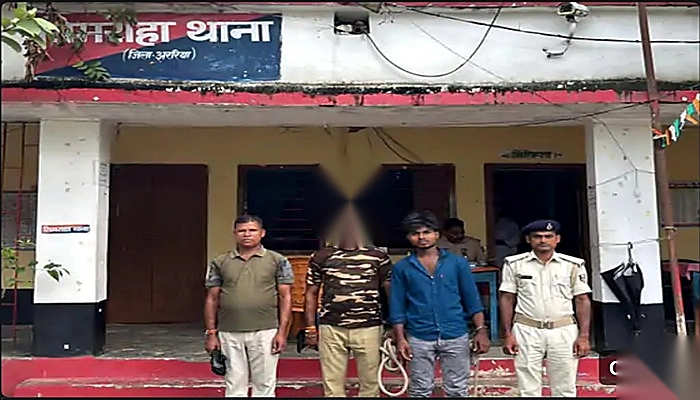
Case Summary
In Araria's Simraha police station area, a minor Hindu girl was lured into a relationship by a Muslim man who concealed his actual religious identity and presented himself to her as a Hindu man named “Santosh Kumar”. He used the false Hindu identity to gain her trust, promised to marry her, established a physical relationship and impregnated her. According to the application submitted by the victim's mother at Simraha police station, Mohammad Qadri had been working at a mobile shop in Simraha. During this period, he obtained the minor girl's mobile number from the shop's driver. After obtaining her number, he began talking to her, which led to further contact. During these interactions, he told the victim that his father's name was Bablu Mandal and stated that he was a resident of Sundarimath, Kursakanta. Using this identity, he promised marriage and established a physical relationship with the victim. The matter came to light when some prominent villagers identified the accused and questioned him after becoming suspicious of his frequent visits to the village. They uncovered the deception and informed the victim’s family. The villagers then caught the accused and handed him over to the police. Given the seriousness of the matter, the in-charge of the women’s police station visited the victim’s home to investigate. Police subsequently arrested the accused, identified as Mohammad Qadri, 21, son of Mohammad Samin, a resident of Madarganj. On 30 August 2026, he was sent to Araria Jail in judicial custody. Simraha police station in-charge Prem Kumar Bharti confirmed the case and said that, based on a complaint filed by the victim’s mother, an FIR had been registered at Simraha police station under the Protection of Children from Sexual Offences Act. He said the case was being investigated thoroughly and that the accused’s mobile phone was also being examined.
Why it is Hate Crime ?
The primary category selected in this case is: Crimes against women in relationships and other sexual crimes. The subcategory selected is: Man pretends to be Hindu. The tertiary category selected is: Name changed. When a non-Hindu man pretends to be a Hindu to deceive a Hindu woman into a relationship, the act is seen as triggered by mala fide intentions. In some cases, the woman eventually accepts the man’s original religious identity and converts after the man’s identity is revealed. These cases could be argued as cases of religious brainwashing and a result of the pressure a woman feels after getting into a relationship with a man. The woman, it can be argued, also changed her religious identity because of the stigma she believes she might face if she chooses to walk out of a deceptive relationship. However, for the purpose of documenting hate crimes, the cases in this subcategory are limited to those where there is explicit violence aimed at religious conversion against the wishes of the victim (force-feeding beef, blackmailing with intimate videos, rape on refusal to convert, etc), or if the woman herself complains of the man’s religious deception. In such cases, it is established that the deception of the non-Hindu man had a specific aim of religious conversion or targeting of the victim due to her Hindu religious identity, therefore making it a religiously motivated hate crime. This case has been added to the tracker because it involved the targeting of a minor Hindu girl by a Muslim man who concealed his religious identity, posed as a Hindu, and lured the victim into a relationship. Thereafter, he sexually assaulted her under the pretext of marriage. The religious dimension of this case cannot be separated from the sexual offence because the accused deliberately concealed his Muslim identity before approaching the Hindu victim. He used a Hindu name, presented himself as a Hindu, and adopted Hindu religious markers to gain her trust and establish a relationship. The sexual assault may have been the eventual objective of his conduct, but reaching that objective depended on first overcoming the victim's natural caution through religious deception. The false Hindu identity was therefore neither minor nor unrelated. It was the means used to gain access to a Hindu woman who had been led to believe that she was interacting with someone from her own faith. The fact that the accused specifically chose to present himself as a Hindu is important. If the religious identity of the victim had no relevance to his approach, there would have been no reason to adopt a Hindu name or outwardly present himself as a Hindu. The deception was effective precisely because the victim believed that they shared the same religious identity. In this sense, her Hindu identity was not incidental to the crime. It was a factor that the accused consciously took into account when approaching and gaining her confidence. The subsequent sexual assault therefore cannot be treated as a completely separate act detached from the deception that preceded it. The relationship was established through a fabricated Hindu identity, and the trust created through that deception was then followed by sexual exploitation. The religious element lies not in the sexual nature of the final offence itself, but in the deliberate use of the victim's Hindu identity and the trust associated with it as a means of facilitating that offence. This distinction is important because an ordinary sexual assault and a sexual assault facilitated through deliberate religious deception are not identical in character. In the latter, the accused specifically manipulates the victim's religious identity to gain access to her. The deception becomes an integral part of the chain of conduct leading to the assault and therefore provides the religious basis for its classification under the Tracker. Viewed as a whole, the sequence of religious identity concealment, false presentation as a Hindu, establishment of trust, and subsequent sexual exploitation demonstrates that the religious element was intertwined with the offence from its beginning. The fact that sexual assault was the apparent end goal does not erase the religious dimension of the method used to reach it. It is this deliberate exploitation of Hindu identity through religious deception that warrants the case's inclusion under the relevant category of the Hinduphobia Tracker. Another aspect is that the victim here was a minor, which means the element of consent and genuine change of conscience was missing ab initio. Minors, due to their young age and lack of maturity, are particularly vulnerable to manipulation and coercion. They may not have the ability to fully understand the implications of converting to another religion, and the Muslim perpetrator purposely targeted and exploited this vulnerability of the victim. Since this case exemplifies the use of coercion and manipulation to achieve religious conversion, it is a blatant act of religious hate, which is why it has been documented here in the hate tracker. Disclaimer: The Hinduphobia Tracker records incidents based on when an event occurred or when the victim's ordeal began. It is important to clarify that none of the media sources covering this case has specified the exact date when the incident occurred. Therefore, for documentation purposes, we have recorded the date as the date the incident was reported in the media, 30th August 2026.
Victim Details
Total Victim
1
Deceased
0
Gender
- Male 0
- Female 1
- Third Gender 0
- Unknown 0
Caste
- SC/ST 0
- OBC 0
- General 0
- Unknown 1
Age Group
- Minor 1
- Adult 0
- Senior Citizen 0
- Unknown 0


Case Status
Arrested


Perpetrators Details
Perpetrators
Muslim Extremists
Perpetrators Range
One Person
Perpetrators Gender
male
 Sources




