Anti-Hindu hate on display: Social media handle celebrates destruction of Hindu idols and deaths of Hindus during Nepal floods, portrays it as ‘Allah’s retribution’
 Turkey
  27 August, 2026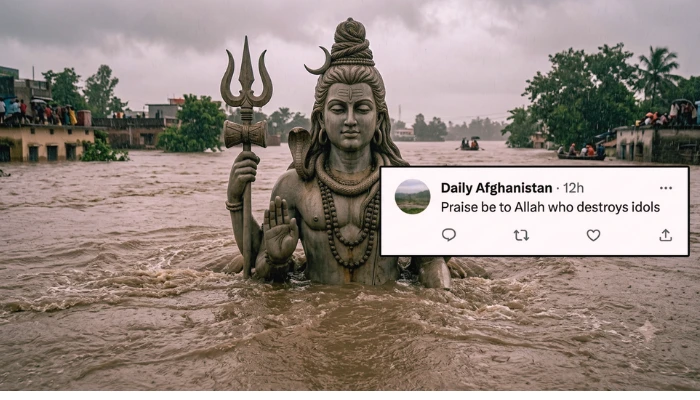
Case Summary
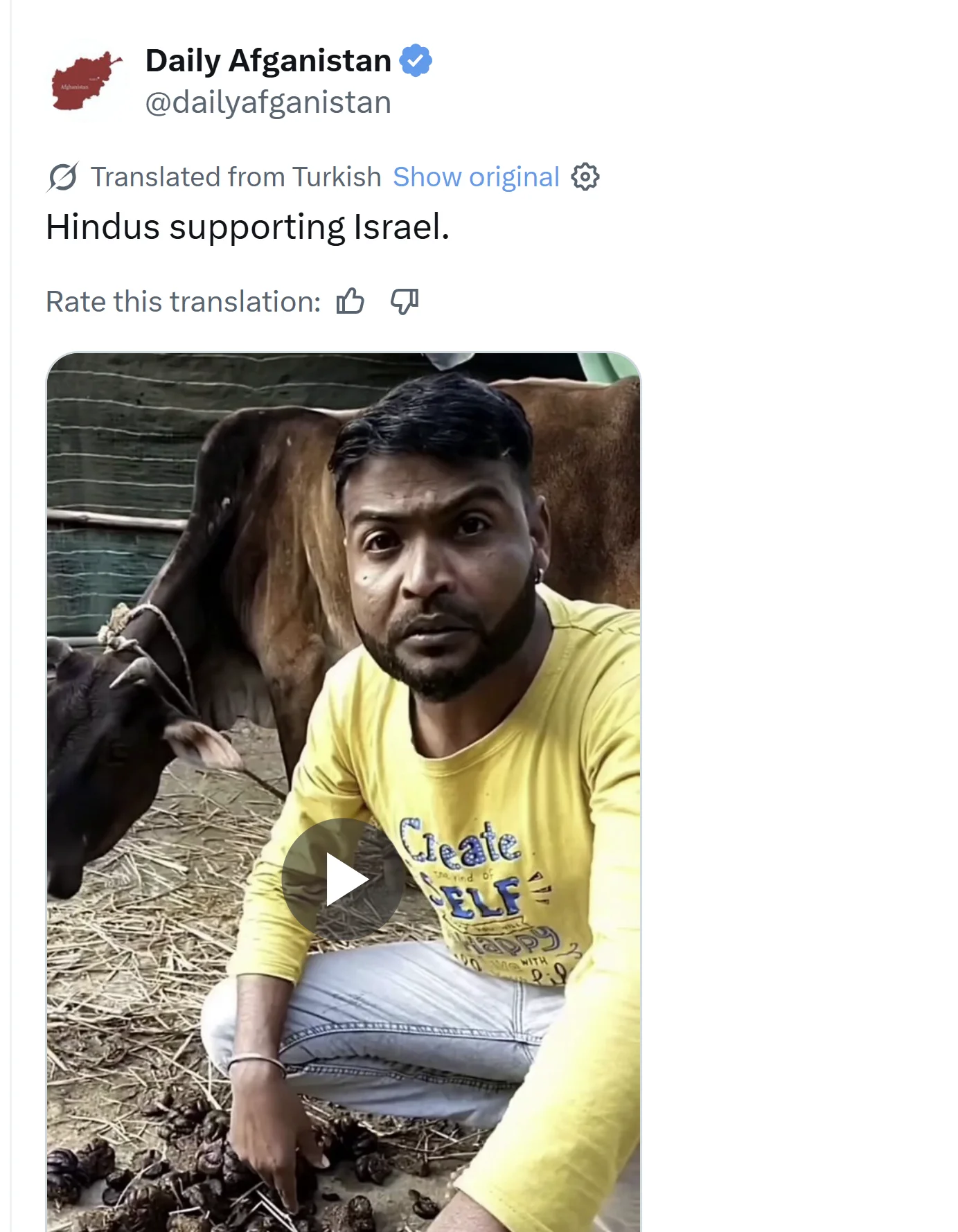
An anti-Hindu social media handle named “Daily Afghanistan” made a series of derogatory posts targeting Hindus and Hinduism. It celebrated the destruction of Hindu idols and the deaths of Hindus during the Nepal floods while portraying the natural disaster as “Allah’s retribution.” On 28 August 2026, the handle shared a video showing an idol of Lord Shiva submerged in floodwater and captioned it, “Praise be to Allah who destroys idols.” The post was pinned to the account’s profile. The video showed footage from the devastating Kedarnath floods of June 2013, when a cloudburst triggered flash floods and caused widespread destruction across Uttarakhand, including in and around the Kedarnath shrine. The handle also made posts mocking the deaths of Hindus during the catastrophic floods that struck Nepal on 26 August 2026 following a glacial collapse in the Nepal-Tibet border region. The floods affected the route used by Hindu pilgrims travelling towards Mount Kailash, with a large number of people, including pilgrims, reported missing in the aftermath. The handle portrayed the deaths of Hindus during the floods as a divine punishment, linking the disaster to incidents of communal violence between Hindus and Muslims in Nepal. The posts referred to the communal clashes in Nepal in July 2026, during which members of both Hindu and Muslim communities were involved in violence that resulted in attacks and damage to religious institutions, homes and other property. The handle, however, selectively highlighted incidents involving the destruction of mosques and presented the deaths of Hindus in the subsequent natural disaster as “Allah’s punishment” for those actions. The Hinduphobia Tracker team examined the account further and found several other anti-Hindu posts. On 30 August 2026, the handle shared a video of a street performance in which performers portrayed Goddess Kali and Lord Shiva in his Mahakal form. The video was accompanied by the caption, “Enemies of Islam,” referring to the Hindu deities depicted in the performance. On 29 August 2026, the handle shared a video showing the final rites being performed for a deceased cow and mocked the ceremony and the religious significance attached to cows in Hinduism. It wrote: “Hindus, who have declared their unwavering support for Israel, are holding a funeral ceremony for their deceased cow deity. The Dead God 🐄” In another post on the same day, the handle shared a video of Hindus participating in a religious procession and wrote, “May God guide them (Hindus), otherwise they will perish.” The handle had also previously posted multiple remarks mocking the religious significance of cows in Hinduism and made posts regarding the derogatory cow dung jibe to target Hindus. Following the circulation of the posts, several Indian social media users stated that the “Daily Afghanistan” handle was not actually operated from Afghanistan and was instead a Turkish or Pakistani-based account being used to publish anti-Hindu and anti-India content, with the intention of affecting India-Afghanistan geopolitical relations. The Hinduphobia Tracker team could not independently confirm the account’s actual location or operators. However, an examination of the account found that its posts were written in Turkish rather than in a language associated with Afghanistan. The location of the individuals operating the handle remained unconfirmed at the time of writing this report.
Case Images
Why it is Hate Crime ?
The primary category in this case is: Hate speech against Hindus. The subcategory under this is: Anti-Hindu slurs, mocking faith. Anti-Hindu slurs and the deliberate mocking of the Hindu faith owing to religious animosity involve the usage of derogatory terms, stereotypes, or offensive references to religious practices, symbols, or figures. One of the common anti-Hindu slurs used against Hindus is “cow-worshipper” and “cow piss drinker”. The intention of using this term is to demean and mock Hindus as a group and their religious beliefs since Hindus consider the cow holy. Additionally, some symbols and the slurs attached to them have a historical context that exacerbates the insult, hate, stereotyping, dehumanisation and oppression against Hindus. Cow worship has been used for centuries to denigrate Hindus, insult their faith and oppress Hindus specifically as a religious group. There has been overwhelming documentation about how cow slaughter has been used to persecute Hindus, with cow meat being thrown in temples and places of worship. There has also been overwhelming documentation where cow meat (beef) has been force-fed to Hindus to either forcefully convert them to Islam or denigrate their faith. Apart from cow worship, the Swastika – which holds deep religious significance for the Hindus – has also been misinterpreted and distorted to use as a slur against Hindus. Similarly, the worship of the Shivling has been used by supremacist ideologies and religions to denigrate Hindus owing to religious animosity. Such slurs and denigration stem from inherent animosity and hate towards Hindus and their faith; therefore, it is categorised as hate speech targeted at Hindus specifically owing to their religious identity. This case is a clear example of a religiously driven hate crime, as the social media handle engaged in a sustained and deliberate pattern of hostility towards Hindus and Hinduism. Rather than constituting an isolated derogatory remark, the handle repeatedly targeted different aspects of the Hindu faith, including Hindu deities, idols, sacred symbols, religious practices, religious processions and the sacred status of the cow. It also went further by celebrating the deaths of Hindus during a natural calamity and presenting it as a divine punishment from Allah. The repeated nature and religious focus of these posts demonstrate that the hostility was directed specifically at Hindus on account of their faith. Firstly, the handle explicitly mocked Hindu gods and Hindu idols while celebrating their destruction. It shared a video showing an idol of Lord Shiva submerged in floodwater, using footage from the 2013 Kedarnath floods, and captioned it, “Praise be to Allah who destroys idols.” Lord Shiva is one of the principal deities of Hinduism and is revered across Hindu traditions as a supreme divine figure. The worship of murtis, or sacred images of deities, is also an important aspect of Hindu religious practice, through which devotees honour and connect with the divine. The handle therefore did not merely share footage depicting the destruction caused by a natural disaster; it deliberately presented the submergence and destruction of a Hindu idol as something worthy of praise. By attributing the destruction of the idol to Allah and celebrating it as an act of divine intervention, the post portrayed the destruction of a Hindu object of worship as a manifestation of the superiority and power of Islam over Hinduism. The statement thus conveyed a message of religious supremacy, in which the destruction of Hindu religious representations was framed as a triumph of one faith over another. Such a deliberate celebration of the destruction of a sacred Hindu object goes beyond theological disagreement or criticism and constitutes an explicit denigration of Hindu religious beliefs and practices. The glorification of the destruction of a Hindu idol, coupled with its attribution to divine intervention in the name of Allah, demonstrates deep-seated religious hostility towards Hinduism and Hindus and reflects an explicitly antagonistic attitude towards Hindu religious beliefs, symbols and objects of worship. The handle also selectively referred to incidents arising from the communal violence in Nepal to justify and celebrate the subsequent deaths of Hindus during the Nepal floods. The communal violence involved members of both Hindu and Muslim communities and resulted in significant damage, including deaths, destruction of property, attacks on religious institutions and damage to homes and other public places belonging to members of the respective communities. However, rather than acknowledging the broader context of the violence or recognising that members of both communities had been involved in attacks and suffered their consequences, the handle selectively referred to incidents involving the destruction of mosques and used those incidents to portray the subsequent deaths of Hindus in the Nepal floods as “Allah’s punishment”. This selective framing is significant because it transformed a natural calamity that caused widespread human suffering into an opportunity to mock and celebrate the deaths of members of the Hindu community. The floods were not treated as a humanitarian disaster affecting people irrespective of their faith; instead, the handle specifically portrayed the deaths of Hindus as deserved divine retribution. By doing so, it sought to dehumanise Hindu victims and present their suffering and deaths as justified on religious grounds. Using the deaths of Hindu civilians and pilgrims during a natural disaster as an occasion for religious triumphalism demonstrates a malicious and deeply hostile attitude towards Hinduism and the Hindu community. It further reinforces the pattern of using religious animosity to portray Hindus as deserving of suffering and punishment. The handle’s repeated targeting of Hindu deities further establishes the religious nature of the hostility. It shared a video showing a street performance in which performers portrayed Goddess Kali and Lord Shiva in his Mahakal form and captioned the video, “Enemies of Islam”, directly referring to the Hindu deities depicted in the performance. Lord Shiva is among the most widely revered deities in Hinduism, while Goddess Kali is a major Hindu goddess associated with Shakti, divine power and the destruction of evil. Mahakal is a form of Shiva particularly associated with his fierce and transformative aspect. By explicitly labelling these revered Hindu deities as “Enemies of Islam”, the handle did not merely express disagreement with Hindu theology; it characterised central figures of Hindu worship as religious enemies. This language places Hindu deities and, by extension, Hindu religious belief itself in an antagonistic relationship with Islam and reinforces the portrayal of Hinduism as something opposed to or incompatible with Islam. The repeated invocation of Islam while denigrating Hindu deities demonstrates a clear pattern of religious animosity and reflects a hostile worldview in which Hindu religious figures are treated as objects of contempt because of their association with Hinduism. The handle similarly mocked the religious significance of the cow and deliberately ridiculed Hindu beliefs surrounding the sacred animal. It shared a video showing final rites being performed for a deceased cow and mockingly described the animal as a “cow deity”, referring to the ceremony as the funeral of a “Dead God”. The cow holds profound religious and cultural significance within Hinduism and is traditionally regarded with reverence by Hindus as a symbol associated with nourishment, motherhood, purity and sacredness. Hindu traditions contain numerous practices through which cows are respected and protected, and rituals performed for a cow therefore carry genuine religious significance. By deliberately reducing such a religiously significant practice to an object of ridicule and describing the deceased cow as a “Dead God” in a mocking manner, the handle sought to portray an important aspect of Hindu religious life as irrational and worthy of derision. The language was specifically constructed to ridicule the beliefs of Hindus and provoke their religious sentiments. Mocking the death of a sacredly revered animal and turning its religious significance into a joke therefore forms another component of the handle’s broader campaign of denigrating Hinduism and demonstrates deep-seated hostility towards Hindu religious beliefs. The handle’s later anti-Hindu comments further demonstrate that this was not an isolated instance of offensive speech but a continuing pattern of religiously motivated denigration. In another post, it mocked Hindus participating in a religious procession and wrote, “May God guide them (Hindus), otherwise they will perish.” Hindu religious processions are an important form of collective religious expression in which devotees publicly honour and celebrate their deities, participate in rituals and express their faith as a community. By portraying Hindus engaged in such a religious practice as people who would “perish” unless they were guided by the Islamic God, the handle again presented Hindu religious belief as something misguided and deserving of condemnation. The handle had also repeatedly used the cow-dung jibe to mock Hindus and ridicule their religious beliefs. The cow-dung jibe, along with the related cow-urine jibe, is a commonly used derogatory insult against Hindus, intended to demean Hinduism and ridicule the religious and cultural significance attached to the cow. Such expressions reduce an important aspect of Hindu religious belief to an object of mockery. The derogatory nature of such jibes has also been evident in instances of violence; notably, during the 2019 Pulwama attack, one of the Islamic terrorists had used the cow-urine jibe while attacking CRPF personnel. Although the handle in this case specifically used the cow-dung jibe, its use of this established anti-Hindu insult similarly sought to demean Hindu beliefs and portray aspects of Hindu religious practice as objects of ridicule. The repeated use of such a jibe, alongside its other attacks on Hindu deities, idols, religious practices and beliefs, demonstrates that the reference was not an incidental insult but formed part of the handle's broader pattern of denigrating Hinduism and Hindus. Overall, the pattern displayed by the handle establishes a clear case of deep-seated Hinduphobia and religiously driven hostility. Therefore, the case is being added to the hate crime database of the Hinduphobia Tracker as a clear instance of a religiously driven hate crime targeting Hindus and Hinduism. Disclaimer: The exact location from which the “Daily Afghanistan” handle is operated could not be independently established at the time of documentation. Several Indian social media users have suggested that the account may be operated from Turkey or Pakistan. The posts examined by the Hinduphobia Tracker were written in Turkish, which, when considered alongside these observations, makes Turkey a possible location of operation. However, the use of Turkish does not independently establish the account’s physical location or the identity or nationality of its operators. Therefore, for the purpose of documentation, the location has been recorded as "Turkey", subject to revision if credible evidence establishes otherwise.


Case Status
Unknown


Perpetrators Details
Perpetrators
Muslim Extremists
Perpetrators Range
Unknown
Perpetrators Gender
unknown
 Sources




