Hindu gods and sacred pilgrimage sites denigrated in objectionable Facebook post by Indian politician
 Pathankot, Punjab, India
  23 August, 2026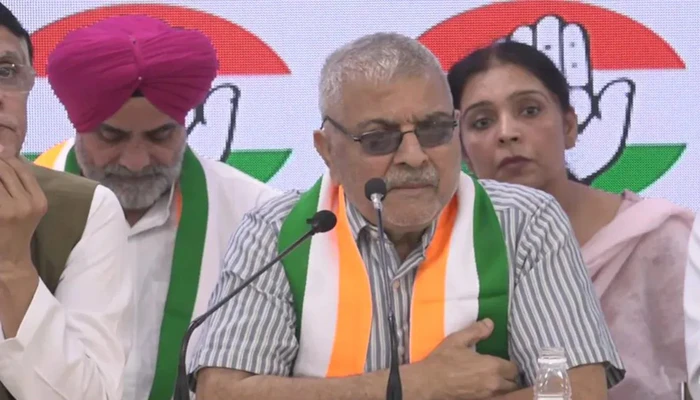
Case Summary
In Pathankot, Congress politician Dr Dharamvira Gandhi made objectionable and insulting social media remarks concerning Lord Shiv, Lord Shri Ram and the Hindu religion. The remarks questioned expenditure on Hindu religious activities and pilgrimages. Ravi Sharma, a leader of Shiv Sena Hind, submitted a written complaint to the Senior Superintendent of Police (SSP), Pathankot, seeking legal action against Dr Dharamvira Gandhi, the Congress Member of Parliament from Patiala. The complaint concerned a Facebook post shared from Dr Gandhi’s official Facebook account. In the Facebook post, Dr Dharamvira Gandhi referred to “Kejri-Bhagwant & Company” and wrote that his family worked day and night and therefore paid taxes so that the people of the state could receive better treatment, education, employment and better basic infrastructure. He then wrote “Khabardar!” and questioned the spending of taxpayers’ money from the government treasury on “Ek Shaam Shiv Ke Naam”, “Hamare Ram”, new temple construction, Shri Khatu Shyam, Salasar, Haridwar, Rishikesh, Mathura, Vrindavan and Shri Hazur Sahib, as well as on free religious pilgrimages and other religious ceremonies, rituals and related ostentation. The post further stated that religion was a matter of an individual’s personal faith, and that for the State to promote one religion over another in any manner was not only a violation of the Constitution of India, but also created divisions between brothers and contributed to communalism. The complaint stated that the comments caused serious hurt to the religious sentiments of people who believed in the Hindu religion, and that such statements could create an atmosphere of religious tension, hostility and unrest between different communities. Shiv Sena Hind attached screenshots of the Facebook post and other evidence to the complaint and requested the police administration to conduct an immediate and impartial investigation based on the submitted evidence and screenshots. It sought verification of the authenticity of the social media material and its source, and requested that, if the investigation established a violation of the law, strict legal action be taken against Dr Dharamvira Gandhi under the relevant provisions. Shiv Sena Hind further demanded that action under the relevant provisions be taken against the Patiala Congress Member of Parliament and stated that, if no action was taken against Gandhi within one week, a state-level struggle/protest would be launched from Pathankot on 7 September 2026.
Why it is Hate Crime ?
The primary category selected in this case is: Hate speech against Hindus. Within this, the subcategory selected is: Anti-Hindu slurs, mocking faith. Anti-Hindu slurs and the deliberate mocking of the Hindu faith owing to religious animosity involve the usage of derogatory terms, stereotypes, or offensive references to religious practices, symbols, or figures. One of the common anti-Hindu slurs used against Hindus is “cow-worshipper” and “cow piss drinker”. The intention of using this term is to demean and mock Hindus as a group and their religious beliefs, since Hindus consider the cow holy. Additionally, some symbols and the slurs attached to them have a historical context that exacerbates the insult, hate, stereotyping, dehumanisation and oppression against Hindus. Cow worship has been used for centuries to denigrate Hindus, insult their faith and oppress Hindus specifically as a religious group. There has been overwhelming documentation about how cow slaughter has been used to persecute Hindus, with cow meat being thrown in temples and places of worship. There has also been overwhelming documentation that cow meat (beef) has been force-fed to Hindus to either forcefully convert them to Islam or denigrate their faith. Apart from cow worship, the Swastika – which holds deep religious significance for the Hindus – has also been misinterpreted and distorted to be used as a slur against Hindus. Similarly, the worship of the Shivling has been used by supremacist ideologies and religions to denigrate Hindus owing to religious animosity. Such slurs and denigration stem from inherent animosity and hate towards Hindus and their faith; therefore, it is categorised as hate speech targeted at Hindus specifically owing to their religious identity. The incident qualified as a religiously motivated hate speech case because the politician's Facebook post did not remain confined to political criticism, government spending or the functioning of the state. Instead, it invoked Lord Shiv, Lord Shri Ram and sacred Hindu pilgrimage sites, central and deeply revered elements of Hindu religious belief, within a political attack. The remarks therefore brought Hindu religious beliefs and sacred traditions into a political criticism of government expenditure, making the reference religious in substance rather than merely political in subject matter. Firstly, the remarks cast Lord Shiv and Lord Shri Ram as targets of a political attack, disrespecting their sacred status. Both figures hold an exceptionally revered place in Hindu worship and devotion. Lord Shiv is worshipped as one of the principal deities of Hinduism and is associated with divine power, transformation and spiritual liberation, while Lord Shri Ram is revered as an incarnation of Lord Vishnu and is honoured for embodying righteousness, duty and moral virtue. Their names, stories and traditions form an integral part of Hindu worship, festivals, sacred texts and religious life, and millions of Hindus regard them with profound devotion and respect. Using their names while making a political point turned central elements of Hindu belief into objects of political disparagement. For Hindus, this diminished the sanctity associated with figures who were worshipped rather than treated merely as subjects of political commentary. Secondly, the remarks disparaged Hindu temples, religious ceremonies, rituals, and programmes by placing them under criticism for government expenditure. Hindu temples hold an important place in religious life as sacred spaces for worship, prayer, devotion and community observance, while religious ceremonies and rituals form an integral part of Hindu practice through which devotees express faith, honour deities and observe important spiritual traditions. References to “Ek Shaam Shiv Ke Naam” and “Hamare Ram”, along with expenditure on new temple construction, directly concerned established forms of Hindu religious expression and worship. Presenting these activities as questionable expenditure portrayed practices that were meaningful to Hindus as unnecessary or improper, thereby undermining the legitimacy and importance of Hindu religious observance. Thirdly, the remarks extended the criticism to Hindu pilgrimage traditions and sacred destinations, specifically Shri Khatu Shyam, Salasar, Haridwar, Rishikesh, Mathura and Vrindavan. These places hold profound religious significance in Hinduism. Shri Khatu Shyam is revered as a manifestation associated with Barbarika, Salasar is renowned for the worship of Lord Hanuman, Haridwar is one of Hinduism’s most sacred pilgrimage centres and a gateway to the Ganga, Rishikesh is a major centre of Hindu spirituality, Mathura is revered as the birthplace of Lord Krishna, and Vrindavan is deeply associated with his life and worship. They serve as important destinations for Hindu pilgrimage, worship, sacred observances and spiritual practice. Linking these destinations to criticism of government spending therefore disparaged not only public expenditure but also religious journeys and places through which Hindus express and practise their faith. The broader context is also relevant. India is a Hindu-majority country, and Hindu temples, pilgrimage centres and religious traditions form an important part of the country's cultural and religious heritage. These are not merely places of private worship but also sites of historical, cultural and architectural significance, visited by millions of devotees. Government expenditure towards their preservation, maintenance, and infrastructure, therefore, cannot, by itself, be characterised as improper merely because it concerns Hindu religious institutions or pilgrimage. In this context, portraying expenditure on Hindu temples, religious programmes and pilgrimages as inherently objectionable can contribute to a disparaging portrayal of Hindu religious practices and institutions. Lastly, the remarks directly engaged with Hindu religion and Sanatan Dharma, making Hindu religious identity itself part of the political argument. Moreover, the manner in which Dr Dharamvira Gandhi made these remarks revealed a dismissive attitude towards Hindu faith and religious practices. He casually brought revered Hindu deities, temples, rituals and pilgrimage sites into a political attack, portraying expenditure associated with them as something that should be questioned and associating the promotion of religion with communalism. This went beyond criticism of a particular government policy. By casually using deeply revered Hindu beliefs and practices as political targets, the remarks showed a disregard for the religious sentiments of Hindus. It is this deliberate choice to invoke and disparage core elements of Hindu faith in a political attack that gives the incident its religiously motivated character.


Case Status
Complaint filed


Perpetrators Details
Perpetrators
State and Establishment
Perpetrators Range
One Person
Perpetrators Gender
male
 Sources




