Hindu man targeted, assaulted and subjected to anti-Hindu slurs by Bangladeshi Muslims in New York
 Queens, New York, United States
  15 August, 2026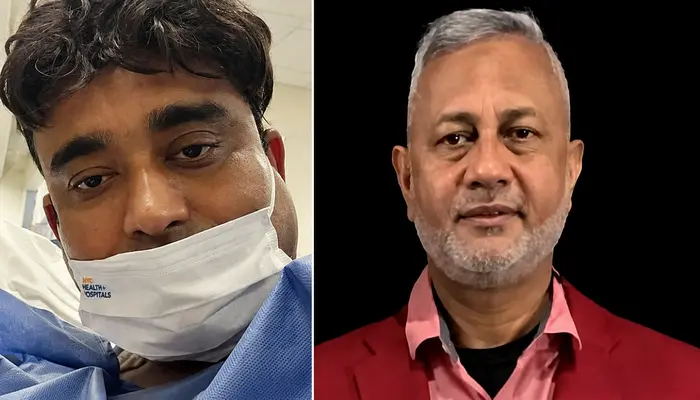
Case Summary
In Jamaica, Queens, New York, a Hindu man, Anup Kumar Esh, was physically assaulted, threatened and subjected to anti-Hindu abuse by Bangladeshi Muslims. This occurred following a minor dispute over payment for DJ services he had provided during a marriage ceremony. The victim revealed that the dispute escalated into religious abuse and violence, with him being targeted because of his Hindu identity and his openly expressed support for the Hindu community. The incident occurred on 16 August 2026 at a party hall near Hillside Avenue, located at 89-16 175th Street in Jamaica, Queens. A Gaye Holud ceremony (a pre-wedding ceremony in which turmeric is applied to the bride and groom) for the son of Jami Chowdhury, a Bangladeshi Muslim immigrant, was held at the venue from approximately noon until midnight. According to reports, Anup Kumar Esh was hired to provide DJ equipment and services for the event. He was to receive $1,500 for his work. However, after the ceremony, the organisers paid him only $400, substantially less than the agreed amount. He objected to the reduced payment, leading to an argument over his professional fees. When Anup demanded full payment for his services, he was subjected to religiously hateful and abusive verbal remarks. He stated that he was deliberately targeted and harassed because of his Hindu identity and his openly expressed support for the Hindu community. According to Anup's account, the dispute subsequently escalated beyond verbal harassment. Approximately 10–12 Muslim individuals, including Jami Chowdhury, were involved in the assault. Reports on the case stated that Anup was physically attacked, threatened and intimidated during the incident. The intimidation continued while Anup attempted to obtain emergency assistance. He was threatened with death even as he attempted to call 911 for help. Following the 911 call, police officers and an ambulance arrived at the scene. Anup was found unconscious and taken from the location for medical treatment. He was subsequently hospitalised and sustained injuries to his neck, ear and back as a result of the assault. The assault subsequently became a matter of discussion within the local Bangladeshi community in New York. An attempt was made to resolve the matter through a settlement or compromise. However, Anup declined to accept the proposed settlement, stating that he wanted justice rather than an informal resolution. He also said that the matter concerned his means of earning a living. Following the incident, Jami Chowdhury was arrested by the police on 26 August 2026 and was subsequently brought before a court. A judge granted him bail. He was scheduled to appear before Queens Criminal Court on 15 September 2026.
Why it is Hate Crime ?
The first primary category selected in this case is: Attack not resulting in death. Within this, the selected subcategory is: Attacked for Hindu identity. In several cases, Hindus are attacked merely for their Hindu identity without any perceived provocation. A classic example of this category of religiously motivated hate crime is a murder in 2016. 7 ISIS terrorists were convicted for shooting a school principal in Kanpur because they got ‘triggered’ seeing the Kalava on his wrist and tilak that he had put. In this, the Hindu victim had offered no provocation except for his Hindu religious identity. The motivation for the murder was purely religious, driven by religious supremacy. Such cases where Hindus are targeted merely for their religious identity would be documented as a hate crime under this category. The second primary category selected in this case is: Hate speech against Hindus. Within this, the subcategory selected is: Anti-Hindu slurs, mocking faith. Anti-Hindu slurs and the deliberate mocking of the Hindu faith owing to religious animosity involve the usage of derogatory terms, stereotypes, or offensive references to religious practices, symbols, or figures. One of the common anti-Hindu slurs used against Hindus is “cow-worshipper” and “cow piss drinker”. The intention of using this term is to demean and mock Hindus as a group and their religious beliefs, since Hindus consider the cow holy. Additionally, some symbols and the slurs attached to them have a historical context that exacerbates the insult, hate, stereotyping, dehumanisation and oppression against Hindus. Cow worship has been used for centuries to denigrate Hindus, insult their faith and oppress Hindus specifically as a religious group. There has been overwhelming documentation about how cow slaughter has been used to persecute Hindus, with cow meat being thrown in temples and places of worship. There has also been overwhelming documentation that cow meat (beef) has been force-fed to Hindus to either forcefully convert them to Islam or denigrate their faith. Apart from cow worship, the Swastika – which holds deep religious significance for Hindus – has also been misinterpreted and distorted to be used as a slur against Hindus. Similarly, the worship of the Shivling has been used by supremacist ideologies and religions to denigrate Hindus owing to religious animosity. Such slurs and denigration stem from inherent animosity and hate towards Hindus and their faith; therefore, it is categorised as hate speech targeted at Hindus specifically owing to their religious identity. This case constituted a clear example of a religiously motivated hate crime because a Hindu man was physically assaulted, threatened and subjected to anti-Hindu abuse by Bangladeshi Muslims. Although the incident began with a dispute over payment for DJ services, the victim stated that the confrontation escalated into religiously motivated hostility, with him being targeted because of his Hindu identity and his openly expressed support for the Hindu community. The main religious marker in this case was the fact that the victim was subjected to religiously abusive and hateful remarks while being attacked by the perpetrators. While the initial conflict arose from a dispute over payment for DJ services, it subsequently escalated into violence accompanied by hostility directed at the victim's Hindu identity. The use of anti-Hindu slurs during the assault demonstrated that the perpetrators had identified and profiled the victim as a Hindu and invoked his religious identity as part of the abuse directed against him. When a person is physically attacked while their religious identity is simultaneously invoked and insulted, the attack acquires a clear religious dimension. In this case, the assault could not be viewed solely through the lens of the initial payment dispute, as the victim's Hindu identity was brought directly into the confrontation through religiously abusive language. The targeting of a Hindu man for being Hindu reflected hostility towards the religious identity he represented. Such violence, when accompanied by abuse directed specifically at the victim's faith, constituted a clear example of religiously motivated hostility and made the incident a case of a religiously driven hate crime. Another important religious marker was the victim's statement that he was also targeted because of his openly expressed support for the Hindu community. This indicated that the hostility was not limited to his personal identity as a Hindu but extended to his public association, solidarity and support for other Hindus. His willingness to openly support the Hindu community and stand with its concerns became an additional basis on which he was singled out and mistreated. This demonstrated that the hostility extended beyond the victim's religious identity to his expression of support for the rights, dignity and protection of the wider Hindu community. When an individual is subjected to violence not only because of his own faith but also because of his public support for others belonging to that faith, it indicates hostility towards both the religious community and those who openly identify with and defend it. The targeting of Anup on this basis therefore served as a separate religious marker and reinforced the religiously motivated nature of the incident. Furthermore, the religious abuse directed at the victim demonstrated deep-seated hostility towards Hindus and Hinduism. The use of derogatory and hateful remarks against him because of his faith was not merely incidental to the confrontation but reflected hostility towards his religious identity. Such language sought to demean the victim on the basis of his Hindu identity and, by extension, expressed contempt towards the faith and community with which he identified. The religious abuse therefore served as a direct marker of anti-Hindu animosity and reinforced the religiously motivated nature of the crime. Taken together, the victim's Hindu identity, his support for the Hindu community, and the anti-Hindu abuse directed at him established a clear religious dimension to the assault. Therefore, this case has been added to the hate crime database of the Hinduphobia Tracker.
Victim Details
Total Victim
1
Deceased
0
Gender
- Male 1
- Female 0
- Third Gender 0
- Unknown 0
Caste
- SC/ST 0
- OBC 0
- General 0
- Unknown 1
Age Group
- Minor 0
- Adult 1
- Senior Citizen 0
- Unknown 0


Case Status
Case sub-judice


Perpetrators Details
Perpetrators
Muslim Extremists
Perpetrators Range
From 10 to 100
Perpetrators Gender
male
 Sources




