Hindu woman befriended under pretext of 'spiritual healing', repeatedly raped, forced to convert to Islam and undergo nikah by Muslim men in Gujarat
 Banas Kantha, Gujarat, India
  6 April, 2026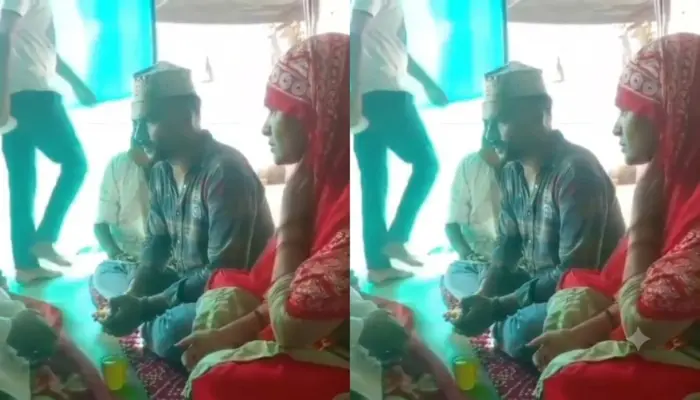
Case Summary
In Banaskantha district, Gujarat, a 30-year-old pregnant Hindu woman was befriended by a Muslim man under the pretext of providing ‘spiritual remedies’ for her recurring health problems. She was subsequently subjected to repeated sexual assault, physical abuse, threats and blackmail by the Muslim man and his three Muslim relatives. The woman was also pressured and forced to convert to Islam and undergo a nikah. According to media reports, the Hindu victim had been married for several years to a man from the Tharad region of Gujarat. The couple later moved to Palanpur, where her husband worked as a rickshaw driver. The woman frequently suffered from ill health. During this period, the Muslim accused, Akhtar Rajabshah Fakir, who was known to her husband, told her that his grandfather could provide occult spiritual remedies for her health problems using supposed protective threads, commonly known as ‘dora-dhaga’. Using this as a pretext, Akhtar began visiting the woman’s home more frequently and gradually became close to her. Following a dispute with her husband, the Hindu woman began living separately from him and stayed with Akhtar. According to the woman, Akhtar sexually assaulted her during this period. She further stated that Akhtar, along with his brothers, Arif Rajabshah Fakir and Iliyas Rajabshah Fakir, and their uncle, Salimshah Jumashah Fakir, repeatedly raped her. The woman had earlier filed a sexual assault case against Akhtar and his relatives at Palanpur East Police Station on 7th April 2026. Following the registration of that case, Akhtar and two other accused were arrested. However, Arif and Iliyas, who were absconding in connection with the earlier case, threatened to kill the woman and kidnap her two daughters if she did not agree to a settlement. Her daughters were staying with their grandparents at the time. The woman stated that these threats placed her under pressure and forced her to agree to a compromise. She subsequently filed an affidavit before the Gujarat High Court and approached the court seeking to have the earlier First Information Report quashed. After Akhtar and the other accused in the earlier case were released from jail on 16th June 2026, the woman again went to live with Akhtar. She moved with him to Pengiya village in Dhanera taluka, hoping that their differences would be resolved and that they could live peacefully together. However, according to her subsequent complaint, the harassment resumed within two or three days of her arrival in the village. At the time, she was five months pregnant. Despite her pregnancy, Akhtar continued to sexually and physically assault her. The woman stated that Akhtar pressured her to engage in non-consensual sexual relations and forced her to speak to other men over the phone. When she refused, he threatened her with the conversion of her two daughters to Islam. The woman further stated that Akhtar, along with Arif Rajabshah Fakir, Iliyas Rajabshah Fakir and Salimshah Jumashah Fakir, blackmailed her using a private video that had been secretly recorded without her knowledge. The accused threatened to make the video viral on social media. She stated that the video was repeatedly used to intimidate and blackmail her. During this period, the four Muslim men also pressured and forced the Hindu woman to convert to Islam. A local cleric was brought in to conduct a nikah as part of the forced conversion ceremony. The woman stated that she was given a spiked or drugged drink during the ceremony, after which her name was changed to “Fiza”. The accused also threatened to bring her daughters, who were staying with their grandparents, to them and forcibly convert them to Islam. On 21st July 2026, all four accused assaulted the woman and threw her out of the house. She stated that they refused to accept responsibility for either her or her unborn child. After being thrown out, the woman sought help from a shopkeeper and contacted the 181 women’s helpline. With the assistance of her mother, she was subsequently taken to Lakhani. The woman approached Dhanera Police Station and lodged a fresh complaint on 20th August 2026. Based on her complaint, police registered a case against Akhtar Rajabshah Fakir, Arif Rajabshah Fakir, Iliyas Rajabshah Fakir and Salimshah Jumashah Fakir. The four accused were booked under provisions of the Bharatiya Nyaya Sanhita relating to rape, criminal intimidation and assault, along with provisions of the Gujarat Freedom of Religion Act. The woman also handed over a video to police that showed her being forced to convert to Islam. Deputy Superintendent of Police C. L. Solanki stated that Akhtar Rajabshah Fakir was arrested following the registration of the case at Dhanera Police Station. Police continued efforts to arrest the remaining three accused, Arif Rajabshah Fakir, Iliyas Rajabshah Fakir and Salimshah Jumashah Fakir. At the time of writing this report, the police investigation was ongoing.
Why it is Hate Crime ?
This case is being added to the tracker under the primary category: Crimes against women in relationships and other sexual crimes. The subcategory selected is: Forced conversion before marriage. The selected tertiary category is: Forced to do nikah. In such cases, a non-Hindu man is in a relationship with a Hindu woman when the pressure to convert her religion begins to manifest. In such cases, typically, two patterns emerge. First, when the relationship is consensual, and the religious identity of the perpetrator is known to the Hindu woman in the relationship, however, at some point during the relationship, the non-Hindu man starts to force the victim to convert her religion and give up her Hindu religious identity. The second is when the woman gets into a marriage with the man pretending to share her faith. Later, when the truth is revealed, the man starts pressuring the woman to convert her religion and give up her religious identity. In both the situations, the methods used to force the victim to convert her religion often revolve around force-feeding beef, forcing her to wear hijab, forcing her to read the Kalma or even pressurizing the victim to do ‘Nikah’, which is marriage under Islamic law, with a prerequisite being conversion to Islam. Cases where a Hindu woman consensually converts to Islam in a relationship will be left out of the hate crime database, even though it could be argued in several cases that the conversion was a result of religious brainwashing. This case represented a religiously driven hate crime because the abuse went beyond sexual and physical violence and was accompanied by deliberate efforts to target and erase the victim’s Hindu identity. The victim was subjected to sustained sexual exploitation, coercion and violence before being forcibly converted to Islam and made to undergo a nikah. The religious conversion was therefore not incidental to the abuse but formed a central part of the coercive control exercised over her. The combination of targeting a Hindu woman, subjecting her to severe abuse and then forcibly imposing another religious identity demonstrated a clear religious dimension to the crime. The initial targeting of the victim under the pretext of curing her illnesses was significant because it showed how her vulnerability was exploited to gain access to her and establish control over her. She was already married when the perpetrator approached her with promises of spiritual and occult remedies. The subsequent manipulation resulted in her becoming separated from her husband and increasingly dependent on the perpetrator. The fact that this was followed by sexual violence and, ultimately, forced conversion indicated that the initial targeting was not merely a means of establishing a relationship but formed part of a wider process of coercion that culminated in an attempt to strip her of her Hindu identity. The use of manipulation to make her vulnerable and dependent before imposing a different religious identity therefore demonstrated the religiously driven nature of the abuse. The repeated sexual violence by the Muslim perpetrator and his Muslim relatives demonstrated the deeply dehumanising manner in which the Hindu victim was treated. The fact that multiple Muslim men repeatedly subjected her to rape went beyond an isolated act of sexual violence and reflected a sustained pattern of humiliation, domination and violation of her bodily autonomy. In the context of the subsequent forced conversion and other efforts to erase her Hindu identity, the sexual violence was a tool of coercive control, intended to break the victim’s resistance, undermine her sense of dignity and make her increasingly vulnerable to further exploitation. The repeated violation of a Hindu woman by multiple Muslim men, followed by efforts to forcibly impose Islam upon her, demonstrated how sexual violence was intertwined with religious coercion and domination. Her Hindu identity was not simply disregarded but subjected to a broader process of humiliation and forced subjugation, making the sexual exploitation a significant component of the religiously driven abuse documented in the case. The forcible conversion of the victim to Islam represented a direct and profound violation of her religious autonomy and constituted a central element of the religiously driven nature of the crime. The victim was a Hindu woman whose faith and religious identity were an intrinsic part of her personal autonomy, yet she was subjected to coercion to abandon Hinduism and accept Islam against her will. This was not simply a matter of the perpetrators disregarding her existing faith; it involved actively compelling her to relinquish her Hindu religious identity and adopt a different religion without her free and informed consent. By forcing her to renounce Hinduism, the perpetrators sought to exercise control over a deeply personal aspect of her identity and deprive her of the fundamental right to determine her own faith and religious affiliation. The coercive nature of the conversion further demonstrated that the victim’s Hindu identity was treated as something that could be overridden, suppressed or forcibly discarded rather than respected as a matter of individual conscience. The conversion therefore functioned as an instrument of religious domination, through which the perpetrators sought not merely to control the victim personally but to alter the religious identity with which she had identified. The fact that this coercion was directed at a Hindu woman and resulted in the forced abandonment of her Hindu faith showcased that this incident is a clear example of a religiously driven hate crime. The fact that the victim was subsequently made to undergo a nikah further demonstrated that the forced conversion was intended to be institutionalised through marriage rather than remain a one-time act of religious coercion. In Islamic jurisprudence, a Hindu woman would have to convert to Islam to marry a Muslim man, and in this case, the victim was first forcibly converted to Islam and was then made to undergo a nikah with the Muslim perpetrator. The sequence was therefore significant because the conversion and marriage were directly connected, with the nikah serving to formalise and consolidate the religious identity that had been imposed upon her. The marriage was not a freely chosen union entered into on the basis of her personal or religious consent; instead, it followed coercion and the forced abandonment of her Hindu faith. The nikah consequently functioned as a further mechanism of control and domination, allowing the perpetrators to reinforce the victim’s post-conversion status and deepen their control over her personal and religious identity. In this context, the marriage was not merely intended to fulfil the religious requirement associated with a Muslim man marrying a Hindu woman, but also served to institutionalise the victim’s coerced conversion and entrench her separation from Hinduism. By imposing both conversion and nikah upon her, the perpetrators sought to exercise control over her religious identity through successive acts of coercion, making the forced marriage an extension of the religious domination already imposed upon her. This forceful nikah showcases deep-seated religious hostility towards Hinduism, making it a religiously driven hate crime. The threats to forcibly convert the victim’s two daughters to Islam demonstrated that the religious coercion extended beyond the victim herself and was used as a deliberate means of intimidation and control. The perpetrators threatened to take her daughters, who were staying with their grandparents, and force them to abandon their existing religious identity. By targeting her children’s faith, they exploited the victim’s emotional vulnerability and placed additional pressure on her to submit to their demands. The threat also demonstrated that the perpetrators sought to extend the removal of Hindu identity to the next generation, treating the children’s religious affiliation as something they could forcibly change. Using the threat of religious conversion against the victim’s daughters in order to further control and intimidate a Hindu woman demonstrated hostility towards her faith and an intent to impose Islam upon her family, showcasing religious animosity towards Hinduism and making this a further indicator of a religiously driven hate crime. The victim was also subjected to blackmail and threats involving a private video that had been secretly recorded without her knowledge. The perpetrators used the threat of making the video public to intimidate and sexually exploit her, while she was also subjected to repeated sexual violence. This demonstrated how the perpetrators used humiliation, fear and the threat of social exposure to maintain control over her. When viewed together with the religious coercion she subsequently faced, these methods demonstrated a sustained pattern of exploitation in which the victim's vulnerability and Hindu identity were used as part of the circumstances enabling further abuse. Finally, the fact that the victim was assaulted and thrown out of the house while she was five months pregnant further demonstrated the severe and dehumanising nature of the abuse to which she was subjected. The perpetrators refused to accept responsibility for either her or her unborn child after subjecting her to prolonged sexual, physical and psychological abuse. Considered alongside the forced conversion, religious coercion, threats involving her daughters and attempts to erase her Hindu identity, the incident demonstrated a sustained pattern of violence and religiously motivated domination. As the case met the parameters of a religiously driven hate crime, it was added to the Hinduphobia Tracker's hate crime database. Disclaimer: The Hinduphobia Tracker records incident dates based on when the victim’s ordeal began rather than when the case was reported by the media. In this case, however, the exact date on which the victim’s ordeal began was not specified. The case described a prolonged timeline of incidents, with only specific dates provided and no broader indication, such as the year or month, of when the ordeal initially began. The earliest specific date mentioned was 7th April 2026, the date when the victim first filed a complaint against the perpetrators. Henceforth, 7th April 2026 was selected as the indicative incident date for documentation purposes only.
Victim Details
Total Victim
1
Deceased
0
Gender
- Male 0
- Female 1
- Third Gender 0
- Unknown 0
Caste
- SC/ST 0
- OBC 0
- General 0
- Unknown 1
Age Group
- Minor 0
- Adult 1
- Senior Citizen 0
- Unknown 0


Case Status
Arrested


Perpetrators Details
Perpetrators
Muslim Extremists
Perpetrators Range
From 2 To 5
Perpetrators Gender
male
 Sources




