Hindu woman befriended by Muslim man using fake Hindu identity, sexually exploited, pressured to marry, blackmailed with obscene videos
 Fatehpur, Uttar Pradesh, India
  23 August, 2026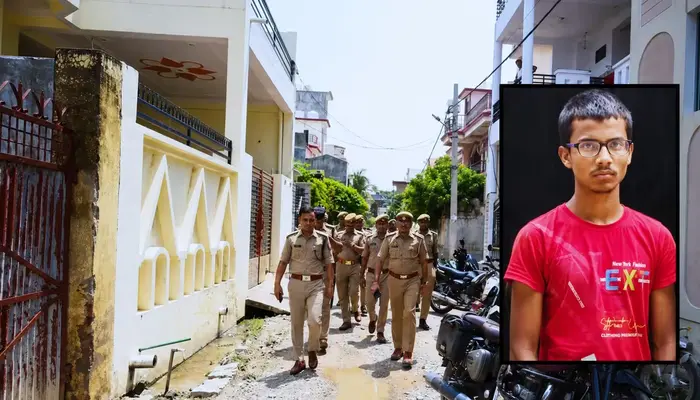
Case Summary
In Fatehpur, Uttar Pradesh, a Hindu woman was deceived by a Muslim man named Asif, who posed as a Hindu man. He falsely used the name “Pappu” to establish a relationship, sexually exploited her after promising marriage, and recorded obscene photographs and videos. He later pressured her to marry him and, after she refused upon learning his actual religious identity, he circulated the photographs and videos on social media, verbally abused her, and threatened to kill her. In December 2024, the Hindu woman from a village in the Asothar police station area received a phone call from a man who introduced himself as Pappu, also a Hindu. Believing this claim, she became friends with him on Instagram. According to her account, their friendship subsequently developed into a romantic relationship. The two later decided to meet in May 2026. The woman said that Asif established sexual relations with her on the promise of marriage. During the encounter, he made obscene photographs and videos of her. He subsequently pressured her to marry him. The woman later learned that the man belonged to a different religious community and refused to marry him. According to the complaint, Asif became angry and, on 5th June 2026, circulated her obscene photographs and videos on social media. When she complained about the circulation of the material, he verbally abused her and threatened to kill her. The woman subsequently submitted a complaint to the police and requested strict action against the accused. Acting on her complaint, police registered a case under the relevant sections. According to Station House Officer Rajiv Mishra, police used the woman's Instagram account to chat with the accused and called him to meet them in Asothar. The accused subsequently arrived in Asothar on Saturday evening, where police arrested him. Rajiv Mishra identified the accused as Asif, a resident of Gerki village in Dagarua police station area of Purnia district, Bihar. Police initiated proceedings to have him jailed, and further legal action was said to be underway.
Why it is Hate Crime ?
The incident has been added to the tracker under the primary category: Crimes against women in relationships and other sexual crimes. Within this, the subcategory selected is: Man pretends to be Hindu, and the tertiary category selected is: Name changed. When a non-Hindu man pretends to be a Hindu to deceive a Hindu woman into a relationship, the act is seen as triggered by mala fide intentions. In some cases, the woman eventually accepts the man’s original religious identity and converts after the man’s identity is revealed. These cases could be argued as cases of religious brainwashing and a result of the pressure a woman feels after getting into a relationship with a man. The woman, it can be argued, also changed her religious identity because of the stigma she believes she might face if she chooses to walk out of a deceptive relationship. However, for the purpose of documenting hate crimes, the cases in this subcategory are limited to those where there is explicit violence aimed at religious conversion against the wishes of the victim (force-feeding beef, blackmailing with intimate videos, rape on refusal to convert, etc), or if the woman herself complains of the man’s religious deception. In such cases, it is established that the deception of the non-Hindu man had a specific aim of religious conversion or targeting of the victim due to her Hindu religious identity, therefore making it a religiously motivated hate crime. The religious dimension of the case was reflected in the fact that the accused initially concealed his true identity and approached the Hindu victim on social media using the name “Pappu” while claiming to be Hindu. This deception enabled him to gain her trust and establish a relationship without disclosing his actual identity. By presenting himself as belonging to the same religious community as the victim, he was able to develop the relationship under false pretences. Further, the manner in which the victim was drawn into a romantic relationship and later subjected to exploitation reflects a pattern of grooming and control. The accused used emotional manipulation and the promise of marriage to establish influence over her decisions. This becomes significant as it shows that the relationship was not based on genuine intent but was structured in a way that allowed the accused to exercise control over the victim’s actions and circumstances. The other significant religious marker is pressuring the Hindu woman to marry him. The accused knowingly concealed that he was Muslim and deliberately pursued marriage with the Hindu woman on that basis. The woman was denied the opportunity to make an informed choice about an interfaith marriage. The pressure to marry would become religiously significant because it followed the initial concealment of his identity and the subsequent revelation of his actual religious background. The concern would not be an interfaith relationship itself, but the deception and pressure used to obtain the marriage. The religious dimension also cannot be excluded merely because the available account does not expressly state that the accused demanded her conversion. Under traditional Islamic jurisprudence, marriage between a Muslim man and a Hindu woman is generally not recognised as permissible unless the woman embraces Islam. This makes religious conversion a relevant consideration in cases where a Hindu woman is pursued through promises of marriage. In the present case, the accused first concealed his Muslim identity, developed a relationship with the victim, and then pressured her to marry him. When she discovered his true identity and refused the marriage, he resorted to blackmail, harassment, and threats. The sequence therefore raises a clear religious dimension, even though an explicit demand for conversion is not recorded, because the marriage itself would have involved a religious barrier that the accused concealed from the victim. The religious dimension became more significant after the Hindu woman discovered the accused's Muslim identity and refused to marry him. Rather than accepting her decision, he responded by subjecting her to harassment, circulating her intimate photographs and videos on WhatsApp and Instagram, verbally abusing her, and threatening to kill her. This conduct is an attempt to punish or intimidate the woman after she rejected a relationship and marriage upon learning the accused's religious identity. The concern therefore arose not from the interfaith relationship itself, but from the deception about his identity followed by pressure, harassment, and threats when the woman exercised her choice not to marry him. In cases like these, the tactic of concealing identity, establishing trust through deception, and then conditioning the relationship on religious conversion reflects more than individual wrongdoing. It shows a deliberate use of religious identity as a means of control and influence, where the victim’s faith becomes a factor to be altered under pressure. Such actions indicate a disregard for the victim’s religious background and exploit her trust in a targeted manner. It is this combination of deception, coercion, and the conditional demand for conversion that establishes the religious nature of the offence, and this is why the case has been recorded as a hate crime under the tracker. Disclaimer: The Hinduphobia Tracker records incidents based on when an event occurred or when the victim's ordeal began. It is important to clarify that none of the media sources covering this case has specified the exact date when the incident occurred. Therefore, for documentation purposes, we have recorded the date as the date the incident was reported in the media, 24th August 2026.
Victim Details
Total Victim
1
Deceased
0
Gender
- Male 0
- Female 1
- Third Gender 0
- Unknown 0
Caste
- SC/ST 0
- OBC 0
- General 0
- Unknown 1
Age Group
- Minor 0
- Adult 0
- Senior Citizen 0
- Unknown 1


Case Status
Arrested


Perpetrators Details
Perpetrators
Muslim Extremists
Perpetrators Range
One Person
Perpetrators Gender
male
 Sources




