Hindu students pressured to convert to Islam, perform Namaz and recite Kalma by Muslim professor; accused also disparaged Hindu deities and called Hindus “kafirs”
 Surat, Gujarat, India
  20 August, 2026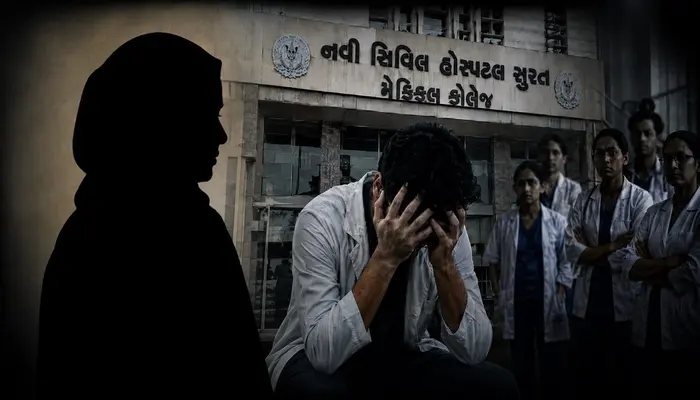
Case Summary
In Surat, Gujarat, Hindu students were pressured to abandon Hinduism and convert to Islam by their Muslim professor, Dr Sumaiya Mulla. The accused disparaged Hindu deities, referred to Hindus as “kafirs” and made a Hindu girl to recite kalma and perform namaz. The incident came to light after Dr Sumaiya Mulla, Head of the Microbiology Department, was suspended for 90 days by the Gujarat Health and Family Welfare Department in connection with the suicide of resident doctor Dr Harsh Pandya, who had faced ragging and mental harassment. Hindu students stated that Mulla had used her position and the college premises to promote Islam and subject Hindu students to sustained religious pressure. One former female Hindu student stated that Mulla repeatedly told her and her parents to leave Hinduism and convert to Islam, saying that Hinduism would not exist in the future and that only Islam would remain. She further stated that Mulla had disparaged Hindu beliefs by comparing Hindu and Islamic religious practices and had referred to Hindus as “kafirs”. According to the student, Mulla had also played videos of Muslim clerics on her mobile phone and encouraged students to listen to them, while telling them that Islam contained teachings that were absent from Hinduism. The students further stated that Mulla had directly instructed them in Islamic religious practices. One former student, a Hindu girl, revealed that Mulla had taken her to a restricted PCR room in the hospital’s leptospirosis department, where she was taught how to perform ablution and subsequently instructed in Namaz and the recitation of the Kalma. The student said that Mulla had contrasted Islamic practices with Hindu worship and had asked her about her experience after making her perform the prayer. The students also stated that Mulla had repeatedly encouraged Hindu women to marry Muslim men, including telling them that if they could not find a suitable Hindu match, she would find them a Muslim man to marry. The former students also stated that Mulla had attempted to undermine their faith by making disparaging remarks about Hindu scriptures, including the Ramayana, Mahabharata, Bhagavad Gita and Shiv Purana. She told them that these scriptures contained no meaningful explanation of life or its purpose, thereby attempting to create doubts about Hindu religious beliefs. One former student further stated that the religious pressure had caused severe mental distress during her residency. This revelation formed part of wider complaints raised by former students and staff concerning Mulla's conduct during her tenure. They stated that students had been used for work unrelated to their academic responsibilities, including collecting samples for research, handling personal banking tasks and obtaining railway tickets. There were also complaints concerning the use of government laboratory equipment and facilities for purposes outside their intended public function. Former students stated that complaints about Mulla's conduct had been submitted to authorities as far back as 2008–2016 and that a committee had reportedly been constituted in 2016, after which she was transferred to Jamnagar for a brief period. The case of religious-pressure emerged in the aftermath of the death of Dr Harsh Pandya, a postgraduate resident doctor at Surat Medical College, who died by suicide on August 9, 2026. An internal inquiry into the incident found that junior resident doctors had described severe harassment and ragging by seniors. Four doctors, Dr Nirali Vasave, Dr Anuj Maheshwari, Dr Dikshita Ghewaria and Dr Hina Bhoot, were subsequently booked under provisions relating to abetment of suicide, ragging and the Scheduled Castes and Scheduled Tribes (Prevention of Atrocities) Act and were suspended for six months. Mulla was also suspended for 90 days after the inquiry examined her failure to act on complaints of ragging.
Why it is Hate Crime ?
The primary category selected in this case is: Predatory Proselytisation. Under this, the subcategory selected is: Proselytisation by grooming, brainwashing, manipulation or subtle indoctrination. Religious brainwashing essentially means the often subtle and forcible indoctrination to induce someone to give up their religious beliefs to accept contrasting regimented ideas. Religious grooming or brainwashing also involves propaganda and manipulation. It involves the systematic effort, driven by religious malice and indoctrination, to persuade “non-believers’ to accept allegiance, command, or doctrine to and of a contrasting faith. Cases of such grooming or brainwashing are far more nuanced than direct threats, coercion, inducement and violence. In such cases, it is often seen that there is repeated, subtle and continual manipulation of the victim to induce disaffection towards their own faith and acceptance of the contrasting faith of the perpetrator. While subtle indoctrination is widely acknowledged as predatory, an element which is often understated in such conversions or the attempts of such conversion is the role of loyalty and trust which might develop between the perpetrator and the victim. Fiduciary relationships are often abused to affect such religious conversion. For example, an educator transmitting religious doctrine of a competing faith to a Hindu student. The Hindu student is likely to accept what the teacher is transmitting owing to existence of the fiduciary relationship. The exploitation of the fiduciary relationship to religiously indoctrinate victims would also be included in this category. Since the underlying animosity towards the victim’s faith forms the basis of predatory proselytization, such cases are considered religiously motivated hate crimes. The other sub-category selected here is - Attempting to convert/converting by denigrating Hinduism. In several cases, Hindus are converted or an attempt is made to convert Hindus by denigrating their faith, Hinduism. In such cases, the Hindus associate with the non-Hindu perpetrators often by choice and then, the attempt to convert them by insulting their faith, showing the faith down etc begins. An example of this would be a non-Hindu gathering where the Hindus are attending the gathering of their own free will. However, once they attend the gathering, there is an explicit attempt to convert them by abusing their faith and hailing the faith of the perpetrator. The denigration of the Hindu faith is often based on misrepresentation of the Hindu faith, its doctrine and scriptures and insult to espoused traditions if not blatant lies about Hindu beliefs and ways. Such conversions or attempts at conversions are driven by animosity towards the Hindu faith and are therefore documented as religiously motivated hate crimes. The others sub-category selected here is - Harassment, threats, coercion for conversion. Anti-Hindu slurs and the deliberate mocking of the Hindu faith owing to religious animosity involve the usage of derogatory terms, stereotypes, or offensive references to religious practices, symbols, or figures. One of the common anti-Hindu slurs used against Hindus is “cow-worshipper” and “cow piss drinker”. The intention of using this term is to demean and mock Hindus as a group and their religious beliefs since Hindus consider the cow holy. Additionally, some symbols and the slurs attached to them have a historical context that exacerbates the insult, hate, stereotyping, dehumanisation and oppression against Hindus. Cow worship has been used for centuries to denigrate Hindus, insult their faith and oppress Hindus specifically as a religious group. There has been overwhelming documentation about how cow slaughter has been used to persecute Hindus with cow meat being thrown in temples and places of worship. There has also been overwhelming documentation where cow meat (beef) has been force-fed to Hindus to either forcefully convert them to Islam or denigrate their faith. Apart from cow worship, the Swastika – which holds deep religious significance for the Hindus – has also been misinterpreted and distorted to use as a slur against Hindus. Similarly, the worship of the Shivling has been used by supremacist ideologies and religions to denigrate Hindus owing to religious animosity. Such slurs and denigration stem out of inherent animosity and hate towards Hindus and their faith, therefore, it is categorised as hate speech targeted at Hindus specifically owing to their religious identity. The other primary category selected here is - Hate speech against Hindus. Within it, the sub-category selected here is - Anti-Hindu slurs, mocking faith. Anti-Hindu slurs and the deliberate mocking of the Hindu faith owing to religious animosity involve the usage of derogatory terms, stereotypes, or offensive references to religious practices, symbols, or figures. One of the common anti-Hindu slurs used against Hindus is “cow-worshipper” and “cow piss drinker”. The intention of using this term is to demean and mock Hindus as a group and their religious beliefs since Hindus consider the cow holy. Additionally, some symbols and the slurs attached to them have a historical context that exacerbates the insult, hate, stereotyping, dehumanisation and oppression against Hindus. Cow worship has been used for centuries to denigrate Hindus, insult their faith and oppress Hindus specifically as a religious group. There has been overwhelming documentation about how cow slaughter has been used to persecute Hindus with cow meat being thrown in temples and places of worship. There has also been overwhelming documentation where cow meat (beef) has been force-fed to Hindus to either forcefully convert them to Islam or denigrate their faith. Apart from cow worship, the Swastika – which holds deep religious significance for the Hindus – has also been misinterpreted and distorted to use as a slur against Hindus. Similarly, the worship of the Shivling has been used by supremacist ideologies and religions to denigrate Hindus owing to religious animosity. Such slurs and denigration stem out of inherent animosity and hate towards Hindus and their faith, therefore, it is categorised as hate speech targeted at Hindus specifically owing to their religious identity. The incident qualifies as a religiously motivated hate crime because the conduct was directed at Hindu students on account of their religious identity and sought to undermine, delegitimise and ultimately replace their existing religious beliefs with Islam. The behaviour of the accused was therefore not merely an expression of personal religious belief or an isolated attempt at religious persuasion; it reflected a sustained pattern in which Hindu identity and faith were treated as inferior, invalid or in need of abandonment. A key indicator of the religious motivation was the use of Hindu students' religious identity as the basis for pressure directed against them. The students were not subjected to generic harassment unrelated to their beliefs. Rather, the interactions centred on their being Hindu and on persuading them to cease identifying with Hinduism. Pressuring Hindu individuals to discard their religious faith and embrace another was a direct attack on their religious identity and dignity. It was not a matter of personal choice; it was coercion rooted in hostility towards the victim's Hindu identity. Such an attempt reflects religious animosity because the act was not simply about personal differences but about erasing the victim’s Hindu faith. The denigration of Hindu beliefs further strengthens the religious-motive assessment. By portraying Hinduism and its religious traditions as lacking value while presenting Islam as superior or inevitable, the accused sought to undermine Hindu faith. Thus, the accused denigrated and misled Hindu students against Hinduism and Hindu gods and goddesses. This goes beyond religious debate or proselytisation; it constitutes an act of incitement and insult directed at the core beliefs of the Hindu community. Such remarks are designed to demean and undermine the faith of Hindus and intend to create an inferiority complex in the minds of the victims against their own faith. This fosters an environment of hostility and disrespect towards the Hindu community and Hindu deities. These acts of insulting Hinduism stem from Islamic theology, which harbours disdain and hatred for polytheistic faiths, and which categorises Hindus as ‘polytheists’, thereby fostering hatred against them. Furthermore, the use of the term “kafir” in reference to Hindus is particularly relevant because it was used in the context of interactions with Hindu students and therefore contributed to an environment in which their religious identity was characterised in derogatory or exclusionary terms. This was not generic term, but an outright abuse towards Hindus. In Islamic terminology, “kafir” refers to non believers and is often used in a derogatory or hostile manner against Hindus and other non-Muslims. Using derogatory slurs like "Kafir" against Hindus reveals the profound hostility the accused harboured towards their religious identity. Such dehumanising language constitutes clear anti-Hindu hate speech and communal slurring targeted at Hindu individuals solely for being Hindus. The conduct also went beyond verbal expression and involved direct interference with the students' religious autonomy. The attempts to instruct Hindu students in Islamic religious practices are significant because they occurred in circumstances involving an unequal institutional relationship between an authority figure and students. This distinction matters: the concern is not that Islamic practices were discussed in themselves, but that Hindu students experienced repeated pressure from an institutional authority to participate in religious practices associated with another faith while simultaneously being encouraged to reject their own beliefs. The instruction to a Hindu student to perform Namaz, recite the Kalma and undergo ablution is particularly significant in assessing the religious motive because these were not merely discussions about Islam but direct participation in Islamic religious practices. Making a Hindu student engage in such practices was an attempt to sever her from her own religious identity and familiarise her with the beliefs and practices of Islam. The significance therefore lies not in the religious practices themselves, but in their use within a wider pattern of sustained religious pressure directed at a Hindu student. The institutional setting further contributes to the assessment of religious motivation. The conduct reportedly within an educational and medical environment in which the students were dependent on senior personnel for their academic and professional development. If an authority figure uses such a position to repeatedly target students because of their religion, the religious pressure carry substantially greater coercive weight than an unsolicited interaction between private individuals. The students could reasonably perceive such conduct as difficult to refuse or challenge because of the authority differential. Additionally, the encouragement of Hindu women to marry Muslim men is relevant for a similar reason. In isolation, an individual expressing a preference for interfaith marriage would not necessarily constitute religious hostility. However, when such encouragement is made as part of a broader pattern of urging Hindu students to abandon their faith, it becomes relevant to the wider pattern of attempting to weaken or alter their Hindu religious identity. Its significance therefore derives from the surrounding conduct and alleged objective rather than from the statement alone. Taken together, the reported conduct indicates a pattern in which Hindu identity was singled out, denigrated and subjected to sustained pressure for religious change. The religious element was therefore integral to the misconduct rather than incidental to it. The combination of identity-based targeting, disparagement of Hindu beliefs, pressure to reject Hinduism, and promotion of Islamic practices provides the basis for classifying the incident as a religiously motivated hate crime against Hindus. Disclaimer: The Hinduphobia Tracker acknowledges that the incident may have involved additional Hindu students who were subjected to similar religious pressure. However, only two Hindu girls have publicly come forward and provided accounts of the conduct. Accordingly, the victim count has been conservatively recorded as 2, based only on the victims who have been specifically identified and whose accounts are available.
Victim Details
Total Victim
2
Deceased
0
Gender
- Male 0
- Female 2
- Third Gender 0
- Unknown 0
Caste
- SC/ST 0
- OBC 0
- General 0
- Unknown 2
Age Group
- Minor 0
- Adult 2
- Senior Citizen -1
- Unknown 1


Case Status
Complaint filed


Perpetrators Details
Perpetrators
Muslim Extremists
Perpetrators Range
One Person
Perpetrators Gender
female
 Sources




