Hindu family brutally murdered amidst ongoing persecution of Hindus in Bangladesh; police arrest two Hindu youths amid serious investigation discrepancies
 Rangpur District, Bangladesh
  21 August, 2026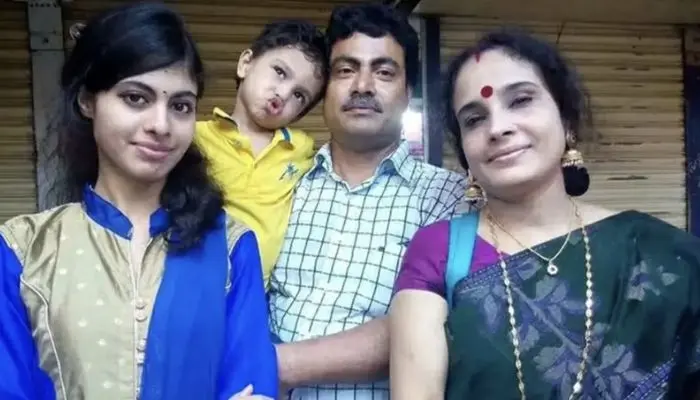
Case Summary
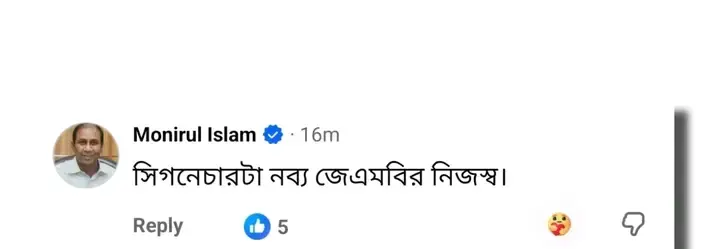
Four members of a Hindu family were murdered inside their locked home in the Machuapara area of Rangpur city, Bangladesh, on 22 August 2026. The deceased were retired Rangpur District School teacher Ganapati Chakraborty Jewel (65), his wife Pritilata Chakraborty Bala (50), their 25-year-old daughter Agami (also identified in some reports as Kandi) Chakraborty, and their 12-year-old son Priyam (also identified as Ayush) Chakraborty. The family had last been contacted on the night of 20 August 2026. When relatives could not reach them, they went to the victim's home two days later and noticed a strong foul smell coming from the house. Subsequently, they informed the police, who broke open the externally locked gate and recovered the four decomposed bodies from different locations. Ganapati's body was initially reported to have been found on the roof, those of his wife and daughter on the stairs, and the child's body under a bed or inside a bedroom. The police initially investigated the deaths as a possible robbery or planned murder. On 23 August 2026, Rangpur Metropolitan Police Commissioner Mohammad Abdul Mabud presented a different account during a press conference, claiming that two youths, identified as Mugda Das (23) and Siddharth Das (19), had entered the roof of Ganapati's house to consume Yaba (drugs). According to the police account, Ganapati confronted them after hearing noise on the roof and was strangled with a towel by the accused. His wife, daughter and sleeping son were also subsequently killed. Police said the accused then remained inside the house, bathed, ate dates and cucumbers, consumed the remaining Yaba and later left with gold ornaments, which they hid behind a nearby temple. They also said the accused had deliberately disturbed the household belongings to make the deaths appear to have resulted from a robbery and had soaked two mobile phones in detergent-mixed water in an attempt to destroy fingerprints. The two arrested men were reported to have confessed and to have given statements before a court. However, significant inconsistencies subsequently emerged between the police account and information provided by the autopsy doctor. Police Commissioner Mohammad Abdul Mabud had earlier claimed that Agami's eyes had been gouged out and that her jaw had been broken while she was being strangled. Further questions arose over the condition of Agami's body. Relatives and local sources described injuries to her eyes and neck and stated that the lower half of her body had been unclothed. Some reports also described injuries or burns to her face and private parts and raised questions about whether she had been sexually assaulted. These details had not been officially established by police at the time of reporting this incident. On the other hand, autopsy officer Dr Bablu Kishore Biswas stated that the post-mortem had found no evidence of a broken jaw or removed eyes. He further said that all four victims had been strangled and that there was no evidence that acid had been used to burn or disfigure their faces. He explained that the bodies had remained in the house for several days and that decomposition had caused the faces to appear burned. Samples collected during the post-mortems were to be sent to the CID laboratory, meaning that the forensic findings were not yet complete. The conflicting descriptions nevertheless intensified demands for a transparent investigation into the circumstances of her death. The police account also came under scrutiny because of questions surrounding the location of Ganapati's body. While the police claimed that he had been killed on the roof after confronting the youths, material circulated from the scene, including a video, appeared to show his body beside a cot inside a room. The discrepancy was cited by protesters and other observers as another reason to question the reconstruction of the crime and the police account. Furthermore, Siddharth's father, Binoy Das, and his elder brother said Siddharth had been wearing a coloured T-shirt when they handed him over to the police, whereas he was later seen wearing a different shirt when presented before journalists. The family said Siddharth had never owned such a shirt and sought an explanation for the change of clothing. A video circulating in connection with the case also revealed that a policeman was seen at the crime scene, who was wearing the same striped shirt that Siddharth was seen wearing when he was presented in front of journalists. The arrested men's families and sections of the local community also disputed the police's account that the two youths had been consuming Yaba. Protesters questioned whether two young men could have killed four members of the family in the manner described by police and then remained inside the house for an extended period. Former teachers and students of Rangpur District School, the Rangpur District Mahila Parishad and the Rangpur Metropolitan Citizens Committee organised demonstrations on 24 August 2026, demanding that the actual circumstances of the murders be established and that those responsible be identified. Protesters described the police explanation as unconvincing and demanded a judicial investigation if necessary. A separate line of inquiry revealed there was an extortion dispute at the time of the construction of Ganapati Chakraborty's house. His elder brother Gopinath Chakraborty and some local residents said that an influential local person had demanded a substantial amount of money from Ganapati during the construction. They further stated that the dispute had continued and that the individual had been seen near Ganapati's house with associates shortly before the murders. Gopinath suggested that the family might have been killed because of this dispute and that the scene could have been disturbed afterwards to make the murders appear to be a robbery. No response from the person accused of making the extortion demand was available in the reports, so this remained an investigative lead rather than an established motive. The case also generated wider concern among members of Bangladesh's Hindu community. Former Bangladeshi anti-terrorism official Monirul Islam described the crime scene as resembling a JMB-style (Jamaat-ul-Mujahideen Bangladesh, an Islamist terrorist organistation) attack, while Hindu community voices questioned whether the arrested youths were being used to close the investigation prematurely. Social-media posts also attributed the killings to Islamist elements and connected them to broader concerns over violence against Hindus in Bangladesh. The contradictory accounts concerning the victims' injuries, the location of Ganapati's body, the clothing of one arrested suspect, the extortion dispute and the circumstances surrounding the arrests led to substantial public demands for an independent and comprehensive investigation. The four victims had been members of a Hindu family, and the brutality of the killings, particularly the questions surrounding Agami's injuries, caused widespread concern. At the time of reporting, however, the definitive motive remained unresolved and the forensic examination was still pending.
Case Images
Why it is Hate Crime ?
This case has been added to the tracker under the primary category of - Attack resulting in death. Within it, the sub-category selected here - Attacked for Hindu identity. In several cases, Hindus are attacked merely for their Hindu identity without any perceived provocation. A classic example of this category of religiously motivated hate crime is a murder in 2016. 7 ISIS terrorists were convicted for shooting a school principal in Kanpur because they got ‘triggered’ seeing the Kalava on his wrist and tilak that he had put. In this, the Hindu victim had offered no provocation except for his Hindu religious identity. The motivation for the murder was purely religious, driven by religious supremacy. Such cases where Hindus are targeted merely for their religious identity would be documented as a hate crime. Under this category, cases where the attack led to the death of the Hindu victim/s would be documented. In this case, the murder of Ganapati Chakraborty and his family qualified as a religiously motivated hate crime because the victims were members of a Hindu family who were killed together in an attack that raised serious indications of targeted violence against a Hindu household. The religious identity of the victims was not incidental to the case: the entire family belonged to Bangladesh’s Hindu minority and was attacked inside their own home, a space in which they should ordinarily have been able to live without fear. The scale and brutality of the attack, in which four members of the same Hindu family, including a retired teacher and a 12-year-old child, were killed, therefore required examination not merely as a multiple murder but within the broader context of violence and insecurity experienced by Hindus in Bangladesh. While the available reports did not record an explicit religious slur or statement demonstrating that Hindu victims were murdered because they were Hindus, the victim's Hindu identity remained relevant in assessing the incident within the broader environment of insecurity and violence affecting vulnerable Hindu minorities in Bangladesh. The Hinduphobia Tracker therefore treated the case as potentially faith-targeted in the context of the wider pattern of attacks and insecurity experienced by Hindus, while remaining open to revision if a credible investigation established that the incident was exclusively motivated by a non-religious criminal or personal dispute. For the purpose of documenting the 2024 to 2026 ethnic cleansing of Hindus in Bangladesh and the subsequent persecution following the political exile of Sheikh Hasina, the death of Sharif Osman Hadi, and the 13th National Parliamentary Election 2026, the Hinduphobia Tracker records such incidents as likely religiously motivated at the point of entry. If any case is later established through credible investigation or court findings to stem from motivations other than religious hostility, it will be revised or removed from the hate crime database. In this case, the circumstances surrounding the deaths further strengthened the need to examine the incident as part of a pattern of persecution of Hindus. The victims were not isolated individuals but four members of the same Hindu household, including a retired teacher, his wife, an educated adult daughter and a 12-year-old child. The complete destruction of a single Hindu family within its own residence carried significance beyond an ordinary criminal incident because it demonstrated the vulnerability of a minority household to extreme violence. The reported financial pressure surrounding the construction of the family's house also raised the possibility that the family had been specifically targeted after being subjected to coercion, while the unresolved questions regarding the identity and motive of the perpetrators meant that the religious dimension could not be discounted at the time of documentation. The subsequent public protests by teachers, students and civil-society representatives, who demanded that the actual perpetrators and motive be established, further reflected the seriousness with which the incident was viewed within the local community. Thus, even in the absence of an explicit anti-Hindu statement, the combination of the victims' shared Hindu identity, the targeting of an entire Hindu household, the severity of the violence, the reported prior pressure on the family and the unresolved circumstances of the investigation provided sufficient grounds for the incident to be documented as a likely religiously motivated attack, subject to revision if subsequent credible findings established a wholly non-religious motive. This incident must also be viewed against the broader context in which crimes involving Hindu victims in Bangladesh can initially be presented as theft-related, personal, or locally motivated incidents without the possibility of religious hostility being fully examined. The absence of an explicit religious motive in the initial reporting did not, in itself, eliminate the relevance of the victim's Hindu identity, particularly given the wider insecurity experienced by the Hindu minority. Accordingly, the incident was documented as a likely religiously motivated attack against Hindus on the basis of the circumstances available at the time. The manner in which the investigation was conducted by the police also raised serious concerns. Within a short period of the bodies being recovered, police arrested two Hindu youths, Mugda Das and Siddharth Das, and presented them as the perpetrators. However, the subsequent investigation was marred by multiple inconsistencies. The police account concerning the manner in which the victims, particularly Agami Chakraborty, were killed did not correspond with the findings subsequently provided by the autopsy doctor. Police statements regarding the injuries to her eyes and jaw were contradicted by the post-mortem examination, while questions also arose regarding the location of Ganapati Chakraborty's body and the clothing worn by Siddharth when he was presented after his arrest. Furthermore, s conducted also became relevant to the hate-crime assessment because the two individuals arrested by police were themselves Hindu. Their arrest, followed by the rapid presentation of a specific non-religious motive, meant that the investigation effectively moved towards closing the case around a drug-related explanation before the wider questions surrounding the deaths had been resolved. As documented above, significant discrepancies subsequently emerged between the police narrative, the autopsy findings and other evidence surrounding the crime scene. These inconsistencies, together with the concerns raised by the families of the arrested men and members of the local community, raised questions about whether the investigation had sufficiently examined alternative perpetrators and motives. The issue was therefore not simply that the police had arrested two Hindu suspects, but that the identification of Hindu individuals as the perpetrators could potentially obscure the question of whether the Hindu family had themselves been selected for religious reasons. Given the disputed evidence and the absence of a conclusively established motive, the investigation could not reasonably be treated as having ruled out a communal dimension. This concern assumed greater significance against the documented record of communal violence and contested official responses involving Hindus in Bangladesh following the fall of Sheikh Hasina's government on August 5, 2024. The broader pattern included attacks on Hindu homes and temples, disruption of Hindu religious events, pressure on Hindu teachers and officials, and violence against individuals defending Hindu religious sites. For example, in Jessore, around 20 Hindu homes were attacked by a Muslim mob following a local dispute, while the subsequent official response was criticised for framing the violence as retaliation rather than examining its communal character. In Khilkhet, Dhaka, Hindu boy Timpol Paul was beaten by members of the Bangladeshi army after he opposed a Muslim mob demanding the demolition of a Hindu temple. These incidents provided relevant contextual evidence of the vulnerability of Hindus and of concerns regarding the manner in which communal crimes were addressed by authorities. The Rangpur investigation therefore required particular scrutiny, as the disputed identification of the perpetrators and the premature emphasis on a non-religious motive occurred within an environment in which the possibility of anti-Hindu targeting could not safely be excluded without a thorough and impartial investigation. In Bangladesh, too, official statements can play a significant role in shaping the initial characterisation of crimes against Hindus in an attempt to deny communal angle and whitewash crimes done by Muslim perpetrators. Where Muslim perpetrators are involved, authorities may describe an incident as the result of robbery, a personal dispute, political retaliation, drug-related conflict or other ordinary criminal motives, thereby separating the crime rooted in religious animosity from the wider communal environment in which it occurred. Such explanations are given by the authorites so as to deny that the crime was religious motivated, particularly when the victims belong to a vulnerable religious minority. In the present case, the arrest of two Hindu individuals and the immediate emphasis on a Yaba-related motive therefore required particular scrutiny. The fact that the arrested individuals were themselves Hindu did not automatically establish that the police had fabricated the case or that the murders were communal; however, when considered alongside the disputed evidence, the unresolved motive and the wider pattern of hostility and persecution faced by Hindus in Bangladesh, it raised the possibility that the investigation may have focused on convenient Hindu suspects while failing to adequately examine whether the Hindu family had been targeted by Muslim perpetrators for religious reasons. The disputed investigation, the targeting of an entire Hindu family and the broader pattern of hostility towards Hindus warranted retaining the case within the hate-crime database unless a credible and independent investigation subsequently established that the murders were wholly unrelated to the victims' religious identity. The possibility of a involvement of Muslim terrorist organisation dimension further strengthened the need to examine the murders within the framework of anti-Hindu violence. Former Bangladeshi counter-terrorism official Monirul Islam identified similarities between the scene and attacks associated with JMB (an Islamist terrorist organistaion), while Hindu community representatives pointed to concerns about Islamist violence against Hindus. These obervations further called into question the police's rapid attribution of the murders to a Yaba-related dispute. In particular, the fact that the police arrested two Hindu individuals and presented them as the perpetrators raised concern that their arrest could have served to divert attention from the possibility of an attack by Muslim perpetrators and thereby obscure the communal dimension of the crime. The disputed evidence and unresolved inconsistencies consequently blurred the distinction between an ordinary criminal investigation and a possible attempt to establish a non-communal narrative around the killing of a Hindu family. In the context of the wider persecution of Hindus in Bangladesh, the possibility that the arrest of Hindu suspects was used to distance the case from an anti-Hindu motive therefore required serious scrutiny rather than allowing the communal dimension to be dismissed solely on the basis of the police narrative. Taken together, the circumstances surrounding the murder of Ganapati Chakraborty and his family warranted its documentation as a likely religiously motivated hate crime against Hindus. While the available evidence did not establish an explicit anti-Hindu motive, the killing of an entire Hindu household, the unresolved circumstances surrounding the attack, the prior pressure on the family, the serious inconsistencies in the police investigation, and the arrest of Hindu individuals amid a disputed non-religious narrative collectively raised substantial concerns that the communal dimension had not been adequately investigated. These concerns were further strengthened by the wider pattern of anti-Hindu hostility and contested official responses in Bangladesh following August 2024, as well as the possibility of Islamist involvement raised by observations regarding the nature of the attack. The case was therefore appropriately recorded on the basis of the available evidence and prevailing circumstances, while remaining subject to revision should a credible and independent investigation conclusively establish a wholly non-religious motive.
Victim Details
Total Victim
4
Deceased
4
Gender
- Male 2
- Female 2
- Third Gender 0
- Unknown 0
Caste
- SC/ST 0
- OBC 0
- General 0
- Unknown 4
Age Group
- Minor 1
- Adult 3
- Senior Citizen 0
- Unknown 0


Case Status
Complaint registered


Perpetrators Details
Perpetrators
Unknown
Perpetrators Range
Unknown
Perpetrators Gender
unknown
 Sources