Minor Hindu girl found brutally tied, assaulted and injured inside school washroom in Bangladesh
 Khulna Division, Bangladesh
  19 August, 2026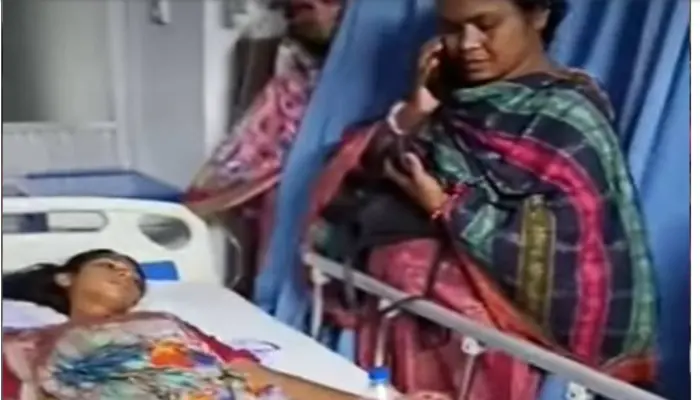
Case Summary
On 20 August 2026, a Class 10 Hindu female student was assaulted and confined at Gazirhat Hazi Naimuddin High School in Dighalia upazila of Khulna, Bangladesh. After classes ended at 4:00 pm and the premises emptied, two unidentified individuals who remained near the washroom attacked the student. The victim's mother stated that the perpetrators struck the student on the head from behind, injected her with an unidentified substance, and inflicted blade-like cuts on her body. The attackers then tied the student's hands, legs, and mouth, and locked her inside the washroom. Around 9:00 pm, construction workers at the school heard sounds coming from the locked facility. They broke open the lock and rescued the student, who was in a bloody and unconscious state with visible signs of torture. The student received initial first aid from a local physician at a Primary Health Centre. As her condition deteriorated, she was transferred to Gazi Medical College in Khulna for critical medical treatment. The Officer-in-Charge of the Digholia Police Station stated that the victim did not recognise her attackers. Police initiated an investigation to identify the perpetrators and examine a potential link to a past financial dispute involving a non-governmental organisation previously operated by the student's father. These incidents occurred against the backdrop of a sustained wave of anti-Hindu hostility in Bangladesh. The escalation of violence against Hindus in Bangladesh has unfolded in three distinct phases: first, following the ouster of Sheikh Hasina’s government in August 2024; second, after the death of Sharif Osman Bin Hadi in December 2025; and third, in the immediate aftermath of the 13th National Parliamentary Election 2026. Following the ouster of Sheikh Hasina, multiple reports documented attacks on Hindu homes, temples, and religious institutions, alongside intimidation campaigns, arson, and mob assaults targeting minority neighbourhoods. The Hinduphobia Tracker recorded 336 such incidents against the Hindu minority, underscoring the scale and persistence of anti-Hindu violence during this period. A further escalation occurred following the death of Sharif Osman Bin Hadi, a Muslim political activist and student leader known for his anti-Hindu and anti-India rhetoric. Hadi had been involved in political unrest after the fall of the Hasina government and was killed in Dhaka on 18th December 2025 during clashes. In the aftermath of his death, Hindu communities were blamed and subsequently targeted in retaliatory violence. Hindu homes were selectively set ablaze in multiple localities, forcing families to flee and leaving many displaced. The attacks appeared patterned rather than sporadic, with Muslim mobs focusing on Hindu neighbourhoods, properties, and religious symbols. Among the victims was Dipu Chandra Das, who was lynched to death and his body was set ablaze by a Muslim mob over false blasphemy allegations. The Hinduphobia Tracker documented 51 incidents of anti-Hindu violence in the period following Hadi’s death alone. Reports further indicated that posters and written materials calling for the extermination of Hindus were displayed in public spaces, signalling an alarming normalisation of genocidal rhetoric. The third phase of violence was unleashed after the 13th National Parliamentary Election 2026. Within days of the announcement of results, Hindu families in districts such as Noakhali, Rangpur, Nilphamari, Sylhet, Thakurgaon, and Dinajpur reported coordinated attacks involving arson, looting, assault, and vandalism of temples and homes. In several instances, Hindu homes were selectively targeted, looted, and families were threatened with displacement. The social media campaign calling for the desecration of the idol of Lord Ram at the Sanatan Complex in Rangpur emerged within this broader environment of hostility, where Hindu religious symbols, places of worship, and the Hindu community increasingly became targets of intimidation, hatred, and religiously motivated aggression.
Why it is Hate Crime ?
This case has been categorised under the ‘Undecided’ database in the Hinduphobia Tracker, as there is currently no conclusive evidence confirming a religious motivation behind the crime. However, it is important to consider the broader context in which the incident occurred. The crime took place in Bangladesh, where the Hindu minority has historically faced systemic persecution and violent attacks by sections of the Muslim majority. This trend has intensified significantly following the ousting of Prime Minister Sheikh Hasina on August 5, 2024. Since her removal, there has been a marked surge in violence against the Hindu community, including reports of rapes, forced conversions, mob lynchings, assaults, temple desecrations, and the displacement of Hindus from their ancestral properties. Given this worsening situation, it is entirely possible that the Hindu girl in this case may have been targeted by the perpetrators due to her religious identity. At the same time, it remains possible that the attack was opportunistic, without a direct religious motive. In the absence of any definite evidence pointing to a religious motive, the case will remain categorised as ‘Undecided’. If any further information emerges that shows that the crime was motivated by religious hostility, then this case would be added to the hate crime database.
Victim Details
Total Victim
1
Deceased
0
Gender
- Male 0
- Female 1
- Third Gender 0
- Unknown 0
Caste
- SC/ST 0
- OBC 0
- General 0
- Unknown 1
Age Group
- Minor 1
- Adult 0
- Senior Citizen 0
- Unknown 0


Case Status
Complaint filed


Perpetrators Details
Perpetrators
Unknown
Perpetrators Range
From 2 To 5
Perpetrators Gender
unknown
 Sources




