Hindu students targeted by Muslim teacher, locked up and barred from singing 'Vande Mataram', called a 'Hindu Song'
 Bidar, Karnataka, India
  14 August, 2026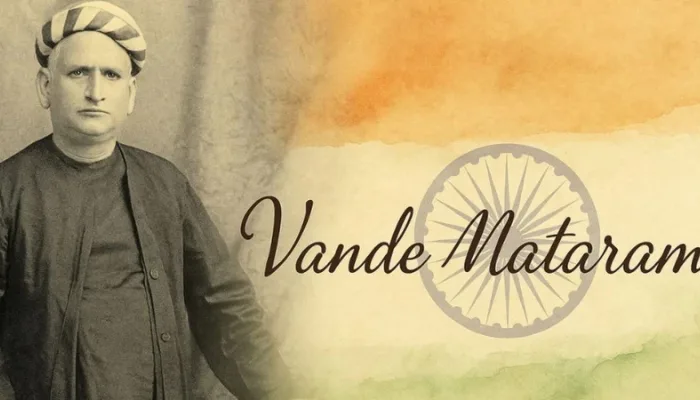
Case Summary
In Chitguppa, Bidar district, Karnataka, Abdul Hakeem, the Muslim principal of Shaheen PU College, targeted and discriminated against Hindu students. This happened after they sang the national song “Vande Mataram” and raised the patriotic slogan “Bharat Mata Ki Jai” following the Independence Day celebrations on August 15, 2026. Abdul Hakeem reprimanded the students and warned them against raising the slogans on the college premises, particularly stating that “Vande Mataram” belonged to the Hindu community and that raising such slogans could create hostility against Muslim students. By associating a national song and a patriotic expression with one religious community, he treated an expression of national identity as a religiously exclusive practice. The college had organised Independence Day celebrations comprising the flag-hoisting ceremony, cultural programmes and the singing of the National Anthem. After the National Anthem, students raised “Vande Mataram” and “Bharat Mata Ki Jai” as they left the college premises. At around 10 AM, the Muslim principal stopped the students and warned them not to raise the slogans again on the college campus. He stated that such slogans belonged to a particular religious community and would not be permitted in the college. The complaint further stated that the principal discriminated between Hindu and Muslim students and acted in a manner that could create feelings of hostility between students belonging to the two communities and affect public peace. It also stated that Hindu student Sagar Gowli was locked in a room for nearly one hour and subjected to mental harassment. Sagar’s father, Hiroba Gowli, submitted the complaint at Chitguppa Police Station at around 7 PM on August 17. Based on the complaint, Chitguppa Police registered Crime No. 97/2026 against Abdul Hakeem under Sections 126(2), 352 and 353(2) of the Bharatiya Nyaya Sanhita (BNS). Following the incident, members of Hindu organisations protested outside the college premises and Chitguppa Police Station, demanding legal action against the principal.
Why it is Hate Crime ?
The primary category selected for this case is: Hate speech against Hindus. The subcategory selected for this case is: Anti-Hindu subversion and prejudice. Hate speech is defined as any speech, gesture, conduct, writing, or display that is prejudicial against a specific individual and/or group of people, which is leading to or may lead to violence, prejudicial action or hate against that individual and/or group. Media plays a specific and overarching role in perpetuating prejudicial attitudes towards a community owing to unfair, untrue coverage and/or misrepresentation/misinterpretation, selective coverage and/or omission of facts of/about issues affecting a specific religious group. This type of bias can dehumanise the victim group, making it easier for others to justify harmful actions against them, which aligns with the objectives of hate speech laws aimed at preventing such harm. It is often observed that the media takes a prejudicial stand against the Hindu community, driven by their need to shield the aggressor community, which happens to be a numeric minority; however, it is the one perpetrating violence against Hindus. For example, the media is often quick to contextualise religiously motivated crimes against Hindus, omit or misrepresent facts that point towards religiously motivated hate crimes, justify and/or downplay religiously motivated hate crimes, or simply present fake news to stereotype Hindus. Such media bias leads to the denial of persecution and is often used to dehumanise Hindus, leading to justification for violence against them. For example, the media covered several fake allegations of Hindus targeting Muslims and forcing them to chant Jai Shree Ram. Most of these cases were proved false and fabricated after police investigation. These fake news reports were subsequently never retracted or clarified. Such fake news led to the justification of violence and dehumanisation of Hindus based on the argument that since Hindus targeted Muslims and forced them to chant Jai Shree Ram, the dehumanisation of Hindus and violence against them was par for the course and merely a retaliation. Such media bias leads to a prejudicial portrayal of Hindus and offers a justification for violence against them and therefore is considered hate speech under this category. The teacher's anti-Hindu bias becomes evident from the students' accounts of discrimination against Hindu students. Her objection to "Vande Mataram" and "Bharat Mata Ki Jai" is particularly significant because he reportedly treated these expressions as belonging to the Hindu community and sought to stop Hindu students from raising them. This was not simply an objection to a slogan. It showed that he viewed expressions associated with Hindu culture and identity with hostility. An educational institution is meant to be a secular place, and it cannot become a place where students are treated differently because of their religious identity. In this case, the principal used his position of authority to create such a distinction by portraying a national song as belonging to one religious community and suggesting that its expression would cause hostility with another community. This effectively placed Hindu students in a position where an ordinary expression of patriotism was treated as objectionable because of the religious identity attributed to it. Such conduct reinforces prejudice by portraying Hindu cultural and religious expressions as inherently divisive. Vande Mataram is the National Song of India. The poem personifies India as Mother India and uses imagery associated with Hindu goddesses to express reverence for the motherland. It does not ask people to worship these deities in a temple. The imagery is used to glorify the country and express devotion to India. "Bharat Mata Ki Jai" similarly expresses pride and loyalty towards the nation. By objecting to these expressions because Hindu students were raising them, the teacher effectively treated an expression of patriotism as a Hindu activity that should not be allowed. The objection becomes easier to understand when viewed through the mindset of religious extremists who see India primarily as a Hindu collectivity and therefore regard Hindu cultural expressions as a statement of Hindu identity. In fact, the very basis of the partition of India was that the Muslims believed that Islam was a nation unto itself, which could not survive with a Hindu collectivity like India. In such a mindset, praising India itself can be interpreted as praising the Hindu civilisation that has shaped its history and culture. Thus, a slogan such as "Bharat Mata Ki Jai" or a song such as "Vande Mataram", which, to most Indians, simply expresses love for the country, is viewed as an assertion of Hindu identity and therefore is treated with hostility. This explains why the teacher's objection was not neutral. He was not merely asking students to refrain from political slogans, but was singling out expressions of devotion towards the country by identifying them as belonging to the Hindu community. Alongside the students' accounts of discrimination between Hindu and Muslim students, this makes her hostility towards Hindu identity and Hindu cultural expression evident. The incident therefore reflects discrimination directed at Hindu students because of the religious identity attached to the expressions they were using, rather than a simple dispute over classroom discipline. Further, the harassment meted out to the Hindu student aggravated the discriminatory conduct. His confinement followed the dispute over the patriotic slogans and was one of the circumstances in which Hindu students were reprimanded for expressing national sentiment. The use of institutional authority in this manner reinforced the hostile treatment the student faced.


Case Status
Complaint registered


Perpetrators Details
Perpetrators
Muslim Extremists
Perpetrators Range
One Person
Perpetrators Gender
male
 Sources




