Multiple Hindu women lured into relationships, exploited and forced into prostitution by Muslim man
 Dehradun, Uttarakhand, India
  20 August, 2026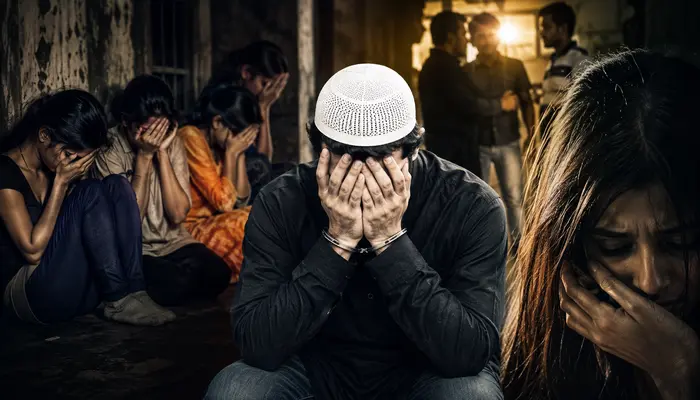
Case Summary
In Dehradun, Uttarakhand, multiple Hindu women were lured into relationships, exploited and subsequently forced into prostitution by a Muslim man named Arif. According to members of Bajrang Dal, a Hindu organisation, the Muslim accused was identified as Arif Khan. Bajrang Dal members said that he was involved in a sex racket for about a year and was previously caught several times. The first time he was caught was around nine months earlier, in December 2025. In the latest incident, Bajrang Dal members revealed that the accused rented a hotel room using a Hindu name that was mentioned on his Aadhaar card. He was subsequently found in the room with a Hindu woman identified as Sunita Kumari, from Punjab. During the confrontation, the man identified himself as Arif and gave his father's name as Mohammed Hasin. In the video, Arif Khan admitted to running a sex racket. The Bajrang Dal members revealed that he kept around 10–12 Hindu women from different states, including Uttarakhand and Punjab, for the racket. They also said that he operated 12 websites as part of the operation and targeted Hindu women by establishing relationships with them before involving them in the racket. The members further added that Khan had been married three times and had two children. Two of his three wives were Hindu; one of them had a child, and the other was from Punjab. The Bajrang Dal members stated that Khan had used relationships with Hindu women to lure them into a “love trap” and subsequently make them work in the sex racket.
Why it is Hate Crime ?
This case has been placed in the Undecided Database because, although the circumstances raise serious concerns regarding the exploitation of Hindu women, the evidence currently available does not conclusively establish that the victims were targeted because of their Hindu identity or that the accused was motivated by religious hostility. According to members of the Bajrang Dal, the Muslim accused had operated the racket for approximately a year and had previously been caught in connection with the activity. The pattern of establishing romantic relationships with Hindu women before involving them in the prostitution racket raises concerns regarding whether their religious identity played a role in their selection. Furthermore, the use of a Hindu name by the accused raised questions about whether Sunita Kumari had been lured into a relationship after he presented himself as a Hindu. This circumstance was significant because adopting a Hindu identity while establishing a relationship with a Hindu woman could indicate an attempt to conceal his actual religious identity and gain her trust, which is malicious, as it is a calculated strategy rooted in religious profiling and targeting. However, the available evidence did not establish whether the use of the Hindu name was intended to deceive as to his Hindu identity, as it only states that he used the Hindu name to book the hotel room. The case also assumes greater significance because the available account indicated that Khan had been married three times, with two of his wives being Hindu women. However, these circumstances alone did not establish that his relationships with Hindu women were motivated by religious hostility or formed part of an organised effort to target Hindus. Similarly, the fact that the victims were Hindu and the accused was Muslim did not, by itself, demonstrate a religious motive. The available evidence did not indicate that Khan had attempted to convert the women to Islam, compelled them to abandon Hinduism, expressed hostility towards Hindu religious beliefs, or otherwise demonstrated anti-Hindu sentiments while committing the offences. At present, the available information therefore established a serious pattern of sexual exploitation and commercial sexual exploitation, but it did not conclusively establish whether the victims were selected specifically because they were Hindu. The fact that Khan deliberately established relationships with Hindu women before involving them in the racket warranted further investigation into whether their religious identity was a factor in the recruitment process. Until such evidence becomes available, the religious motive remained insufficiently established for inclusion in the Hate crime database. Accordingly, this case has been placed in the Undecided Database. Should further evidence emerge through police investigation, witness statements, digital evidence, or judicial proceedings establishing that Khan deliberately selected Hindu women because of their religious identity, or that religious hostility or another specifically anti-Hindu motive formed part of the offences, the case may warrant reconsideration for inclusion in the main Hinduphobia Tracker. Disclaimer: The exact date on which the Hindu girls first came into contact with the accused or when the offences commenced was not specified in the available sources. The tracker records incident dates based on when the underlying offence occurred rather than when it was reported or published. As the available material did not specify the exact commencement of the offences, 20th August 2026, the date when this incident came to light on social media and was reported by the media, has been used as the indicative incident date for documentation purposes only. For documentation purposes, the victim count was recorded as twelve based on statements made by the Bajrang Dal members in the video.
Victim Details
Total Victim
12
Deceased
0
Gender
- Male 0
- Female 12
- Third Gender 0
- Unknown 0
Caste
- SC/ST 0
- OBC 0
- General 0
- Unknown 12
Age Group
- Minor 0
- Adult 0
- Senior Citizen 0
- Unknown 12


Case Status
Unknown


Perpetrators Details
Perpetrators
Muslim Extremists
Perpetrators Range
One Person
Perpetrators Gender
male
 Sources




