Hindu religious sentiments outraged; Indian politician made objectionable remarks invoking Hindu deities in political rhetoric
 India
India  1 August, 2026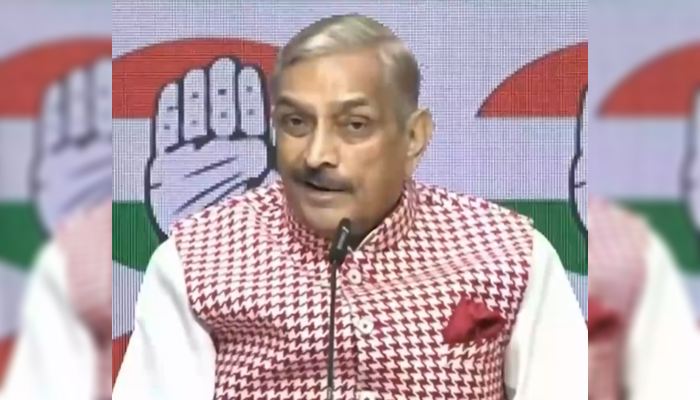
Case Summary
Hindu religious sentiments were outraged after Indian politician Pramod Tiwari made controversial and insulting remarks invoking Lord Ram and Goddess Sita while attacking Prime Minister Narendra Modi. During a press conference on 2 August 2026, Congress Rajya Sabha MP Pramod Tiwari made controversial remarks invoking Lord Ram and Goddess Sita while criticising the Modi government over the Ram Temple and the performance of religious rituals in Ayodhya. Tiwari referred to the Ashwamedha Yagna and sarcastically questioned the identity or presence of Modi’s wife in comparison with Goddess Sita. He said, “Ram ki Sita thi, Modi ki Sita kaun hai?” (“Ram had Sita, who is Modi’s Sita?”). He also questioned where Modi’s wife was during the religious ceremony at the Ram Temple. The remarks triggered a political controversy, with the Delhi BJP objecting to Tiwari’s reference to Goddess Sita in the course of a political attack against the Prime Minister. The Delhi BJP subsequently submitted a police complaint against Tiwari over derogatory remarks concerning Goddess Sita and sought action against him. News reports noted that the controversy centred on Tiwari bringing a revered figure of Hinduism, Goddess Sita, into a political attack on Prime Minister Modi.
Why it is Hate Crime ?
This case has been added to the tracker under the primary category of - Hate speech against Hindus. Within it, the sub-category selected here is - Anti-Hindu slurs, mocking faith. Anti-Hindu slurs and the deliberate mocking of the Hindu faith owing to religious animosity involve the usage of derogatory terms, stereotypes, or offensive references to religious practices, symbols, or figures. One of the common anti-Hindu slurs used against Hindus is “cow-worshipper” and “cow piss drinker”. The intention of using this term is to demean and mock Hindus as a group and their religious beliefs since Hindus consider the cow holy. Additionally, some symbols and the slurs attached to them have a historical context that exacerbates the insult, hate, stereotyping, dehumanisation and oppression against Hindus. Cow worship has been used for centuries to denigrate Hindus, insult their faith and oppress Hindus specifically as a religious group. There has been overwhelming documentation about how cow slaughter has been used to persecute Hindus with cow meat being thrown in temples and places of worship. There has also been overwhelming documentation where cow meat (beef) has been force-fed to Hindus to either forcefully convert them to Islam or denigrate their faith. Apart from cow worship, the Swastika – which holds deep religious significance for the Hindus – has also been misinterpreted and distorted to use as a slur against Hindus. Similarly, the worship of the Shivling has been used by supremacist ideologies and religions to denigrate Hindus owing to religious animosity. Such slurs and denigration stem out of inherent animosity and hate towards Hindus and their faith, therefore, it is categorised as hate speech targeted at Hindus specifically owing to their religious identity. The incident qualified as a religiously motivated hate speech case because the political attack did not remain confined to criticism of Prime Minister Narendra Modi, his policies, or the functioning of the government. Instead, it invoked Lord Ram and Goddess Sita, two central and deeply revered figures of Hindu religious belief, as instruments in a political attack. Tiwari drew a direct comparison between the relationship of Lord Ram and Goddess Sita and the personal life of the Prime Minister, thereby placing a sacred Hindu narrative within a political taunt directed at an individual. The reference was therefore religious in substance rather than merely political in subject matter. The religious dimension was particularly significant because Goddess Sita was not incidental to the statement. Tiwari specifically invoked her role alongside Lord Ram and used that religious relationship as the basis for questioning the Prime Minister. In Hinduism, Sita is a central object of reverence and is traditionally understood as Lord Ram’s consort and a principal figure in the Ramayana tradition. Consequently, using her identity as a rhetorical device in a political attack moved the statement beyond ordinary criticism of a public figure. The religious reference became the mechanism through which the political point was constructed. The statement also acquired a derogatory character from the way the sacred relationship was recast as a political comparison. Tiwari contrasted the revered relationship of Ram and Sita with the personal circumstances of Narendra Modi, asking who “Modi’s Sita” was. This juxtaposition reduced a sacred Hindu relationship to a political analogy and invited the audience to view a revered religious figure through the lens of partisan political criticism. The case was therefore distinct from a situation in which a politician merely criticised a religious institution, a temple administration, or a government policy concerning religion. Here, revered Hindu figures themselves were incorporated into the rhetoric of the political attack. The choice to use Lord Ram and Goddess Sita as the framework for the criticism was central to the expression rather than peripheral to it. This provided the religious element necessary for classifying the incident as hate speech directed at Hindu religious sentiments, particularly because the remarks concerned figures regarded as sacred by Hindus. The incident thus crossed the boundary from political disagreement into the use of religiously revered figures in a manner that was derogatory towards Hindu religious sentiments. This religious targeting, rather than the criticism of Modi itself, formed the basis for its classification as a religiously motivated hate-speech incident.


Case Status
Complaint filed


Perpetrators Details
Perpetrators
Others
Perpetrators Range
One Person
Perpetrators Gender
male
 Sources




