Hindu religious sentiments outraged over derogatory remarks against Hindu deities in Gaurela, Chhattisgarh
 Gaurela, Chhattisgarh, India
  11 August, 2026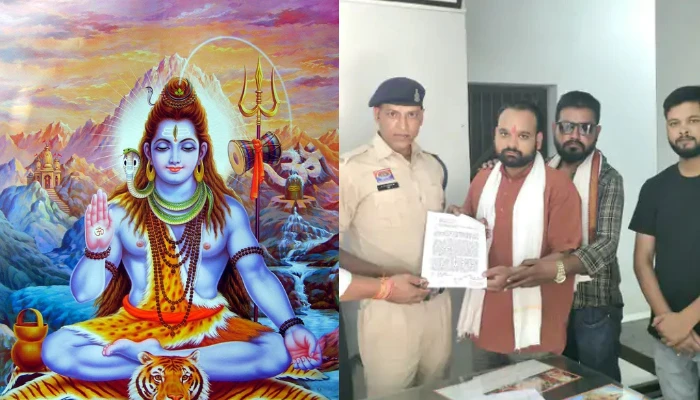
Case Summary
In Pendra, Chhattisgarh, Hindu sentiments were outraged after objectionable content concerning Hindu deities and religious beliefs was circulated on social media by a Facebook profile named ‘Hansraj Goyal’. The profile shared a post derogatory to the religious beliefs associated with Lord Shiva, including the Shivalinga, and other Hindu deities. Subsequently, ‘Arun Pannalal’, identified as the president of the Christian Forum, commented on the post and mocked the Hindu faith, an incident which was also recorded by The Hinduphobia Tracker. The incident triggered strong protests from the Vishwa Hindu Parishad (VHP) and Bajrang Dal, whose representatives approached the police and submitted a memorandum demanding action against those responsible. The organisations stated that the content was a deliberate attempt to hurt the religious sentiments of Hindus and create religious animosity and tension in society. They also expressed concern that such objectionable material could affect law and order in the region. The organisations demanded that the Pendra Police Station conduct a prompt and proper investigation into the Facebook post and comment and take strict legal action against Hansraj Goyal and Arun Pannalal. They also sought registration of a case under Sections 299 and 196 of the Indian Penal Code (IPC) 2023, along with other relevant provisions. Screenshots of the Facebook posts and comments were also submitted to the police as evidence. Representatives of the VHP and Bajrang Dal stated that insults to Hindu deities and symbols of faith would not be tolerated. Sagar Patel, Nikhil Parihar, Vinay Pandey, Anurag Pandey, Shani Patel and other organisation workers were present during the submission of the memorandum.
Why it is Hate Crime ?
This case has been added to the tracker under the primary category: Hate Speech against Hindus. The subcategory selected is Anti-Hindu slurs, mocking faith. Anti-Hindu slurs and the deliberate mocking of the Hindu faith owing to religious animosity involve the usage of derogatory terms, stereotypes, or offensive references to religious practices, symbols, or figures. One of the common anti-Hindu slurs used against Hindus is “cow-worshipper” and “cow piss drinker”. The intention of using this term is to demean and mock Hindus as a group and their religious beliefs since Hindus consider the cow holy. Additionally, some symbols and the slurs attached to them have a historical context that exacerbates the insult, hate, stereotyping, dehumanisation and oppression against Hindus. Cow worship has been used for centuries to denigrate Hindus, insult their faith and oppress Hindus specifically as a religious group. There has been overwhelming documentation about how cow slaughter has been used to persecute Hindus, with cow meat being thrown in temples and places of worship. There has also been overwhelming documentation where cow meat (beef) has been force-fed to Hindus to either forcefully convert them to Islam or denigrate their faith. Apart from cow worship, the Swastika – which holds deep religious significance for the Hindus – has also been misinterpreted and distorted to use as a slur against Hindus. Similarly, the worship of the Shivling has been used by supremacist ideologies and religions to denigrate Hindus owing to religious animosity. Such slurs and denigration stem from inherent animosity and hate towards Hindus and their faith; therefore, it is categorised as hate speech targeted at Hindus specifically owing to their religious identity. This case was added to the hate crime database because the conduct directly targeted Hindu religious beliefs and sacred objects of worship, making religion central to the offence. The use of revered Hindu figures and symbols as subjects of contempt demonstrated that the hostility was directed at the faith and its adherents rather than arising from an ordinary personal or social dispute. Hindu deities occupy a foundational place in Hindu religious life and represent the spiritual beliefs, devotional practices and traditions of Hindu devotees. Gods and goddesses are not merely cultural figures; they are worshipped through prayers, rituals, festivals and other established religious practices. Derogatory references to such figures therefore demean the sacred objects of Hindu devotion and, by extension, the religious faith of the Hindus who revere them. The conduct fell within anti-Hindu slurs and mocking of faith because the objectionable remarks specifically demeaned Hindu religious figures. Such expressions turn sacred elements of Hinduism into objects of insult and ridicule and attack the religious sentiments attached to those figures. The fact that the remarks were serious enough to result in a protest by Hindu devotees further demonstrated the collective religious impact of the conduct. Moreover, the timing of the conduct during Shravan, a particularly sacred month dedicated to Lord Shiva, further demonstrated the religious significance of the act. During this period, devotees undertake pilgrimages, often travelling considerable distances to offer water and prayers to Lord Shiva. Choosing this period to target Lord Shiva and beliefs associated with his worship intensified the insult and demonstrated a deliberate disregard for the religious sentiments of Shiva devotees. The timing therefore strengthened the inference that the conduct was intended to demean Hindu faith at a particularly significant time of religious observance. The effect of such speech extended beyond the immediate persons who heard or encountered the remarks. When Hindu deities are publicly insulted, the conduct degrades religious symbols that are shared across the Hindu community and contributes to an environment in which Hindu beliefs and sacred figures are treated with contempt. Public denigration of revered Hindu figures therefore affects the dignity with which Hindus can practise and express their faith. Taken together, the subsequent protest by Hindu devotees, the demand for identification and arrest of those responsible, and the call for strict legal action demonstrated the seriousness with which the community regarded the remarks. The incident consequently represented more than ordinary offensive speech; it involved deliberate denigration of Hindu religious figures and an attack on the sentiments attached to them, bringing the case within the selected subcategory of Anti-Hindu slurs, mocking faith. The available sources did not specify the exact date on which the derogatory Facebook post and comment were made. The Hinduphobia Tracker records incident dates based on when the crime occurred rather than when it was reported or published. Since the exact date of the offensive content could not be determined from the available material, the date on which the VHP and Bajrang Dal submitted the memorandum to the police was used as the indicative incident date for documentation purposes only.


Case Status
Complaint filed


Perpetrators Details
Perpetrators
Others
Perpetrators Range
One Person
Perpetrators Gender
male
 Sources




