Anti-Hindu prejudice on display: Leftist politician attempts to maligns Hinduism and its revered deities by linking it to Naxalism
 India
India  16 August, 2026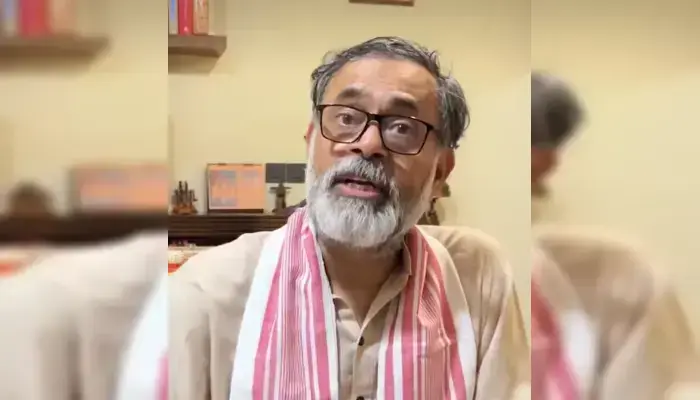
Case Summary
Hindu sentiments were insulted after political commentator Yogendra Yadav linked the term ‘Naxal’ with the Hindu deity Lord Kartikeya (Murugan) and the Kanwar tradition. The remarks were made in the context of Prime Minister Narendra Modi’s use of the term ‘dimaagi naxal’ (intellectual Naxal) while referring to his political opponents. During the Independence Day speech on 15 August 2026, Prime Minister Narendra Modi’s used the term ‘dimaagi Naxal’ during his Independence Day address from the Red Fort. In his speech, Modi said that armed Naxalism had been brought under control, but people with a Maoist mindset continued to pose a threat, and he called for such ‘dimaagi Naxals’ to be identified and isolated. He also said that Naxalism and Maoism had caused violence, destroyed the aspirations of young people and taken the lives of security personnel and civilians. Responding to Modi’s use of the term, Yadav discussed self-proclaimed historian Devdutt Pattanaik’s writings on Hinduism and raised the question of the origin of the word ‘Naxal’. He said that Naxalbari was associated with a type of grass found along riverbanks in Bengal and then narrated an account concerning the birth of Lord Kartikeya, as portrayed by Devdutt Pattanaik. According to the account narrated by Yadav, Shiva’s semen was given to Agni, who became unable to bear it and cast it into the Ganga. The river subsequently became heated, the surrounding Naxal grass caught fire, and Kartikeya was said to have emerged from its ashes. Yadav then said that Lord Kartikeya, also known as Murugan, was the first person to undertake the Kanwar tradition and become a devotee of Shiva. He connected this account to the term ‘dimaagi Naxal’, claiming that the ‘Naxal’ referred to in the political expression was therefore connected to Shiva’s tradition. He further referred to a Harappan depiction while discussing the tradition. Yadav concluded by questioning whether Modi, while using the expression ‘dimaagi Naxal’ against his political opponents from the Red Fort, had inadvertently insulted the tradition associated with Shiva. By drawing a direct association between a political expression referring to Maoist ideology and Hindu religious beliefs involving Lord Kartikeya, Shiva and the Kanwar tradition, the remarks were presented in a manner that trivialised and mocked revered Hindu beliefs and religious traditions.
Why it is Hate Crime ?
The primary category selected is- Hate Speech against Hindus. The subcategory selected is- Anti-Hindu slurs, mocking faith. Anti-Hindu slurs and the deliberate mocking of the Hindu faith owing to religious animosity involve the usage of derogatory terms, stereotypes, or offensive references to religious practices, symbols, or figures. One of the common anti-Hindu slurs used against Hindus is “cow-worshipper” and “cow piss drinker”. The intention of using this term is to demean and mock Hindus as a group and their religious beliefs since Hindus consider the cow holy. Additionally, some symbols and the slurs attached to them have a historical context that exacerbates the insult, hate, stereotyping, dehumanisation and oppression against Hindus. Cow worship has been used for centuries to denigrate Hindus, insult their faith and oppress Hindus specifically as a religious group. There has been overwhelming documentation about how cow slaughter has been used to persecute Hindus with cow meat being thrown in temples and places of worship. There has also been overwhelming documentation where cow meat (beef) has been force-fed to Hindus to either forcefully convert them to Islam or denigrate their faith. Apart from cow worship, the Swastika – which holds deep religious significance for the Hindus – has also been misinterpreted and distorted to use as a slur against Hindus. Similarly, the worship of the Shivling has been used by supremacist ideologies and religions to denigrate Hindus owing to religious animosity. Such slurs and denigration stem out of inherent animosity and hate towards Hindus and their faith, therefore, it is categorised as hate speech targeted at Hindus specifically owing to their religious identity. The other sub-category selected is - Anti-Hindu subversion and prejudice. Hate speech is defined as any speech, gesture, conduct, writing, or display that is prejudicial against a specific individual and/or group of people, which is leading to or may lead to violence, prejudicial action or hate against that individual and/or group. Media plays a specific and overarching reach in perpetuating prejudicial attitudes towards a community owing to unfair, untrue coverage and/or misrepresentation/misinterpretation, selective coverage and/or omission of facts of/pertaining to issues affecting a specific religious group. This type of bias can dehumanise the victim group, making it easier for others to justify harmful actions against them, which aligns with the objectives of hate speech laws aimed at preventing such harm. It is often observed that the media takes a prejudicial stand against the Hindu community driven by their need to shield the aggressor community which happens to be a numeric minority, however, is the one perpetrating violence against Hindus. For example, the media is often quick to contextualise religiously motivated crimes against Hindus, omit or misrepresent facts that point towards religiously motivated hate crimes, justify and/or downplay religiously motivated hate crimes or simply present fake news to stereotype Hindus. Such media bias leads to the denial of persecution and is often used to dehumanise Hindus, leading to justification for violence against them. For example, the media covered several fake allegations of Hindus targeting Muslims and forcing them to chant Jai Shree Ram. Most of these cases were proved false and fabricated after police investigation. These fake news reports were subsequently never retracted or clarified. Such fake news led to the justification of violence and dehumanisation of Hindus based on the argument that since Hindus targeted Muslims and forced them to chant Jai Shree Ram, the dehumanisation of Hindus and violence against them was par for the course and merely a retaliation. Such media bias leads to prejudicial portrayal of Hindus and offers a justification for violence against them and therefore, is considered hate speech under this category. The incident was classified as a hate speech case because Yogendra Yadav’s remarks appropriated Hindu faith, revered Hindu deities and an established Hindu religious tradition to construct a political analogy in an attempt to insult Hindu religious sentiments. The central issue was not that Yadav criticised the use of the term ‘dimaagi Naxal’, but that he sought to challenge it by deliberately associating Lord Kartikeya, Lord Shiva and the Kanwar tradition with Naxalism, a far-left extremist ideology associated with armed violence. By drawing this inappropriate association between revered Hindu figures and a violent political ideology, he placed Hindu religious beliefs within a derogatory political framework and used them to make his criticism more provocative and mocking. The religious figures and traditions invoked in the remarks held profound significance within Hinduism, making their use in a political analogy particularly sensitive. Lord Shiva is one of the principal deities of Hinduism and is widely revered as a supreme deity within Hinduism. Lord Kartikeya, also known as Murugan, Skanda and Subrahmanya, is a major Hindu deity and is especially revered as the son of Shiva and Parvati. The Kanwar Yatra is a prominent Shaivite pilgrimage in which devotees carry sacred Ganga water over long distances and offer it to Lord Shiva, representing an important expression of devotion and religious observance for millions of Hindus. The references therefore did not concern obscure or peripheral elements of **Hindu religious tradition**; they involved central figures and a major devotional tradition. Naxalism refers to the Maoist-inspired Left-Wing Extremist insurgency which involved armed violence against the Indian state, security personnel and civilians. The expression ‘urban Naxal’ had also been used in Indian political discourse to describe people accused of sympathising with or intellectually supporting the Maoist-Naxalist movement from urban or institutional settings. Modi’s use of ‘dimaagi Naxal’ similarly referred to an ideological rather than an armed form of Naxalism. There was no substantive religious component to the term, nor was Hinduism the subject of the original political criticism. Yadav nevertheless shifted the discussion from the political meaning of Naxalism to the purported connection between the word ‘Naxal’ and Hindu religious tradition. This shift was important because it enabled a political disagreement to be reframed around a Hindu deity and religious tradition. Yadav’s remarks crossed from political criticism into anti-Hindu rhetoric by appropriating revered Hindu deities and religious traditions to make a political point. Rather than confining his criticism to Modi’s use of the term ‘dimaagi Naxal’, he deliberately brought Lord Kartikeya, Lord Shiva and the Kanwar tradition into the discussion and associated them with Naxalism. By placing revered Hindu figures within the context of an ideology associated with Maoist extremism and violence, he created an inappropriate and derogatory association between Hindu religious beliefs and Naxalite ideology. The political expression was therefore not merely being criticised; Hindu religious figures were appropriated as material through which the political criticism was constructed. The association also had the effect of tarnishing the religious significance of the Hindu traditions that were invoked. Lord Kartikeya’s sacred traditions and his association with Shiva were removed from their religious context and repurposed to create a political taunt. The Kanwar tradition, a major Shaivite devotional practice, was similarly brought into an argument about Naxalism. By presenting these sacred elements as somehow connected to the violent ideology being criticised through the word ‘Naxal’, the remarks trivialised their religious significance and exposed them to ridicule. The suggestion that the use of ‘dimaagi Naxal’ could somehow amount to an insult to Shiva further reinforced this constructed association and turned Hindu religious belief into an object of political mockery. The religious references were also unnecessary to the political argument. Yadav could have directly criticised Modi’s use of ‘dimaagi Naxal’ by questioning its accuracy, political intent or appropriateness without invoking any Hindu deity or religious tradition. There was no need to introduce Kartikeya, Shiva or the Kanwar Yatra in order to challenge the terminology. Their inclusion therefore was not necessary to criticise Modi’s terminology and instead introduced Hindu religious beliefs into the political mockery, thereby creating an insulting association with Hinduism. The remarks consequently went beyond criticism of a political leader and used revered Hindu beliefs as instruments of ridicule, making the religious appropriation itself central to the offensive character of the speech. Furthermore, Yogendra Yadav had a documented history of remarks and positions that were hostile towards Hindu beliefs, identity and interests. He had previously made sweeping remarks stating that “Hindi, Hindu and Hindustan” would lead to the breaking apart of India, portraying Hindu identity as a threat to national unity. Yadav had also made anti-Hindu remarks in his public commentary, including describing attempts to build a Hindu political community as “diabolic” and accusing Hindu political movements of seeking to “colonise Hinduism by political power”. Taken together, these instances demonstrated that his remarks concerning Hinduism and Hindu identity in the present case were not an isolated occurrence but formed part of a broader pattern of rhetoric and political positioning that had repeatedly placed Hindu beliefs, identity and interests in a negative or hostile framework. Similarly, Devdutt Pattanaik also had a record of remarks that were anti-Hindu in character, particularly in his treatment of Hindu rituals, traditions and social practices. Pattanaik had repeatedly subjected Hindu beliefs, rituals and practices to dismissive and derogatory treatment, including describing Hindu rituals as essentially meaningless and portraying religious practices through a framework that reduced them to superstition. This established a broader pattern of portraying aspects of Hindu religious practice and tradition through a strongly critical framework, providing context for his involvement in the present incident, where his interpretation of Hindu religious tradition was used to construct the association between ‘Naxal’, Lord Kartikeya and the Shiva tradition. The hate-speech element therefore arose from the method used to make the political point. Hindu religious tradition was selectively appropriated, a revered deity was rhetorically associated with Naxalism, and a Hindu devotional tradition was incorporated into the mockery. The remarks consequently went beyond political disagreement and used the religious identity, beliefs and sacred traditions of Hindus as objects of ridicule. This deliberate religious framing was the basis for treating the remarks as an instance of anti-Hindu hate speech rather than merely political criticism.


Case Status
Unknown


Perpetrators Details
Perpetrators
Others
Perpetrators Range
One Person
Perpetrators Gender
male
 Sources




