Hinduphobia on display: Pakistani politician incites Muslims against Hindu minorities in Islamabad
 Islamabad Capital Territory, Pakistan
  13 August, 2026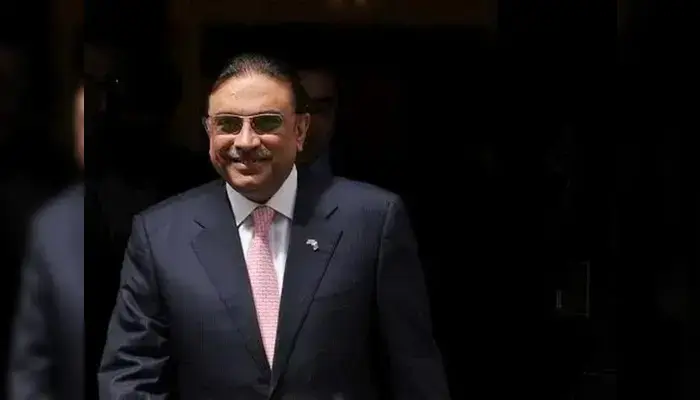
Case Summary
Hinduphobia was on display when Pakistani President Asif Ali Zardari made a hateful remark about the country’s Hindu minority on 14 August 2026, during Pakistan’s Independence Day celebrations. Through his remarks, Zardari issued a subtle threat to Hindus while attempting to incite Pakistan’s Muslim majority against the Hindu minority. Referring to Hindus, Zardari said, “Hum 3–4 pratishat Hindu abaadi ko bardaasht karte hain” (“We tolerate the 3–4 per cent Hindu population”). While talking about India, he further stated, “Hum Musalman hain, ve nahin hain” (“We are Muslims, they are not”). He further said that despite this, Pakistan tolerates its Hindu minorities and that Hindu minorities would always want to live in Pakistan. However, Pakistan’s Hindu population stood at 2.17 per cent according to the 2023 census, making Zardari’s claim of 3–4 per cent inaccurate. Zardari made the remarks at the Yaadgaar-e-Fatah Victory Memorial ceremony in Islamabad. He also referred to India’s idea of ‘Akhand Bharat’, stating that India had its own perspective and agenda. The memorial was built by Pakistan to commemorate what it described as its so-called victory in the 2025 conflict with India, during which India launched Operation Sindoor as a response to Pakistan’s support for the Pahalgam anti-Hindu terror attack. Pakistan termed the conflict ‘Marka-e-Haq’. The remarks drew criticism in India, with lawyer Rohit Madassery and lawyer, writer and Observer Research Foundation researcher Amit Krishnakant Paul criticising Zardari’s comments. Paul said that even 80 years after Independence, Pakistan’s President was referring to India on the occasion of Pakistan’s Independence Day and attempting to create division. The use of the term “tolerate” for Hindu minorities also attracted widespread attention and backlash, particularly as Pakistan’s Constitution guarantees the rights and religious freedom of religious minorities. Notably, Hindus and other religious minorities in Pakistan have faced a long pattern of persecution, including forced religious conversion, abduction, discrimination, intimidation and mob violence, alongside attacks on Hindu temples and other religious places and restrictions on the open practice of their faith. Hindu girls and women have remained especially susceptible to abduction and forced conversion, with cases in which minors were taken away from their families and subsequently converted and married. The community has also faced social and institutional discrimination, including hostility towards Hindu religious practices and symbols. Pakistan’s Hindu population has declined significantly as a proportion of the country’s population since Partition, when Hindus constituted a substantially larger share of the population in areas that became Pakistan. The continued targeting of Hindus through religious persecution, coercion, violence and discrimination has contributed to a climate of insecurity in which members of the community have faced oppression simply because they are Hindus.
Why it is Hate Crime ?
The primary category selected in this case is: Hate Speech against Hindus. The subcategory selected is: Violent Threats. Violent threats, explicit, implicit or implied, is the most dangerous form of hate speech since it goes beyond discriminatory and prejudicial language to express the intent of causing harm to an individual or a group of people based on their religious identity and faith. There could be several different kinds of threats that are issued to Hindus based on religious animosity. An explicit threat would mean the direct threat of violence towards an individual Hindu, a group of Hindus or Hindus at large. Physical violence, death threats, threats of destruction of property belonging to Hindus and threats of genocide would mean explicit threats against Hindus for their religious identity. Implicit threats may not be a direct threat but implied through the use of symbols of actions – for example – in the Nupur Sharma case, other than explicit threats, there were also implicit threats when Islamists took to the streets to burn and beat her effigies. It implies that they want to do the same to Nupur Sharma – thereby is considered an implicit threat. Violent threats can be delivered in person, through letters, phone calls, graffiti, or increasingly through social media and other online platforms. It would be important to understand that a threat – explicit or implicit, online or offline – to an individual who happens to be a Hindu does not qualify as a religiously motivated threat. Such a threat, while vile and dangerous, could be owing to non-religious reasons and/or personal animosity. To qualify as a religiously motivated threat, it would need to exhibit an indication that the individual is being targeted for religious reasons and/or owing to his/her religious identity as a Hindu. This case was a clear example of religiously motivated hostility against the Hindu community, as the remarks made by Pakistani President Asif Ali Zardari carried a subtly threatening undertone while also attempting to incite Pakistan’s Muslim majority against its Hindu minority. By presenting the presence of Hindus in Pakistan as something that Muslims “tolerate”, rather than as a community entitled to equal rights and religious freedom, the remarks reinforced a majoritarian narrative in which Hindus were portrayed as outsiders whose presence depended on the goodwill of the Muslim majority. Such rhetoric contributes to religiously driven hostility and further normalises the vilification of Hindus in Pakistan. The particularly disturbing aspect of the remarks was Zardari’s use of the word “tolerate” in reference to Pakistan’s Hindu population. The language carried a threatening undertone because it demonstrated that the continued presence and existence of Hindus in Pakistan was a concession being granted by the Muslim majority. Religious freedom and the right of Hindus to live in Pakistan as equal citizens are fundamental rights, not favours that can be granted or withdrawn at the discretion of the majority. By describing Hindus as a population that Muslims were merely “tolerating”, Zardari’s statement reflected a deep-seated religious animosity in which the Hindu community was implicitly placed in a subordinate position and made to feel that its presence was conditional. At the same time, the overall wording carried a threatening undertone towards Hindus living across Pakistan, effectively conveying that their continued presence was subject to the tolerance of the Muslim majority. In this context, the remarks did not merely reflect an insensitive choice of words but exposed and reinforced Zardari’s anti-Hindu hostility, while presenting the Hindu community as a group whose existence in Pakistan was dependent on the goodwill of Muslims. The context in which the remarks were made raises even more serious concerns. Hindus in Pakistan have faced a long history of religious persecution, including forced religious conversions, the abduction of Hindu girls and women, attacks on Hindu homes and businesses, desecration and destruction of temples, mob violence and other forms of religious intimidation. Hindu women and girls have repeatedly faced the particular vulnerability of abduction, sexual violence, forced conversion and forced marriage. Hindu places of worship and properties have also been targeted and, in many cases, demolished or occupied. Against this backdrop, for Pakistan’s President to tell the Hindu community that Muslims were “tolerating” them carried an unmistakably threatening implication: that the community’s right to exist, practise its faith and remain in Pakistan was dependent on the permission of the Muslim majority. In a society where religious minorities have already experienced persecution and insecurity, such rhetoric reinforces fear and emboldens further hostility against them. The identity of the person making the statement was also significant. This was not a random social media user, an anonymous internet troll or an individual speaking without public authority. The remark was made by the President of Pakistan, the country’s head of state, in a public ceremony. When a senior constitutional authority speaks about a religious minority in terms of “tolerating” its existence, such language carries far greater weight and legitimises prejudice at the societal level. Rather than challenging hostility towards Hindus, such rhetoric normalises the idea that the Muslim majority has the authority to decide whether Hindu citizens deserve acceptance, thereby creating an environment in which discrimination, intimidation and further persecution of Hindus becomes easier to justify. The fact that the remarks were made not on any ordinary day but on Pakistan’s Independence Day made the context of the statement even more significant. Pakistan was created in 1947 as a separate homeland for Muslims because the Muslims as a collective believed that Islam constituted a distinct nation and that Muslims, with their separate religion, culture and identity, could not coexist with a Hindu collectivity such as India. The creation of Pakistan was also influenced by the broader concept of the Ummah, which refers to the transnational unity of Muslims as a global religious community extending beyond national boundaries. In this sense, Pakistan emerged as a Muslim collectivity distinct from, and in opposition to, the Hindu collectivity, India. Therefore, the fact that Zardari made these remarks on the very Independence Day that commemorated the creation of Pakistan carried a deeper significance, as it placed an explicitly exclusionary statement about Hindus within the historical context of the country’s creation. The timing, combined with the substance of his remarks, showcased deep-seated religious and ideological hostility towards Hindus and their faith. It conveyed to Hindus across Pakistan that their continued existence and religious identity were conditional upon the “tolerance” of the Muslim majority, thereby making the timing of the remarks particularly disturbing and further exposing the anti-Hindu hostility and religious animosity underlying Zardari’s statement. Overall, as this case met the parameters of a hate-driven offence, it is being added to the Hinduphobia Tracker’s hate crime database.


Case Status
Unknown


Perpetrators Details
Perpetrators
State and Establishment
Perpetrators Range
One Person
Perpetrators Gender
male
 Sources




