Hindu man targeted for his faith identity: Muslim man declared “I will make you Muslim” before launching brutal assault
 Delhi, India
  10 August, 2026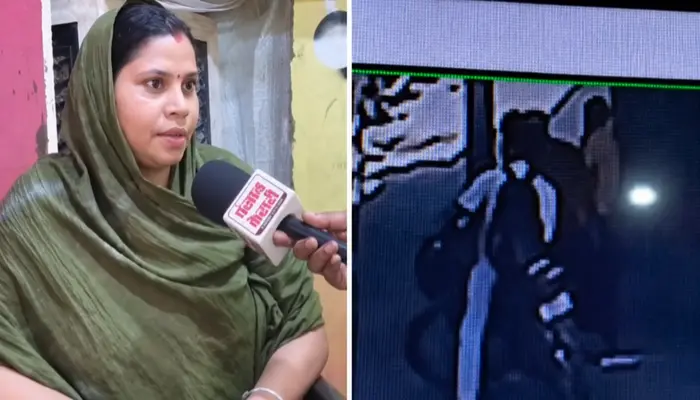
Case Summary
In the Sangam Vihar area of Delhi, a Hindu man was targeted, threatened and assaulted by a group of Muslim men led by Narsim following a local dispute over water. The accused stopped the Hindu man on the road, invoked his Hindu identity and threatened to convert him to Islam before assaulting him. According to the family’s account, around eight to ten months before the incident, a disagreement had taken place among residents of the locality over the use of a water pipeline. Subsequently, the Hindu man was stopped while travelling on his motorcycle by a Muslim man identified as Narsim and two or three other men. Narsim confronted him specifically over his Hindu identity and told him, “You act too Hindu; I will make you Muslim.” He and the accompanying men then assaulted the Hindu man. When he attempted to flee, the group caught hold of him and continued threatening him. He sustained injuries in the assault. After the injured victim returned home, his family contacted the police emergency number 112. Police personnel subsequently took them to the police station and directed them to undergo a medical examination. After the medical examination, the victim and his family were told that an FIR would be registered after CCTV footage was checked. They were subsequently asked to return home, and no immediate action followed. When they visited the police station again the next day, they were told that the matter had gone to court and that further proceedings would take place there. The family stated that they did not subsequently receive information regarding any effective action against Narsim, the man who had assaulted the Hindu victim. The victim's wife further stated that an investigating officer identified as Lakshmi Narayan had intimidated her during the process. According to her, the officer questioned how long she would be able to protect her husband and children and advised her to seek a compromise at the first hearing. Such remarks further contributed to the victim and his family’s sense of insecurity and their perception that they were not receiving adequate protection from the authorities. Furthermore, the victim’s family also described a pattern of previous intimidation in the locality. They stated that Narsim had repeatedly made provocative remarks about the husband’s name and had knocked on their door to make taunting comments. The family said that they had increasingly restricted their movement and avoided confrontation with Muslims in the locality because of these incidents. Following the assault and continued threats, they placed a “house for sale” poster outside their residence, indicating that they were considering leaving the area because they no longer felt safe living there. The woman expressed fear that the situation could escalate further and that her family could face more serious violence.
Why it is Hate Crime ?
This case has been added to the tracker under the primary category of - Attack not resulting in death. Within it, the sub-category selected here is - Attacked for Hindu identity. In several cases, Hindus are attacked merely for their Hindu identity without any perceived provocation. A classic example of this category of religiously motivated hate crime is a murder in 2016. 7 ISIS terrorists were convicted for shooting a school principal in Kanpur because they got ‘triggered’ seeing the Kalava on his wrist and tilak that he had put. In this, the Hindu victim had offered no provocation except for his Hindu religious identity. The motivation for the murder was purely religious, driven by religious supremacy. Such cases where Hindus are targeted merely for their religious identity would be documented as a hate crime under this category. The other primary category selected here is - Hate speech against Hindus. Within it, the sub-category selected here is - Violent threats. Violent threats, explicit, implicit or implied, is the most dangerous form of hate speech since it goes beyond discriminatory and prejudicial language to express the intent of causing harm to an individual or a group of people based on their religious identity and faith. There could be several different kinds of threats that are issued to Hindus based on religious animosity. An explicit threat would mean the direct threat of violence towards an individual Hindu, a group of Hindus or Hindus at large. Physical violence, death threats, threats of destruction of property belonging to Hindus and threats of genocide would mean explicit threats against Hindus for their religious identity. Implicit threats may not be a direct threat but implied through the use of symbols of actions – for example – in the Nupur Sharma case, other than explicit threats, there were also implicit threats when Islamists took to the streets to burn and beat her effigies. It implies that they want to do the same to Nupur Sharma – thereby is considered an implicit threat. Violent threats can be delivered in person, through letters, phone calls, graffiti, or increasingly through social media and other online platforms. It would be important to understand that a threat – explicit or implicit, online or offline – to an individual who happens to be a Hindu does not qualify as a religiously motivated threat. Such a threat, while vile and dangerous, could be owing to non-religious reasons and/or personal animosity. To qualify as a religiously motivated threat, it would need to exhibit an indication that the individual is being targeted for religious reasons and/or owing to his/her religious identity as a Hindu. This case was classified as a hate crime because the victim’s Hindu religious identity was a direct and explicit element in the confrontation and violence against him. Although the dispute over the water pipeline provided the immediate background to the encounter, the subsequent conduct of the accused went beyond an ordinary neighbourhood disagreement. The statement, “You act too Hindu; I will make you Muslim,” directly identified the victim by his religious identity and framed the confrontation in terms of his being Hindu. The threat to make him Muslim transformed the incident from a dispute between residents into an encounter involving hostility towards the victim’s religious identity. The targeted nature of the threat by the Muslim accused was particularly significant because it was made immediately before physical violence was inflicted upon the Hindu victim. The sequence of events indicated that his religious identity was not merely mentioned in passing during an unrelated neighbourhood dispute; rather, the accused specifically confronted him on the basis of his being Hindu, told him that he was “too Hindu”, and threatened to make him Muslim before he and the accompanying men assaulted him. The violence therefore followed an explicit expression of hostility towards the victim’s religious identity, providing a direct link between the religiously charged confrontation and the physical harm that followed. In this context, the assault was not simply an act of violence arising from a prior disagreement over water, as the accused’s words demonstrated that the victim’s Hindu identity had become a specific focus of the confrontation. The threat to forcibly change his religion further reinforced the antagonistic character of the conduct, as it treated his continued Hindu identity as something unacceptable and subject to coercion. The infliction of physical violence following this explicitly anti-Hindu threat demonstrated that the victim was subjected to violence in a context of religious hostility. This sequence provided a demonstrated that the violence was rooted in religious animosity and established that the victim’s Hindu identity was a motivating factor in the attack. A further indicator of religious hostility was the accused’s explicit threat to convert the Hindu victim to Islam. The statement that he would “make him Muslim” was not merely a religious insult but a direct threat aimed at altering the victim’s religious identity against his will. In the context of the confrontation, the threat conveyed hostility towards the victim’s continued adherence to Hinduism and suggested that his Hindu identity was viewed as something to be rejected or forcibly changed. The fact that this threat was made while the victim was being confronted and was followed by physical assault further intensified its coercive nature. The combination of a direct threat to change the victim’s religion and the subsequent violence therefore demonstrated that religious hostility was an integral component of the conduct directed against him and provided a clear indicator of anti-Hindu animosity. The case also indicated that the hostility was not confined to a single physical encounter. The family described earlier instances in which the same individual had made remarks directed at the Hindu man’s name and Hindu identity. While these incidents did not independently establish the motive for the assault, they provided contextual evidence of a continuing pattern of religiously charged intimidation. The family’s account revealed that the victim had previously been subjected to taunting and harassment connected to his identity, making the explicitly religious threat during the assault part of a broader pattern rather than an isolated reference. This violent overreach stems from an Islamic supremacist ideology within Muslim extremist circles, which views Hindus as socially and religiously inferior. This toxic belief breeds contempt and aggression, especially when Hindus resist submission or refuse to yield in disputes. The violence therefore represented more than an ordinary interpersonal or neighbourhood altercation, as the accused had specifically invoked and threatened the victim on account of his religious identity before the assault. This disproportionate escalation was significant in establishing the presence of religious animosity and further supported the classification of the incident as a hate crime against a Hindu victim. The subsequent impact on the family further supported the seriousness of the religiously motivated intimidation. The family reported restricting their movements, avoiding confrontation with members of the local Muslim community and eventually displaying a “house for sale” poster because they no longer felt secure in the locality. These consequences did not by themselves establish the perpetrator’s motive, but they demonstrated that the religiously charged assault and intimidation had created a sustained sense of insecurity for the Hindu family. The case was therefore not classified solely because the victim was Hindu and the accused was Muslim. The decisive factor was the explicit invocation of the victim’s Hindu identity by the accused in the course of the confrontation, coupled with a threat to change his religion and subsequent physical violence. Therefore, this case has been added to the hate crime database. Disclaimer: The Hinduphobia Tracker records incidents based on when an event occurred or when the victim's ordeal began. It is important to clarify that none of the media sources covering this case has specified the exact date when the assault occurred. Therefore, for documentation purposes, we have recorded the date based on when the incident was reported in the media, 11 August 2026.
Victim Details
Total Victim
1
Deceased
0
Gender
- Male 1
- Female 0
- Third Gender 0
- Unknown 0
Caste
- SC/ST 0
- OBC 0
- General 0
- Unknown 1
Age Group
- Minor 0
- Adult 1
- Senior Citizen 0
- Unknown 0


Case Status
Complaint filed


Perpetrators Details
Perpetrators
Muslim Extremists
Perpetrators Range
One Person
Perpetrators Gender
male
 Sources




