Hindu temple of Lord Shiva targeted in Pathankot; sacred temple rules violated and its sanctity desecrated
 Pathankot, Punjab, India
  13 August, 2026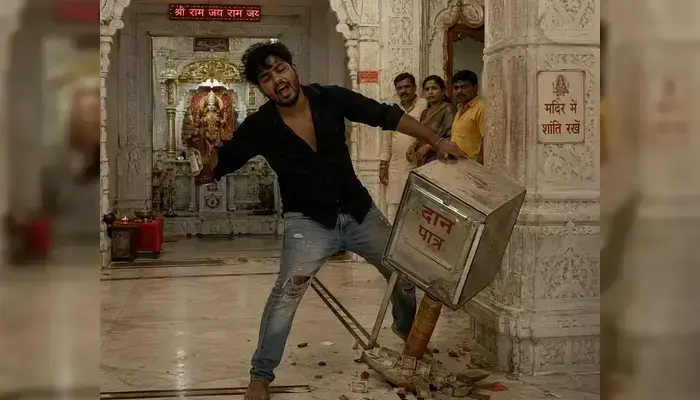
Case Summary
Hindu sentiments were outraged after a man under the influence of alcohol entered a famous Lord Shiva temple in Rajpura, Pathankot, Punjab, wearing slippers and creating a ruckus inside the temple premises. He behaved indecently and disrupted the sanctity of the place of worship. A temple attendant recorded the incident on his mobile phone, while CCTV cameras installed on the premises also captured the incident. Following the incident, the temple attendant submitted a written complaint to the local police, seeking identification of the man and strict legal action. Local Hindu organisations expressed anger over the incident, stating that the temple was a sacred place of worship for Hindus and that such behaviour inside its premises had offended religious sentiments. Police subsequently initiated an investigation based on the complaint and the available video and CCTV footage and stated that appropriate legal action would follow.
Why it is Hate Crime ?
This case has been added to the tracker under the primary category of - Attack on Hindu religious representation. Within it, the subcategory selected is - Breaking rules of place of worship. Sanatan Dharma is not a religion of one book, which is to say that while it has religious scriptures that form the central tenets of the faith, there are several traditions followed through thousands of years, mostly passed from generation to generation orally. One of these oral traditions or written traditions is the rules of specific temples. Certain temples have rules which are traditional rules, dependent on the worship of the presiding deities. These rules and traditions have been followed for thousands of years whether they find scriptural mention or not. Such traditions are based on the nature and rules of worship of the presiding deity of that temple. Any non-compliance of these traditions owing to animosity towards the faith or for the sake of activism stems not only from the lack of faith in the presiding deity but also disregard for the faith of the devotees of that deity/temple and implicit bias against the faith, the tradition and the deity itself. Since these specific traditions are central to the faith of the devotees of that specific temple and presiding deity, any non-compliance with these traditional rules would be considered a religiously motivated hate crime. Another subcategory selected is- Defiling religious customs. Sanatan Dharma is not a religion of one book, which is to say that while it has religious scriptures that form the central tenets of the faith, there are several traditions followed through thousands of years, mostly passed from generation to generation orally. There are several such customs and traditions that are followed by various Hindus and Hindu sects. Defiling of these traditions and customs is a breach of an individual or group’s religious practices. Such practices can range from dietary restrictions like not eating non-vegetarian food for a certain period of the year, not eating non-vegetarian food at all, not eating beef since the cow is considered holy in Hinduism, the sanctity of religious customs followed in the house (like many ISCKON devotees), etc. Any malicious action leading to the breach of such traditions or defilement of these traditions owing to animosity towards the faith or for the sake of activism stems not only from the lack of faith in the religion itself but also from disregard for the faith of the devotees who follow the customs/traditions and implicit bias against the faith, the tradition itself. Since these specific traditions are central to the faith of the devotees of that specific sect of Hindus, any non-compliance with these traditional rules would be considered a religiously motivated hate crime. The religious dimension of the incident arose from the fact that the conduct took place within a Hindu temple, a space specifically maintained for the worship of Hindu deities and the observance of religious practices. A temple is not merely a public or private premises; it is regarded as a sacred environment in which devotees are expected to maintain reverence, discipline and appropriate conduct in the presence of the deities. The accused's entry into this sacred setting while being drunk, followed by disruptive and indecent behaviour, therefore directly interfered with the sanctity and religious character of the place of worship. The conduct also had a distinct religious-space dimension because the incident occurred within the premises of a Lord Shiva temple. The presence of intoxicants and disorderly behaviour in such an environment was incompatible with the norms of purity, reverence and ritual propriety traditionally associated with Hindu worship. Physical and behavioural discipline around a temple and its sacred spaces forms part of the customary manner in which devotees approach and worship Hindu deities. The accused's conduct therefore amounted to a serious breach of the religious customs governing behaviour within a Hindu place of worship, rather than being an ordinary instance of drunken misconduct in a secular setting. The fact that the accused entered the temple wearing slippers was also significant in this context. Removing footwear before entering a temple is a widely observed Hindu practice associated with cleanliness, respect and maintaining the distinction between ordinary spaces and the sacred area of worship. Entering the temple in footwear while simultaneously creating a disturbance further demonstrated disregard for the customary standards of conduct observed within Hindu religious premises. Taken together with his intoxication and indecent behaviour, the conduct undermined the sanctity and dignity ordinarily attached to the temple environment. The state of intoxication of the accused, while explaining his lack of inhibition, did not excuse or diminish the religious nature of their attack. His decision to enter temple premises while drunk and creating a ruckus showed profound disrespect for Hindu religious spaces and practices. The fact that he specifically targeted a temple, rather than any other location, religious spaces of other faiths or completely secular places, suggested that even in his intoxicated state, he deliberately chose to violate Hindu religious representations and sacred spaces. This selective targeting and desecration of a Hindu religious place and event showcased the deep-seated animosity of the perpetrator towards Hinduism and the Hindu community. The incident therefore had a clear religious dimension because the conduct directly violated the sanctity and customary norms of a Hindu place of worship. It was not simply an episode of drunken disorder occurring at an arbitrary location; the conduct took place inside a temple dedicated to Lord Shiva and interfered with an environment specifically intended for Hindu worship. The incident consequently represented a serious affront to Hindu religious sentiments and warranted consideration under the category of defiling Hindu religious customs and disrupting the sanctity of a Hindu place of worship. Disclaimer: The Hinduphobia Tracker records incidents based on when an event occurred or when the victim's ordeal began. It is important to clarify that none of the media sources covering this case has specified the exact date when the incident occurred. Therefore, for documentation purposes, we have recorded the date based on when the incident was reported in the media, 14 August 2026.


Case Status
Complaint filed


Perpetrators Details
Perpetrators
Unknown
Perpetrators Range
Unknown
Perpetrators Gender
male
 Sources




