Minor Hindu girls befriended and abducted by Muslim men posing as Hindus; accused admits to religiously profiling Hindu girls and selling them for 8-10 lakhs
 Jodhpur, Rajasthan, India
  12 August, 2026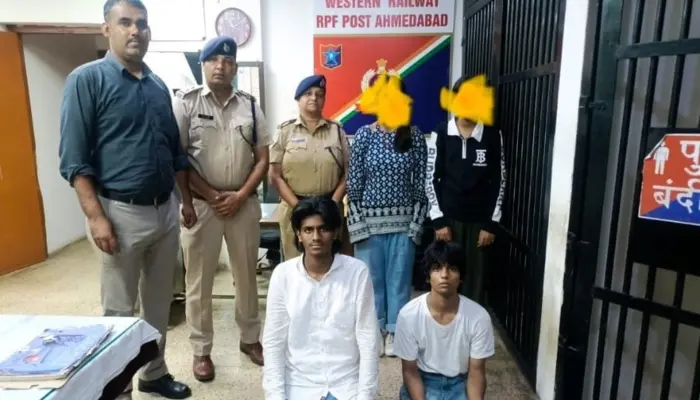
Case Summary
In Jodhpur, Rajasthan, two minor Hindu girls were befriended by two Muslim men, Aquib Ansari and Syed Ibrahim, who posed as Hindus. The victims came into contact with the accused through social media and gaming platforms before being lured away and abducted from their homes. The accused admitted to religiously profiling and targeting multiple Hindu girls, befriending them and selling them in Bangladesh for ₹8–10 lakhs. The two perpetrators were apprehended by the Railway Protection Force (RPF) at Ahmedabad Railway Station on 13 August 2026 while travelling with the girls towards Bengaluru. The incident came to light after Kudi Bhagtasni Police Station in Jodhpur City alerted the Ahmedabad RPF about the two minor girls, who had gone missing and were suspected to be travelling by train. Acting on the information under Operation Rail Prahri, an RPF team checked the Jodhpur–KSR Bengaluru Superfast Express (20693) at Ahmedabad Railway Station and located one of the Hindu girls. The Muslim man accompanying the girl attempted to flee after realising that the RPF personnel had identified them. He was chased and apprehended by the RPF. During his attempted escape, he threw his mobile phone from the train after deleting communication records. RPF personnel later traced and recovered the device at Nadiad Railway Station. Investigators examined the recovered phone and restored relevant data, which helped them trace a mobile number linked to the second accused. With assistance from the Jodhpur Police, the RPF obtained the live location of the second perpetrator. He was subsequently apprehended along with the second minor Hindu girl on Platform No. 1 at Ahmedabad Railway Station. During preliminary questioning, the two accused told investigators that they had established contact with the minor girls through social media and gaming-platform profiles. They befriended the girls online while posing as Hindus before taking them from their homes to Jodhpur Railway Station. According to the preliminary inquiry, the accused intended to travel with the girls to Bengaluru. During questioning, one of the accused admitted to trafficking Hindu girls to Bangladesh and selling them for ₹8–10 lakhs. He further stated that he had personally taken part in five such cases. A video featuring the two rescued minor Hindu girls and a Hindu activist who had apprehended the two accused also went viral on social media. In the video, the activist stated that the girls belonged to Marwari families in Jodhpur and had been lured by the accused through social media. He urged parents of Hindu girls to remain vigilant about their minor children's online activities and interactions on social media. The activist further stated that the Muslim men had previously trapped multiple Hindu girls, brainwashed them, and subsequently illegally trafficked them to other countries, including Bangladesh. He also referred to the sale of Hindu girls in Bangladesh for amounts ranging from ₹8–10 lakhs and stated that one of the accused had admitted to being involved in five such cases. The police also recovered a purported fake e-Aadhaar card bearing the name "Aryan" from the accused's digital devices, along with photographs of the girls' Aadhaar cards. The two accused were identified as Aquib Ansari, 24, and Syed Ibrahim, both associated with Bengaluru. Following their rescue, the two minor girls and the accused were taken to the RPF post at Ahmedabad Railway Station. The RPF informed Kudi Bhagtasni Police in Jodhpur, after which the girls and the two accused were handed over to the Government Railway Police (GRP), Ahmedabad, under a written memorandum for further legal action and coordination with the Jodhpur Police. The investigation was subsequently taken up by the GRP and Jodhpur Police, who examined the circumstances in which the girls were taken from their homes, their online interactions with the accused, and the circumstances surrounding their intended journey to Bengaluru.
Why it is Hate Crime ?
This case is being added to the tracker under the primary category: Crimes against women in relationships and other sexual crimes. The subcategory selected is: Man pretends to be Hindu. The tertiary category selected is: Name changed, Pattern of targeting Hindu women. When a non-Hindu man pretends to be a Hindu to deceive a Hindu woman into a relationship, the act is seen as triggered by malafide intentions. In some cases, the woman eventually accepts the man’s original religious identity and converts after the man’s identity is revealed. These cases could be argued as cases of religious brainwashing and a result of the pressure a woman feels after getting into a relationship with a man. The woman, it can be argued, also changed her religious identity because of the stigma she believes she might face if she chooses to walk out of a deceptive relationship. However, for the purpose of documenting hate crimes, the cases in this subcategory are limited to those where there is explicit violence aimed at religious conversion against the wishes of the victim (force-feeding beef, blackmailing with intimate videos, rape on refusal to convert, etc), or if the woman herself complains of the man’s religious deception. In such cases, it is established that the deception of the non-Hindu man had a specific aim of religious conversion or targeting of the victim due to her Hindu religious identity, therefore, making it a religiously motivated hate crime. The other subcategory selected is: Brainwashed and/or Groomed. The tertiary category selected is: Pattern of targeting Hindu minors. In our database, we have not added incidents where women have converted to another religion of their free will and no allegations of forced/involuntary conversion have been made. However, there are certain cases of conversion where the consent itself is a result of the brainwashing or grooming of a minor by the non-Hindu perpetrator trying to victimise a woman for her Hindu religious identity. The phenomenon of grooming points to non-Hindu perpetrators identifying their Hindu victims’ vulnerabilities and exploiting them over months and sometimes years, to extract the supposed ‘consent’ in order to convert their religion. In most cases of grooming, the victims are minors or the grooming started when the victim was a minor. In other cases of grooming, the non-Hindu perpetrator brainwashes and grooms a minor victim to extract their trust and then proceeds to rape them repeatedly with the intent of converting them to their faith. It is pertinent to understand here that when the victim is a minor, the ‘consent’ to convert or enter into a romantic relationship with an adult itself is redundant – addressed by POCSO. While every case of conversion of a minor and incidents of establishing a physical relationship with a minor by an adult is a crime, for the purpose of this database, a case would be considered a hate crime only if there is a distinct religious angle to the grooming. For example, in the UK, if a Hindu minor is targeted by Pakistani grooming gangs, it would be considered a hate crime because the victims are specifically targeted owing to their non-Muslim religious identity with the perpetrators being Muslim. In other cases, if a Hindu minor is brainwashed into entering a physical relationship with the non-Hindu adult perpetrator and the family alleges grooming/brainwashing of the minor to convert her religion, it would form a part of this database. If the victim is a Hindu adult, the case would form a part of this database only if the victim herself says that she was brainwashed/groomed to convert her religion. However, if the victim is deceased (murdered or otherwise), the case would form a part of this database if her family/friends provided testimony that the victim was brainwashed/groomed to convert her religion. Since these crimes have a distinct religious angle where the victim is being targeted owing to her Hindu religious identity, these cases are considered a hate crime. In this case, the two minor Hindu girls were religiously profiled, deceived and befriended by Muslim men pretending to be Hindus. The accused had admitted to targeting multiple Hindu girls and selling them in Bangladesh for 8-10 lakh rupees. Firstly, the perpetrators' act of deception by posing as Hindus itself demonstrated a clear bias and malicious intent towards the victims' religion. By concealing their true identities, the Muslim men manipulated the Hindu girls' trust and targeted them under false pretences, indicating a premeditated effort to exploit the girls based on their religious background. Additionally, befriending the girls online while concealing their religious identities created a false sense of trust and familiarity, which facilitated their removal from their homes. This constituted a serious violation of the victims' safety and autonomy, as the perpetrators deliberately used deception to gain their trust and influence their actions. Thus, the perpetrators' deliberate decision to conceal their religious identities strongly underscored the religious motive behind the crime. In such instances, identity concealment was not merely a deceptive tactic for personal reasons but a calculated strategy rooted in religious profiling and targeting. The accused were aware that the victims, being Hindu, would not have responded in the same manner had they known their real identities, and they circumvented this by posing as Hindus, which pointed towards a religiously driven intent. This deception reflected a broader pattern in which Hindu girls are specifically targeted through false identities by Muslim men, often using online platforms to establish trust before luring them away. Such targeted victimisation based on religion not only demonstrated a fundamental disregard for Hinduism but also exposed a deeper hostility towards Hindus and their religious identity. The fact that the two Hindu girls were targeted and taken away by Muslim men demonstrated deliberate religious targeting based on their Hindu identity. By deceiving the girls and taking them away from the safety of their homes and families, the perpetrators displayed a predatory intent and exposed them to further danger due to their faith identity. Their use of false Hindu identities to gain the girls’ trust further demonstrated the religiously targeted nature of the crime, constituting a hate crime. In this case, it was also important to note that the victims were minors, which made the crime even more severe. Their young age meant that they were particularly vulnerable to manipulation, deception and coercion. Minors generally lacked the maturity and understanding necessary to fully comprehend the long-term ramifications of deceptive relationships, religious manipulation and targeted exploitation. The perpetrators exploited this vulnerability by establishing contact with the girls, befriending them through social media and gaming platforms, and subsequently taking them away from their homes while concealing their Muslim identities by posing as Hindus. The combination of the victims' religious identity and age-related vulnerability demonstrated a targeted and exploitative pattern, making the incident a clear case of a hate crime. The fact that the perpetrators had previously targeted Hindu girls for sex trafficking and that one of the accused admitted to selling Hindu girls for ₹ 8–10 lakhs in Bangladesh further demonstrated a religiously driven intent in the present case. The accused's statement that Hindu girls were specifically being targeted for such exploitation demonstrated that the victims were not selected solely for the purpose of trafficking, but were targeted on the basis of their Hindu identity. If trafficking had been the sole objective, the perpetrators could have targeted girls irrespective of their religion. The specific targeting of Hindu girls for forced exploitation therefore indicated a pattern of religiously motivated victimisation and showcased deep-seated hostility towards the Hindu community because of their faith identity. In the present case, the fact that the two minor Hindu girls were similarly lured, taken away from their homes and transported towards Bengaluru further indicated that they were being intended for the same form of exploitation, rather than being taken away for an unrelated purpose. This connection between the previous targeting of Hindu girls and the circumstances of the present case further demonstrated the broader pattern of religious hostility and suggested that the girls' Hindu identity was a factor in their selection and exploitation. Such targeting reduced the victims to objects of exploitation while simultaneously singling them out because they were Hindu, demonstrating a dehumanising form of religious hostility that further supported the classification of the present case as a hate crime. Since this case met several parameters of a religiously driven hate crime, it is being added to the hate crime database of the Hinduphobia Tracker. Disclaimer: The Hinduphobia Tracker records incident dates based on when the crime occurred or when the victim's ordeal began, rather than when the incident was reported by the media. However, in the present case, media reports did not specify the exact date on which the victims were lured by the perpetrators. The only date mentioned was 13 August 2026, when the Railway Protection Force (RPF) apprehended the perpetrators while they were travelling with the victims towards Bengaluru. Hence, 13 August 2026 was selected as the indicative incident date for documentation purposes only.
Victim Details
Total Victim
2
Deceased
0
Gender
- Male 0
- Female 2
- Third Gender 0
- Unknown 0
Caste
- SC/ST 0
- OBC 0
- General 0
- Unknown 2
Age Group
- Minor 2
- Adult 0
- Senior Citizen 0
- Unknown 0


Case Status
Arrested


Perpetrators Details
Perpetrators
Muslim Extremists
Perpetrators Range
From 2 To 5
Perpetrators Gender
male
 Sources




