Hindu temple targeted, sacred idols of Hindu dieties desecrated in Etah, Uttar Pradesh
 Etah, Uttar Pradesh, India
  12 August, 2026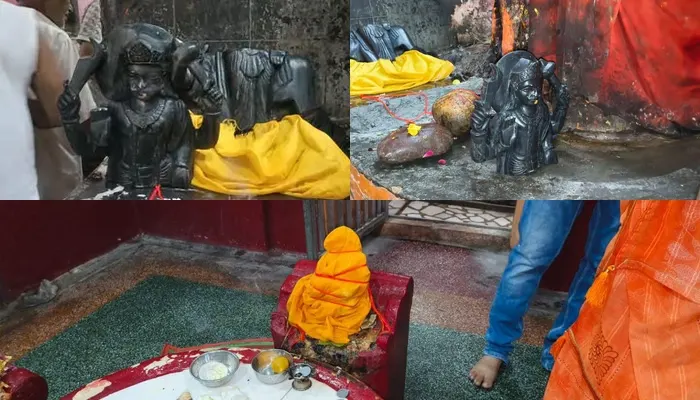
Case Summary
In Bada Bazar, Marhara, Etah, Uttar Pradesh, the sacred idols of Lord Ganesha and Lord Shani Dev installed at the Shiv Chintaharan Temple were vandalised by a miscreant. The incident occurred at around 8:00 PM on Thursday, 13th August 2026, during the holy month of Shravana (a sacred month in the Hindu calendar). The accused, identified as Kuldeep Sharma, son of Haribhan Sharma and a resident of Mohalla Brahmanpuri, entered the temple premises while intoxicated and created a disturbance. Temple priest Vinod Mishra objected to Kuldeep entering the temple in an intoxicated state and attempted to stop him. Kuldeep became aggressive and got into a physical altercation with the priest. He then damaged the installed idols of Lord Ganesha and Lord Shani Dev with his hands before fleeing the temple premises. It was later stated that he had consumed excessive alcohol and was not in control of himself at the time of the incident. The priest informed the temple management about the incident the following morning. The desecration came to the attention of the temple committee and Hindu devotees on the morning of Friday, 14th August 2026. After learning that the sacred idols had been damaged, a large number of devotees gathered at the temple. The incident caused anger among members of the Hindu community, who demanded strict action against the perpetrator and raised concerns over the security of the ancient Hindu temple. The devotees and temple committee members subsequently went to the police station to demand action against the accused. Naval Kishor, manager of the temple committee, submitted a written complaint at Marhara Police Station regarding the damage to the idols and the misconduct towards the temple priest. Following the complaint, police reached the temple, registered a case under relevant legal provisions and initiated action against the accused. SHO Yogendra Singh confirmed that Kuldeep Sharma had been arrested in connection with the incident. Police also questioned the accused as part of the investigation. Further investigation and legal proceedings were underway. The temple committee and Hindu devotees demanded enhanced security arrangements at the temple and strict legal action against the accused following the desecration of the Hindu deities.
Why it is Hate Crime ?
This case has been added to the tracker under the primary category: Attack on Hindu religious representations. The sub-category selected is: Desecration of Hindu religious symbols. Icons and symbols, or a religious representation of a spiritual ideal, are widely revered in Hinduism. Iconography is of vital significance in the Hindu milieu. It helps connect people’s spiritual beliefs with the real world. Iconography within the Hindu faith takes several shapes and forms. Murtis are of great significance to Hindus, to which daily rituals, prayers and offerings are done. Besides the murtis, there are several other symbols which have deep significance in the Hindu faith – the Om and Swastika, for example. Since these Hindu religious symbols hold paramount importance in Hinduism, any desecration of symbols, icons, murtis, religious representations and manifestations is driven by animosity towards the faith itself, which manifests itself through these murtis, icons and symbols. Therefore, any desecration of these Hindu religious symbols and representations is considered religiously motivated hate crimes under this category. The second sub-category selected is: Attack on Temples. In Hinduism, a temple is the abode of the Deity. The Deity in the Temple is consecrated, thereby making it a real, breathing entity. Hindus believe that not just the Deity but the temple premises themselves are sacred to Hindus since Hindus hold the faith that the entire Temple space is an amalgamation of the divine energy of the deity. Given the central significance of Temples in Hindu Dharma, any attack against a Hindu Temple or its peripheral premises is an attack on the faith itself and is born out of animosity towards the faith, of which the Temple is a central tenet. Any manner of attack against a Temple and/or its premises would therefore be considered a religiously motivated hate crime. The third subcategory selected is: Breaking rules of place of worship. Sanatan Dharma is not a religion of one book, which is to say that while it has religious scriptures that form the central tenets of the faith, there are several traditions followed through thousands of years, mostly passed from generation to generation orally. One of these oral traditions or written traditions is the rules of specific temples. Certain temples have rules which are traditional rules, dependent on the worship of the presiding deities. These rules and traditions have been followed for thousands of years whether they find scriptural mention or not. Such traditions are based on the nature and rules of worship of the presiding deity of that temple. Any non-compliance of these traditions owing to animosity towards the faith or for the sake of activism stems not only from the lack of faith in the presiding deity but also disregard for the faith of the devotees of that deity/temple and implicit bias against the faith, the tradition and the deity itself. Since these specific traditions are central to the faith of the devotees of that specific temple and presiding deity, any non-compliance with these traditional rules would be considered a religiously motivated hate crime. This case was a clear example of a religiously motivated hate crime, as the perpetrator entered a Hindu temple and desecrated sacred idols of Hindu deities, directly targeting objects of profound religious significance to Hindus. In Hinduism, idols are not regarded as mere objects or pieces of decoration; they are sacred manifestations of the deities and are regarded as embodiments through which divine presence and energy are made accessible to devotees. Through consecration and prescribed rituals, the deity is invoked into the idol, which then becomes a central focus of worship. Hindus offer prayers, flowers, food, lamps and other offerings before these sacred forms and approach them with reverence, devotion and humility. Hindu temples are likewise sacred spaces dedicated to the worship of the divine, where prayers, rituals, ceremonies and festivals are performed according to established traditions. They are maintained with standards of ritual purity, cleanliness and appropriate conduct in keeping with their sacred character. The consecrated idol and the temple are therefore deeply interconnected, together forming a sacred religious ecosystem comprising the deity, temple space, rituals, priests, devotees and offerings through which Hindu worship and spiritual practice are conducted. Against this religious background, the desecration of the idols of Lord Ganesha and Lord Shani Dev inside the Shiv Chintaharan Temple cannot be viewed as ordinary damage to property. The perpetrator entered a sacred Hindu space and specifically targeted the very objects that serve as the focus of worship, devotion and reverence for Hindu devotees. By physically damaging these sacred representations, he demonstrated clear disrespect towards the deities and towards the beliefs of those who worship them. The act violated not only the sanctity of the place of worship but also the religious practices and traditions centred around the deities. Unlike ordinary material objects, these idols derive their significance from their sacred association with the deities, making their deliberate desecration within the temple a direct affront to the Hindu faith and community beliefs. The nature of the act, the religious setting and the choice of targets therefore indicate a profound disregard for Hindu religious beliefs and a hostility towards Hinduism and its adherents. By desecrating the deities within their sacred abode, the perpetrator also disrupted the wider temple ecosystem in which the deities, sacred space, rituals, priests, devotees and practices of worship are intrinsically connected. The incident thus constituted an attack on the sanctity of Hindu worship itself and reflected deep-seated contempt for the religious values and traditions of the Hindu community. The perpetrator's decision to enter the temple while intoxicated further constituted a violation of established standards of temple conduct and religious purity. Hindu temples are traditionally maintained as spaces of physical and ritual purity, and their customs generally require devotees to approach them in a clean, disciplined and respectful state. Consumption of alcohol is considered incompatible with the sanctity and discipline expected within such sacred spaces, and temple customs commonly prohibit or restrict entry after consuming alcohol or while intoxicated. The perpetrator nevertheless entered the temple in an intoxicated state, despite these established religious norms, created a disturbance and proceeded to confront the priest before damaging the sacred idols. His conduct therefore demonstrated a disregard for the customs governing conduct within a Hindu place of worship and showed that he did not respect the sanctity, religious discipline or sentiments associated with the temple. His intoxication did not merely involve inappropriate conduct; it was followed by a direct violation of the sacred space and its religious objects. It may be argued that the perpetrator acted under the influence of alcohol and that his intoxication was responsible for his conduct. However, intoxication does not justify the desecration of a Hindu place of worship or erase the religious significance of what he chose to target. If his actions had been solely the result of indiscriminate intoxication, he could have damaged non-religious property or objects associated with other religious communities. Instead, his conduct specifically culminated in entering a Hindu temple and damaging the sacred idols of Lord Ganesha and Lord Shani Dev. The selective targeting of a Hindu place of worship and its sacred symbols is therefore significant. His intoxication may explain his state of mind at the time, but it does not explain the religious nature of the objects and place he ultimately targeted. By directing his actions towards Hindu sacred symbols within a Hindu temple, he caused direct harm to Hindu religious sentiments and demonstrated hostility towards Hindu religious beliefs and practices. Overall, since this case meets the parameters of a religiously motivated hate crime, it is being added to the Hinduphobia Tracker's hate crime database.


Case Status
Arrested


Perpetrators Details
Perpetrators
Others
Perpetrators Range
One Person
Perpetrators Gender
male
 Sources




