Anti-Hindu hostility on display: Leftist social media user makes derogatory remarks against Kanwar Yatra
 India
India  10 August, 2026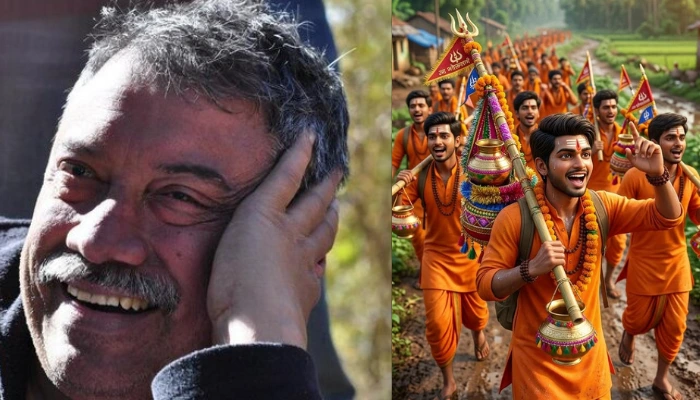
Case Summary
Hindu religious sentiments were hurt after a leftist social media user made derogatory remarks against the Kanwar Yatra, a sacred Hindu pilgrimage observed by devotees of Lord Shiva. The Kanwar Yatra is an annual Hindu pilgrimage undertaken by devotees of Lord Shiva, known as Kanwariyas. During the pilgrimage, devotees travel to sacred places to collect holy water from rivers, particularly the Ganga. They carry the water in decorated containers suspended from a pole known as a Kanwar. The holy water is then taken back to their respective places and offered to Lord Shiva at temples, especially during the Hindu month of Shravan. The pilgrimage is marked by religious devotion, fasting, prayers and other Hindu rituals. Millions of devotees participate in the Kanwar Yatra every year, making it one of the largest Hindu religious pilgrimages in India. The accused was identified as Rajiv Tyagi. On his X account, he posted a tweet in which he compared the Kanwar Yatra to terrorism. In his tweet on 11 August 2026, he wrote, "UP kaawad yatra is state sponsored terrorism..." The tweet went viral, gaining more than 98,000 views and 4,700 likes at the time of reporting, and caused outrage among Hindu users on social media. Notably, the accused described himself as a "former fighter pilot in the Indian Air Force (IAF), National Defence Academy (NDA), Air Force Academy (AFA)." He also called himself a left-liberal humanist. When the Hinduphobia Tracker researched Rajiv Tyagi's X account, it found that he has a history of making similar anti-Hindu remarks in the past. For example, in a tweet dated 6 June 2024, he called Hindutva supporters terrorists, writing, "Ram mandir may have united Hindus but has certainly thrown Hindutva terrorists into disarray... 😅" In another tweet dated 28 November 2021, he mocked the Hindu community and religiously driven crimes against Hindu women in relationships involving Muslim men by writing, "Hindus lose more girls per day to foeticide and infanticide than they do in a decade, to 'love jihad'. India loses 300,000 girls to foeticide and infanticide every year, almost all of them from Hindu homes..."
Why it is Hate Crime ?
This case is being added to the tracker under the primary category: Hate Speech against Hindus. The subcategory selected is: Anti-Hindu slurs, mocking faith. Anti-Hindu slurs and the deliberate mocking of the Hindu faith owing to religious animosity involve the usage of derogatory terms, stereotypes, or offensive references to religious practices, symbols, or figures. One of the common anti-Hindu slurs used against Hindus is “cow-worshipper” and “cow piss drinker”. The intention of using this term is to demean and mock Hindus as a group and their religious beliefs since Hindus consider the cow holy. Additionally, some symbols and the slurs attached to them have a historical context that exacerbates the insult, hate, stereotyping, dehumanisation and oppression against Hindus. Cow worship has been used for centuries to denigrate Hindus, insult their faith and oppress Hindus specifically as a religious group. There has been overwhelming documentation about how cow slaughter has been used to persecute Hindus with cow meat being thrown in temples and places of worship. There has also been overwhelming documentation where cow meat (beef) has been force-fed to Hindus to either forcefully convert them to Islam or denigrate their faith. Apart from cow worship, the Swastika – which holds deep religious significance for the Hindus – has also been misinterpreted and distorted to use as a slur against Hindus. Similarly, the worship of the Shivling has been used by supremacist ideologies and religions to denigrate Hindus owing to religious animosity. Such slurs and denigration stem out of inherent animosity and hate towards Hindus and their faith, therefore, it is categorised as hate speech targeted at Hindus specifically owing to their religious identity. This case was a clear example of a religiously driven hate crime, as the perpetrator made derogatory remarks against the sacred Kanwar Yatra, directly targeting a deeply revered Hindu religious pilgrimage. The Kanwar Yatra holds immense religious significance for Hindus and is one of the most important annual pilgrimages undertaken by devotees of Lord Shiva, particularly during the holy month of Shravan. The devotees who undertake the pilgrimage are known as Kanwariyas, and they travel on foot to sacred locations along the Ganga and other holy rivers to collect Ganga water, which they carry in decorated vessels suspended from a Kanwar. This holy water is subsequently taken back to their respective towns and villages and offered to Lord Shiva at temples as an act of worship and devotion. For Hindus, the journey itself is an important spiritual practice involving prayer, fasting, discipline, devotion and adherence to religious customs. Devotees undertake the pilgrimage with a strong sense of faith and personal religious commitment, enduring considerable physical hardship as part of their worship. The Kanwar Yatra therefore represents far more than a public procession or cultural gathering; it is a deeply sacred Hindu religious observance through which millions of devotees express their devotion to Lord Shiva and fulfil important religious vows and practices. Therefore, comparing the Kanwar Yatra with terrorism by stating, "UP kanwad yatra is state sponsored terrorism", demonstrated hostility towards Hindu religious pilgrimages and the faith practices associated with them. By categorising a sacred Hindu pilgrimage as terrorism, the perpetrator directly demeaned the religious observance itself and portrayed an act of devotion as something inherently associated with violence and criminality. This was not a criticism of a specific administrative aspect of the pilgrimage but a derogatory characterisation of a religious practice revered by millions of Hindus. Such a remark therefore denigrated an important expression of Hindu faith and hurt the religious sentiments of devotees who regarded the Kanwar Yatra as a sacred act of worship and devotion, making it a clear instance of religiously driven hate speech. Making such generalisations and vilifying Hindu religious practices contributes to the normalisation and spread of Hinduphobia, particularly when such remarks are made publicly on social media and reach a large audience. By portraying a revered Hindu practice as something comparable to terrorism, the statement reinforces negative stereotypes about Hinduism and creates an environment in which Hindu religious beliefs, customs and devotees are treated with suspicion, contempt or ridicule. The fact that the remark went viral significantly amplified its reach, allowing the derogatory portrayal to be viewed, shared and repeated by a much wider audience beyond the original post. Such public dissemination deepens prejudice and bias against Hindus by presenting hostility towards their religious practices as socially acceptable, while also encouraging further mockery and denigration of Hindu faith and traditions. In this manner, the remark contributed to an environment of religious bigotry in which Hindu beliefs and devotees were collectively vilified rather than treated with the same respect accorded to other religious communities. The accused had a history of making anti-Hindu remarks, which further demonstrated his hostility towards Hinduism and the Hindu community. In a previous post, he compared Hindutva supporters with terrorists, writing that the construction of the Ram Mandir had "thrown Hindutva terrorists into disarray". Hindutva is a cultural and civilisational movement associated with the protection of Hindu identity, interests, rights and heritage, and is not inherently an extremist or violent movement. Equating Hindutva supporters with terrorists therefore portrayed people associated with a Hindu cultural and civilisational movement as violent extremists and denigrated an important expression of Hindu identity. In another post, the accused mocked the Hindu community by highlighting female foeticide and infanticide in Hindu families and, in the same context, mocked the concept of "love jihad" and concerns surrounding Hindu women being targeted in relationships with Muslim men, including cases involving sexual exploitation, coercion and pressure to convert. By ridiculing such incidents and dismissing the targeting of Hindu women, he trivialised issues that directly affected the Hindu community while simultaneously portraying Hindus and their religious identity in a derogatory manner. These previous remarks, when viewed alongside his derogatory comparison of the Kanwar Yatra with terrorism, demonstrated a recurring pattern of hateful rhetoric directed at the Hindu community, further establishing his anti-Hindu hostility. Overall, this case meets the parameters of religiously driven hate speech targeting the Hindu community. Therefore, it is being recorded in the hate crime database of the Hinduphobia Tracker.


Case Status
Unknown


Perpetrators Details
Perpetrators
Others
Perpetrators Range
One Person
Perpetrators Gender
male
 Sources




