Hindus demonised through selective reporting and negative stereotyping by leftist journalist
 India
India  26 July, 2026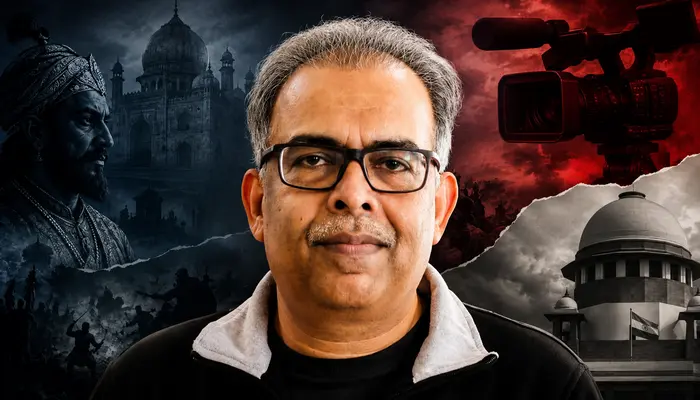
Case Summary
Hindus were targeted and vilified by BBC India correspondent Soutik Biswas, who presented Hindu traditions, political movements and grievances through a predominantly negative and adversarial framework. His coverage repeatedly portrayed Hindu identity and Hindu concerns as sources of social tension while falsely portraying Muslims as the victims, and giving comparatively limited attention to the historical, political and social context underlying those concerns. This framing contributed to the demonisation of Hindus by presenting Hindu cultural practices and political mobilisation primarily as threats, rather than examining them with the same degree of contextualisation afforded to Muslim communities. In his reporting on the cow, for instance, Biswas framed cow protection largely through the lens of communal polarisation, portraying the issue as a conflict between Hindu protection of the cow and Muslim dietary practices. This approach reduced a long-standing Hindu religious and cultural concern to a political instrument of the BJP while overlooking the broader historical and constitutional context of cow protection in India. Similarly, his article on a so-called “foot soldier” of the Hindu far-right explicitly associated Hindu political mobilisation with the far-right, reinforcing a narrative in which Hindu activism was characterised through extremism and communal danger. Biswas also used framing that portrayed Hindu grievances and political movements as inherently suspect. His coverage of protests and political mobilisation frequently centred the state as an oppressive force while giving less prominence to the circumstances surrounding separatism, violence or other factors that had shaped those movements. At the same time, reporting on Hindu concerns was presented through language that associated them with majoritarianism, polarisation and extremism. Such selective framing contributed to an image of Hindus as aggressors or threats rather than as a community with legitimate historical, cultural and political grievances. His treatment of Mughal history further contributed to this imbalance. In reporting on Mughal India, Biswas highlighted scholarship indicating that Aurangzeb was less cruel than commonly portrayed and that there was limited evidence of widespread forced conversion. However, he entirely ignored several documented instances of temple destruction, the reimposition of jizya, persecution of non-Muslims and religious conversion of Hindus.
Why it is Hate Crime ?
This case has been added to the tracker under the primary category of - Hate speech against Hindus. WIthin it, the sub-category selected is - Anti-Hindu subversion and prejudice. Hate speech is defined as any speech, gesture, conduct, writing, or display that is prejudicial against a specific individual and/or group of people, which is leading to or may lead to violence, prejudicial action or hate against that individual and/or group. Media plays a specific and overarching reach in perpetuating prejudicial attitudes towards a community owing to unfair, untrue coverage and/or misrepresentation/misinterpretation, selective coverage and/or omission of facts of/pertaining to issues affecting a specific religious group. This type of bias can dehumanise the victim group, making it easier for others to justify harmful actions against them, which aligns with the objectives of hate speech laws aimed at preventing such harm. It is often observed that the media takes a prejudicial stand against the Hindu community driven by their need to shield the aggressor community which happens to be a numeric minority, however, is the one perpetrating violence against Hindus. For example, the media is often quick to contextualise religiously motivated crimes against Hindus, omit or misrepresent facts that point towards religiously motivated hate crimes, justify and/or downplay religiously motivated hate crimes or simply present fake news to stereotype Hindus. Such media bias leads to the denial of persecution and is often used to dehumanise Hindus, leading to justification for violence against them. For example, the media covered several fake allegations of Hindus targeting Muslims and forcing them to chant Jai Shree Ram. Most of these cases were proved false and fabricated after police investigation. These fake news reports were subsequently never retracted or clarified. Such fake news led to the justification of violence and dehumanisation of Hindus based on the argument that since Hindus targeted Muslims and forced them to chant Jai Shree Ram, the dehumanisation of Hindus and violence against them was par for the course and merely a retaliation. Such media bias leads to prejudicial portrayal of Hindus and offers a justification for violence against them and therefore, is considered hate speech under this category. This case constituted a hate crime because the author's conduct was directed at Hindus as a religious community and repeatedly portrayed their religious identity, beliefs, cultural practices and collective interests in a manner that subjected the community to hostility, contempt and negative stereotyping. The central concern was not merely that a journalist expressed criticism of the BJP, the Modi government or particular Hindu political organisations. Political criticism, by itself, did not constitute a hate crime. Rather, the hate-crime concern arose from a recurring pattern in which the author associated Hindu identity with extremism, communal aggression and social harm, thereby transforming criticism of particular actors into a broader negative portrayal of Hindus and Hinduism. The religious dimension was particularly significant because several of the subjects discussed in the reporting were intrinsically connected to Hindu religious identity. Cow protection, Hindu religious traditions, Hindu political mobilisation and historical experiences of Hindus were treated within a framework that cast these concerns as manifestations of majoritarian hostility. When matters that were meaningful to Hindus as a religious community were repeatedly presented as evidence of intolerance or communal danger, the reporting did more than criticise individual conduct. It contributed to a collective characterisation of Hindus in which adherence to their own religious traditions or advocacy for community interests was associated with undesirable and threatening behaviour. The reporting on cow protection also carried a religious dimension because the cow held a deeply revered position in Hinduism and was regarded as sacred by many Hindus. Consequently, portraying concern for cow protection primarily as a tool of communal polarisation reduced a significant Hindu religious belief to a political or communal issue. The framing failed to adequately recognise that reverence for the cow was rooted in Hindu religious traditions and practices and therefore risked portraying the expression of a genuine religious belief as inherently aggressive or discriminatory towards other communities. The use of labels and framing associated with the “Hindu far-right” was also relevant to the religious targeting. Such terminology attached an extremist character to Hindu political actors specifically on the basis of a Hindu-majority context, creating a broader association between Hindu identity and extremism. This asymmetrical framing attempted to establish Hinduism as the religious identity most readily associated with radicalism, intolerance and political violence. The historical component further intensified the religious dimension of the case. The presentation of Mughal history in a manner that softened or minimised persecution of non-Muslims affected how the historical experiences of Hindus were understood. Where historical episodes involving the destruction of temples, discriminatory taxation or pressure upon non-Muslim communities were downplayed while the ruler responsible was presented in a comparatively rehabilitative manner, the suffering and grievances of Hindu communities were effectively diminished. This mattered because historical persecution remains an important component of Hindu collective memory and identity. Minimising such experiences delegitimises present-day Hindu concerns by portraying them as exaggerated, manufactured or rooted merely in communal prejudice rather than in historical experience. The reporting also had a broader stereotyping effect. Hate crimes do not necessarily depend upon an explicit statement that an entire religious community is inferior. Repeatedly associating a protected religious group with aggression, extremism, intolerance or communal conflict contributes to the same hostile social environment by normalising negative assumptions about that group. In this case, the cumulative pattern was important: Hindu religious practices were treated as polarising, Hindu political mobilisation was framed through extremism, and Hindu historical grievances were presented with limited recognition of the persecution underlying them. Taken together, these portrayals reinforced a negative conception of Hindu identity. The significance of the case therefore lay in the cumulative religious targeting rather than any single sentence or article viewed in isolation. Each instance contributed to a wider narrative in which Hindus were disproportionately positioned as perpetrators of communal tension rather than as a religious community capable of being victims of discrimination, persecution or violence. Such a pattern could influence how audiences interpreted Hindu concerns and could delegitimise legitimate grievances by automatically associating their expression with majoritarianism or extremism. The international reach of BBC reporting further increased the potential impact of this conduct. As a major international broadcaster, the BBC's reporting reached audiences outside India who might have limited independent knowledge of India's complex religious and historical circumstances. Repeated negative framing of Hindu communities in such a setting could strengthen stereotypes among international audiences and contribute to a distorted understanding of Hindu religious and cultural concerns. Accordingly, the hate-crime dimension of this case arose from the religiously targeted nature and cumulative effect of the portrayals. The conduct did not merely challenge particular political leaders, parties or policies; it repeatedly placed Hindu religious identity, practices, historical grievances and collective mobilisation within a framework of suspicion and hostility. This contributed to the stigmatisation of Hindus as a religious community and treated expressions of Hindu identity as inherently associated with extremism, communalism or aggression. For these reasons, the case was relevant to the Hate Speech Against Hindus category, as the principal harm arose from the negative and discriminatory portrayal of Hindus on account of their religious identity.


Case Status
Unknown


Perpetrators Details
Perpetrators
Others
Perpetrators Range
One Person
Perpetrators Gender
male
 Sources




