Hindu sentiments outraged; Goddess Kali portrayed in obscene costume during Kolkata stage performance
 Kolkata, West Bengal, India
  7 August, 2026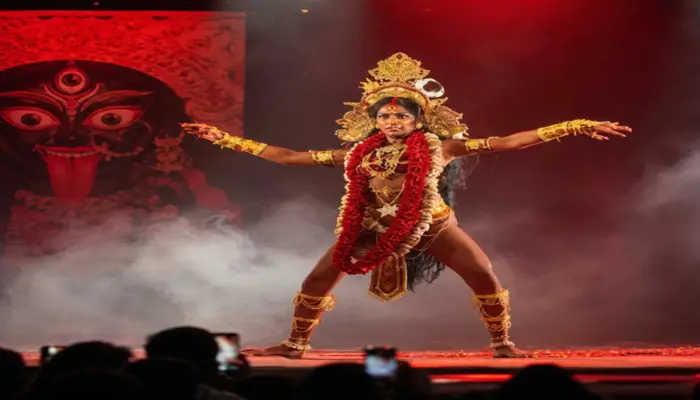
Case Summary
On 8 August, a dance drama titled Mahavidya in Kolkata, West Bengal, sparked public criticism over the portrayal of Hindu Goddess Kali. The performance was staged by the dance production group Nitya – Faculty of Sight at Mohit Mancha in the Tala Park area. During the performance, the artist portraying Goddess Kali appeared on stage in a revealing costume that drew objections from viewers present at the venue and from people who later saw the performance online. The portrayal showed the performer appearing as Goddess Kali with long, unruly hair, garlands and jewellery, while wearing very little clothing. The presentation led to criticism over the manner in which the Hindu Goddess was depicted. One viewer questioned why the form of the Goddess could not have been presented with greater dignity and said that Hindu gods and goddesses were objects of reverence. Another critic questioned the presentation by saying that genuine dancers would not have had the courage to present the Goddess in such a manner. Following the backlash, the organising team issued a public apology through a statement on Facebook. The organisers claimed that the choreography, dance movements and overall artistic presentation were the creative decisions of the individual performer, while the production staff had provided the designated script and accompanying audio. They also claimed that the performer had not participated in a dress rehearsal wearing the costume intended for the live performance, leaving the management unaware of the exact attire she planned to wear. The organisers said that they had expected the performer to wear attire similar to that of the two accompanying background dancers. Instead, she appeared on stage in a “completely different and unspecified costume” that had not been reviewed or approved by the management. The troupe acknowledged failures in communication, administrative oversight and overall supervision and described the presentation as “unsightly and undesirable”. The production team accepted that greater supervision should have been maintained throughout the process and apologised to audience members, fellow artists and supporters. It stated that costumes and visual elements should have been thoroughly inspected before the performance. The group also promised that performance outfits and other visual elements would be formally approved and checked before future public performances.
Why it is Hate Crime ?
This case has been added to the tracker under the primary category of - Attack on Hindu religious representations. Within it, the sub-category selected here is - Iconoclastic representation of Hindu Gods/Goddesses. An icon is a symbol of someone or something that is revered, or a religious representation of a spiritual ideal. Iconography is of vital significance in the Hindu milieu. It helps connect people’s spiritual beliefs with the real world. Iconography within the Hindu faith takes several shapes and forms. Murtis are of most significance to Hindus, to which daily rituals, prayers and offerings are done. Besides the murtis, there are several other symbols which have deep significance in the Hindu faith – the Om and Swastika for example. Any iconoclastic representation of these symbols, images and murtis is an affront to the religious beliefs and faith of the Hindu community itself since the symbols and icons are deeply religious in nature. In this sub-category of crime, we would record hate crimes and iconoclastic representations, in words, art, or any other form of representations of symbols that hold religious significance for the Hindu community. Since these symbols, icons and murtis are central to the Hindu faith, any iconoclastic representation of these symbols is born out of animosity towards the faith itself, manifesting itself through these symbols and therefore, these representations would be considered religiously motivated hated crimes. The depiction of Goddess Kali served as the explicit religious marker in this incident. By adopting the identifiable sacred attributes of the deity, including her distinct ceremonial jewellery and traditional iconography, and pairing them with inappropriate attire, the performance stripped the sacred figure of its inherent reverence. The portrayal transformed a subject of deep spiritual worship into a distorted and undignified spectacle. The alteration degraded the sanctity of the deity and delivered an insult to the spiritual beliefs inextricably connected to her form. The presentation specifically targeted the Hindu community by weaponising a highly venerated figure against the practitioners of the faith. Goddess Kali held a central, defining position in the religious life of Hindus, particularly in the regional context of West Bengal, where her worship dictated significant cultural and spiritual practices. By presenting the deity in a manner that starkly contradicted established religious decorum, the performance displayed a clear disdain towards Hindu sensibilities. The act intentionally disregarded the boundaries of religious respect, functioning as a direct attack on the religious identity of both the local viewers and the wider Hindu community. While staged within a theatrical setting, the deliberate choice to distort the deity's image crossed the threshold into a religiously motivated hate crime. The subversion of Hindu iconography under the guise of creative expression served as a vehicle to normalise the mockery and trivialisation of Hindu deities. In this instance, the severe deviation from expected cultural and religious norms constituted a deliberate affront rather than an innocent artistic oversight. This normalisation of iconoclasm against Hindu symbols fostered an environment where the faith itself faced systemic disrespect and marginalisation in public spaces. The incident ultimately qualified as a hate crime because the primary target was the sanctity of the Hindu faith itself. The distress inflicted upon the audience stemmed entirely from the intentional desecration of a religious ideal they held sacred. By publicly desecrating the traditional and dignified image of Goddess Kali, the performance demonstrated a deep-seated prejudice against Hindu beliefs. Such actions diminished the spiritual autonomy of Hindus to see their deities represented with dignity, confirming the underlying religiously motivated hostility of the entire presentation.


Case Status
Unknown


Perpetrators Details
Perpetrators
Unknown
Perpetrators Range
Unknown
Perpetrators Gender
female
 Sources




